
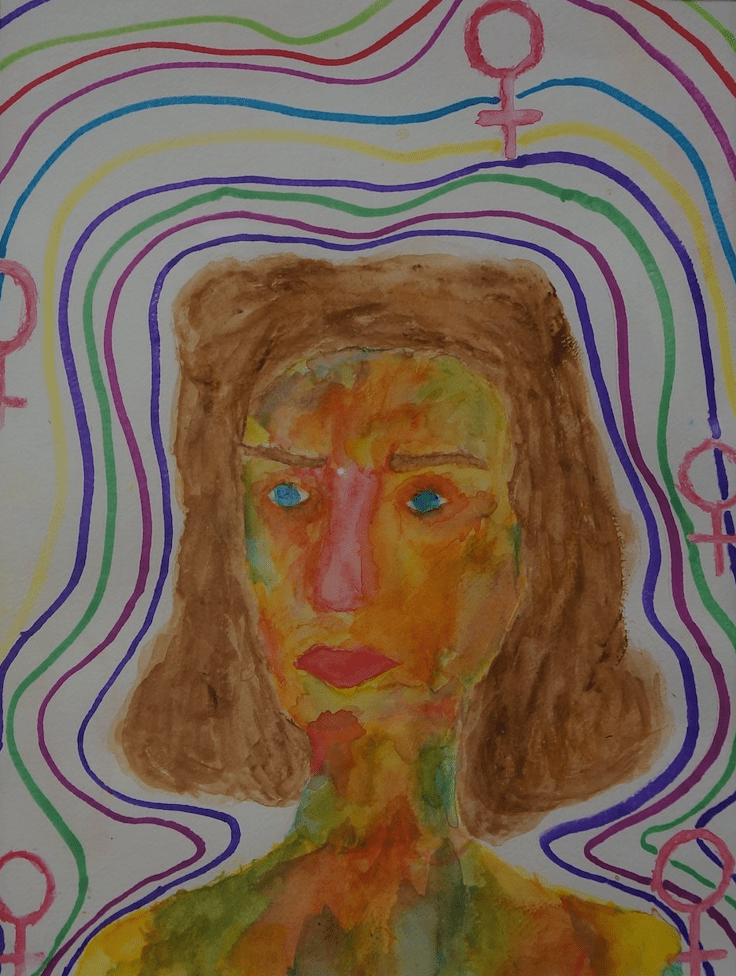
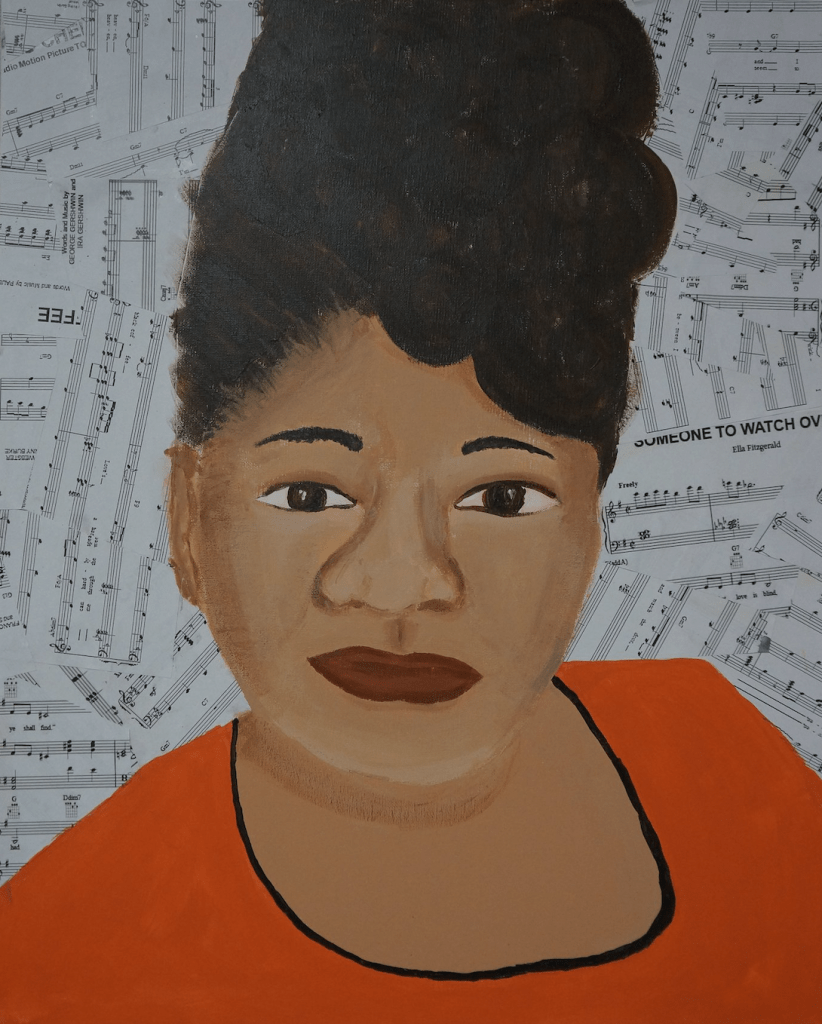
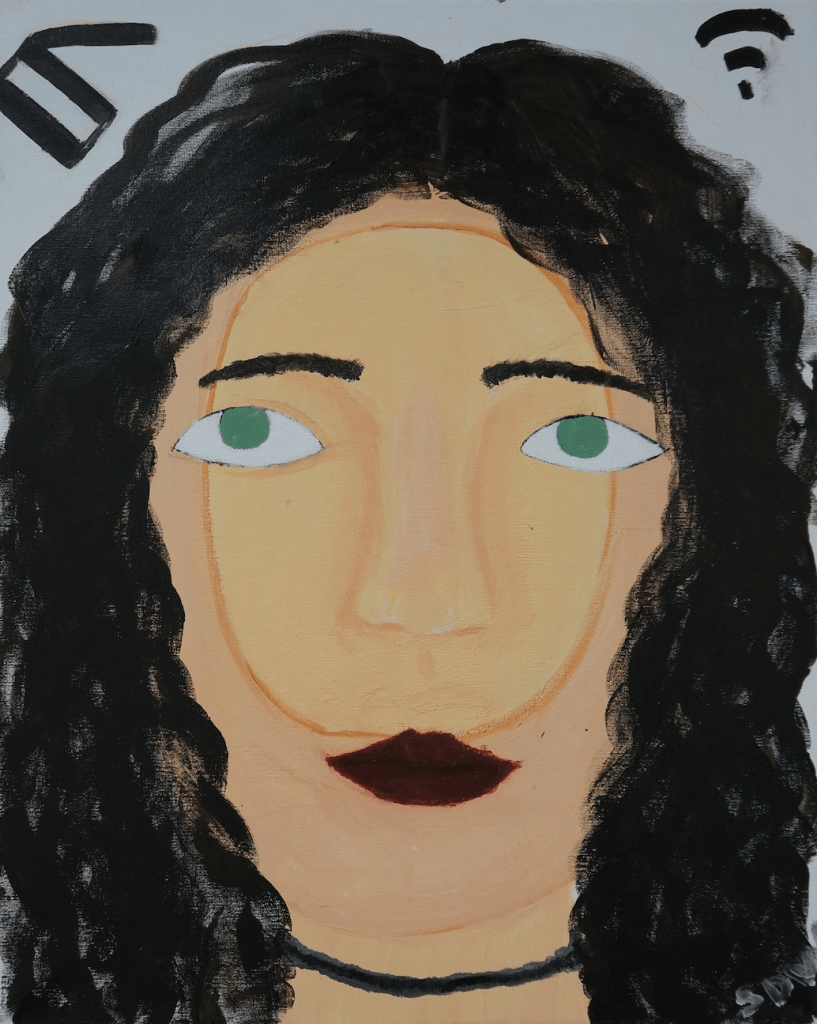
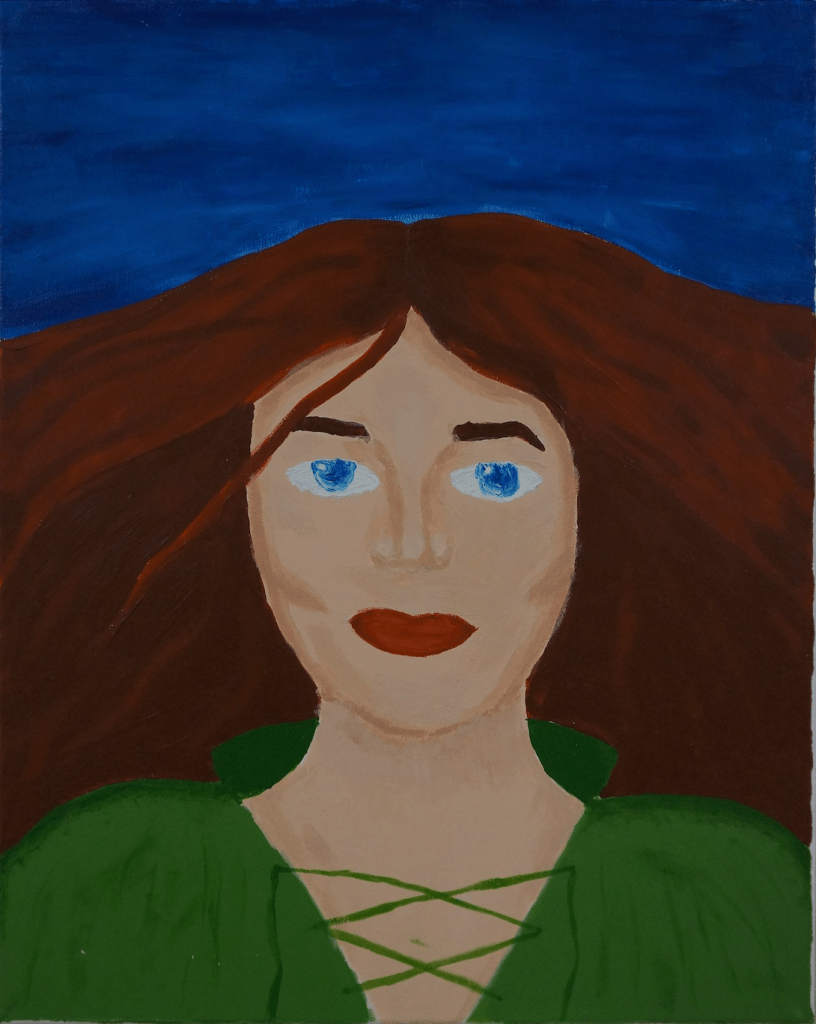
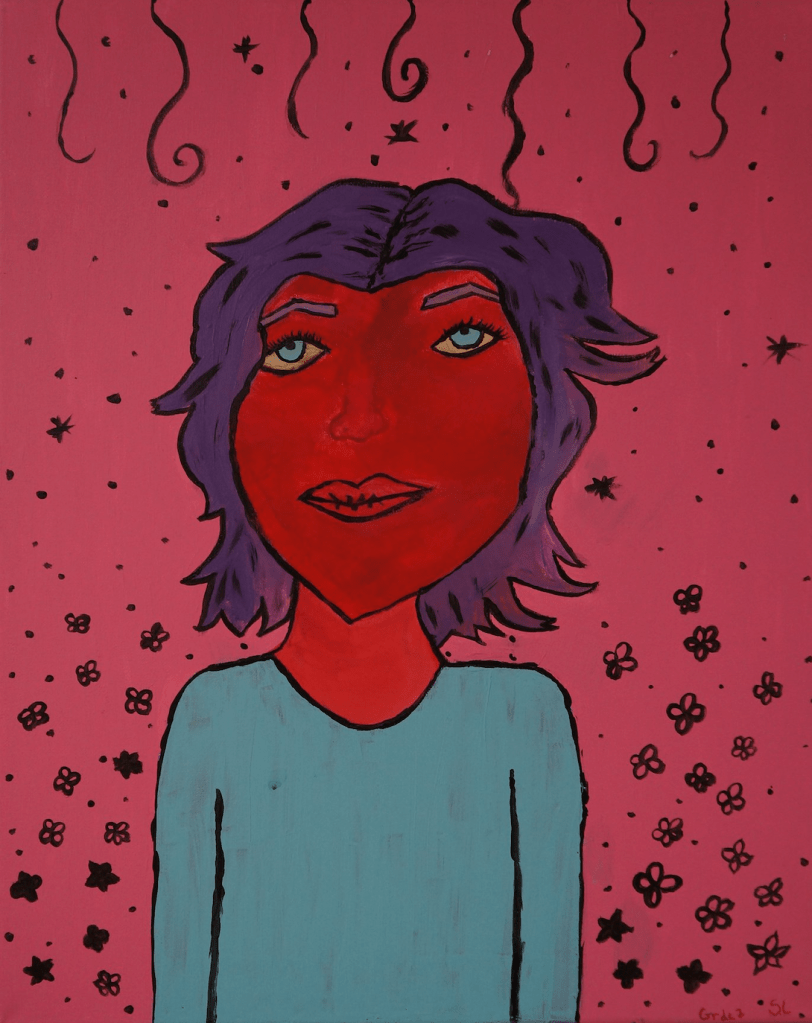
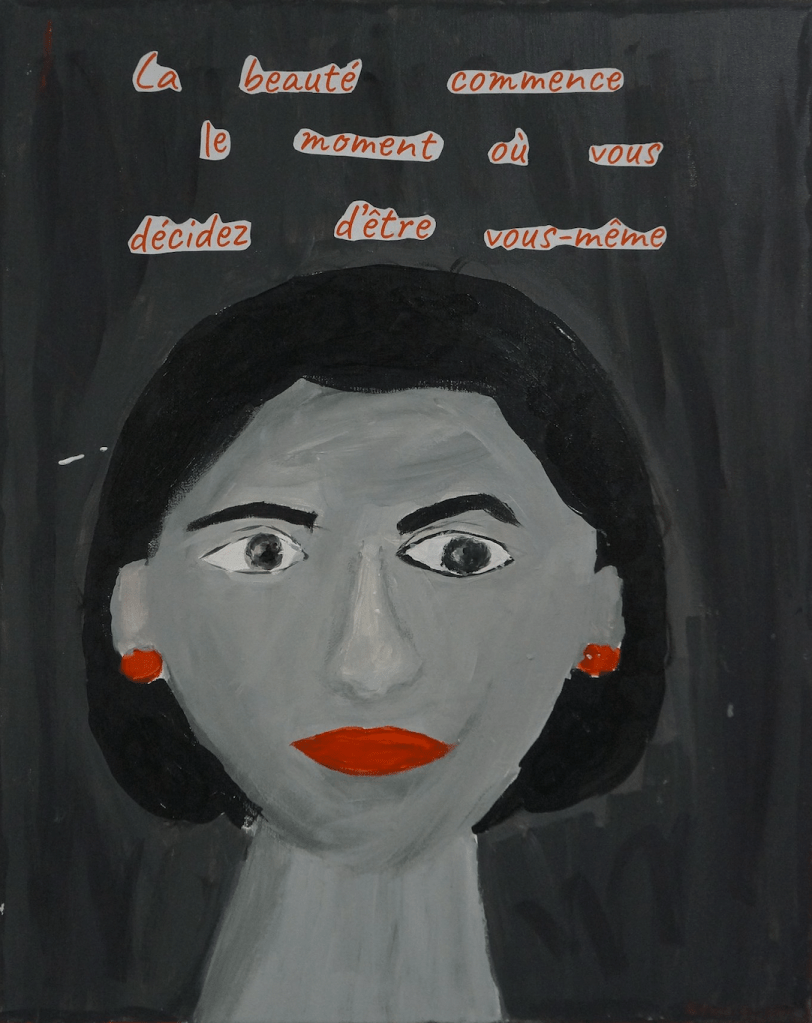
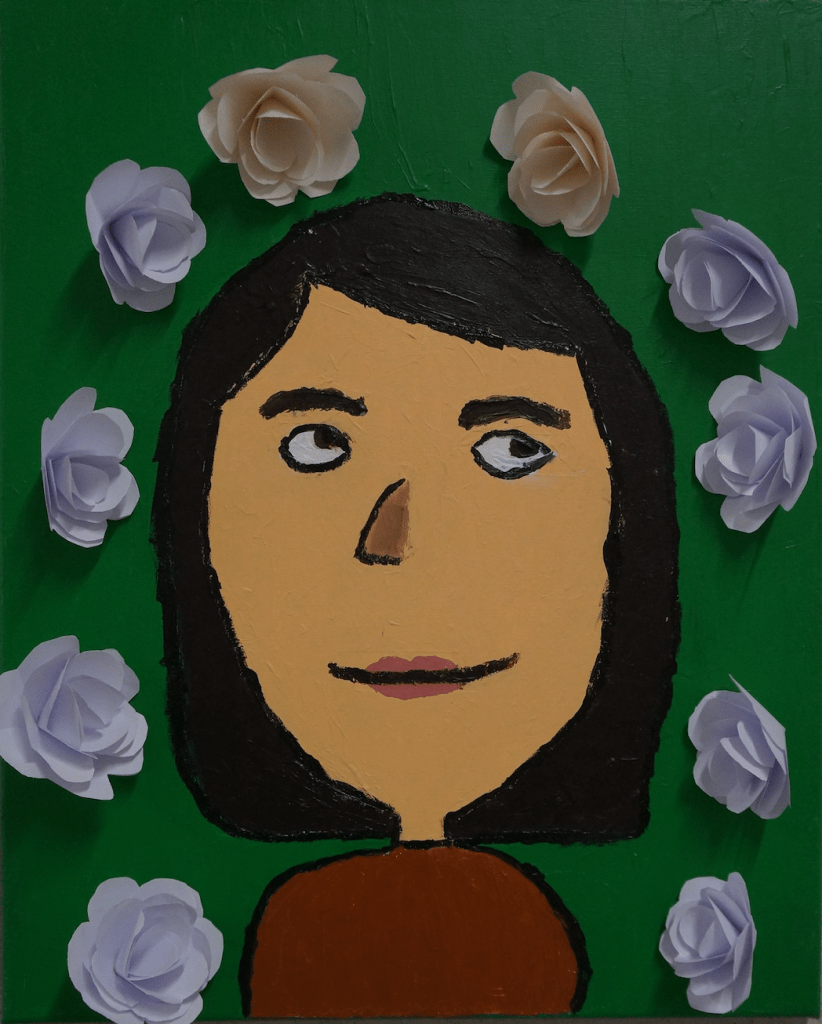
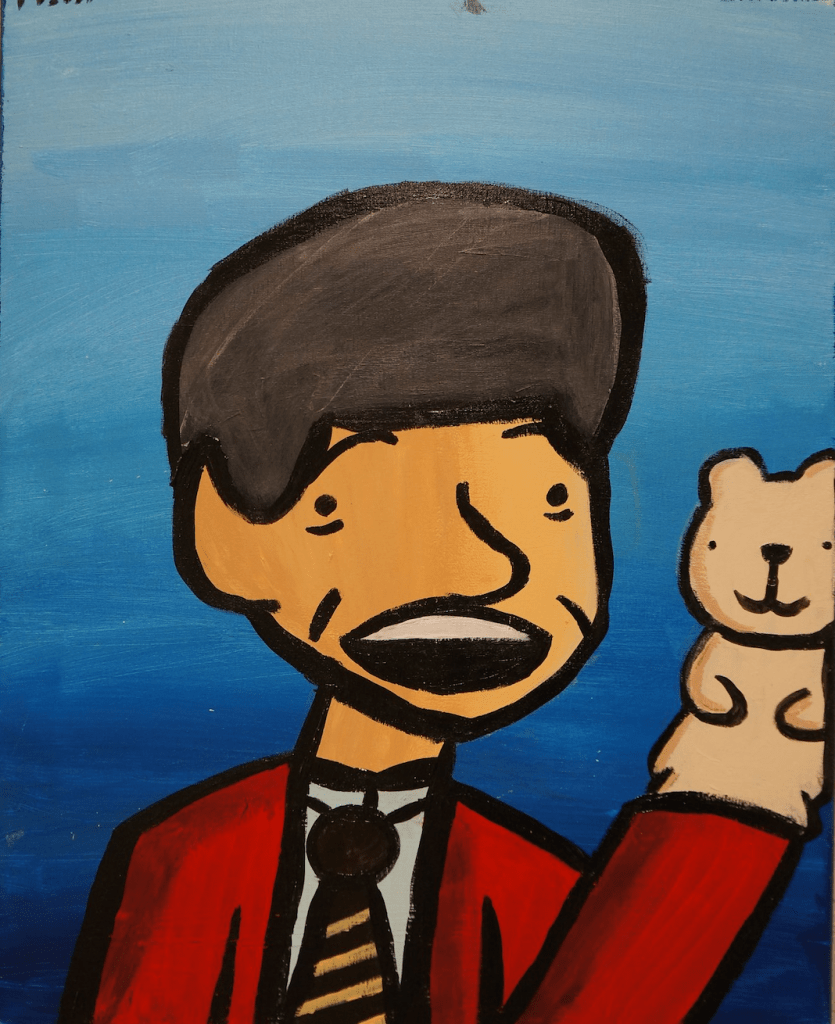
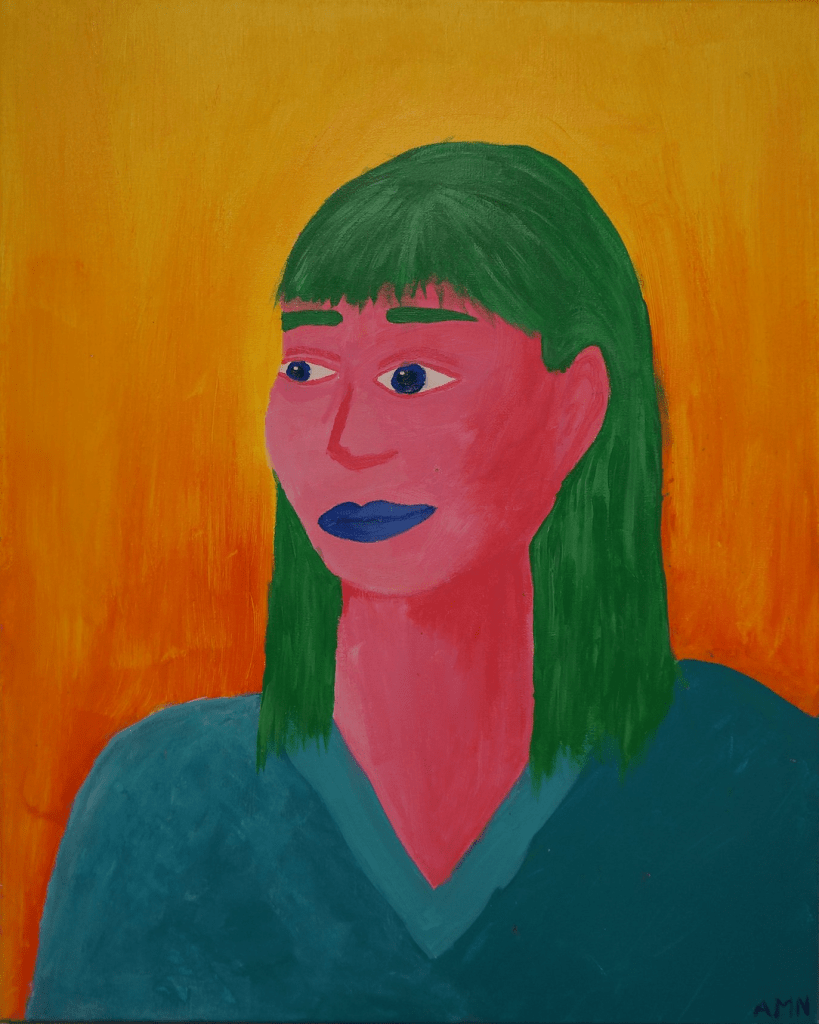
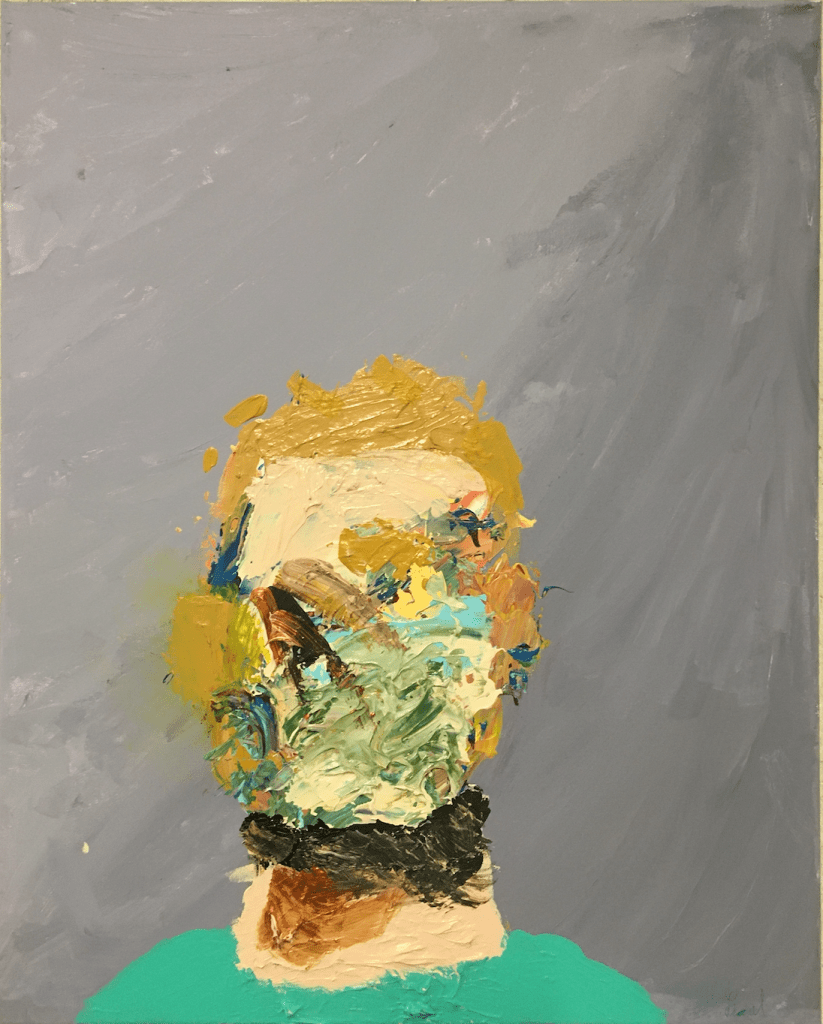
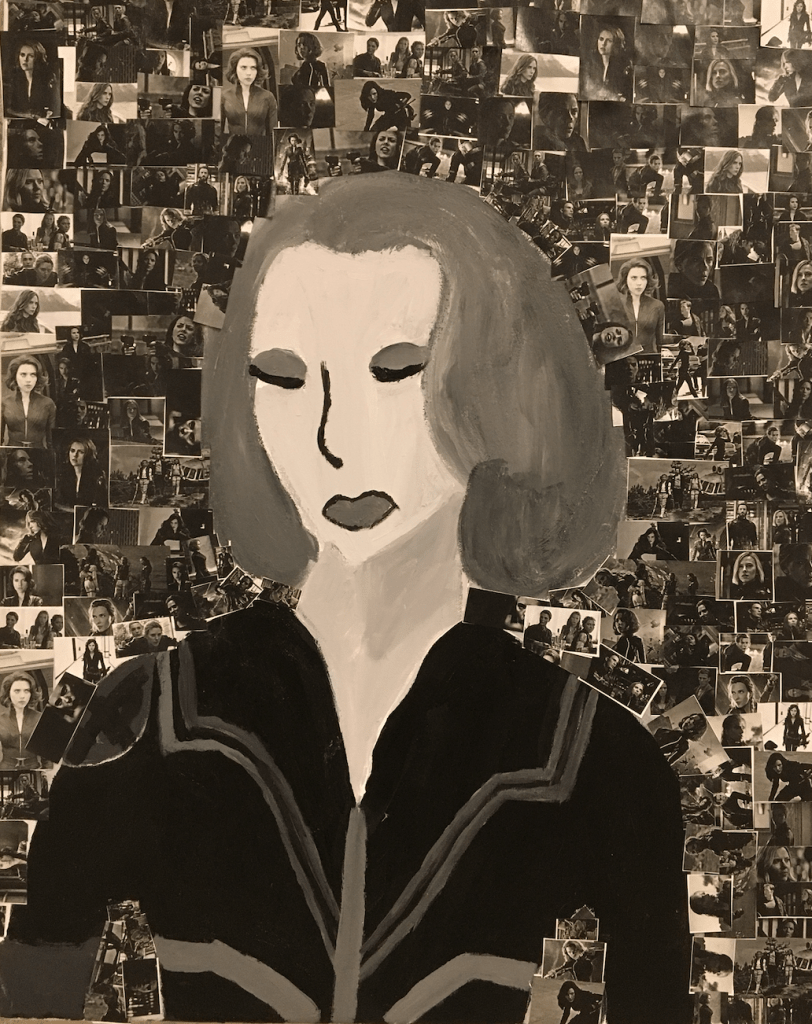
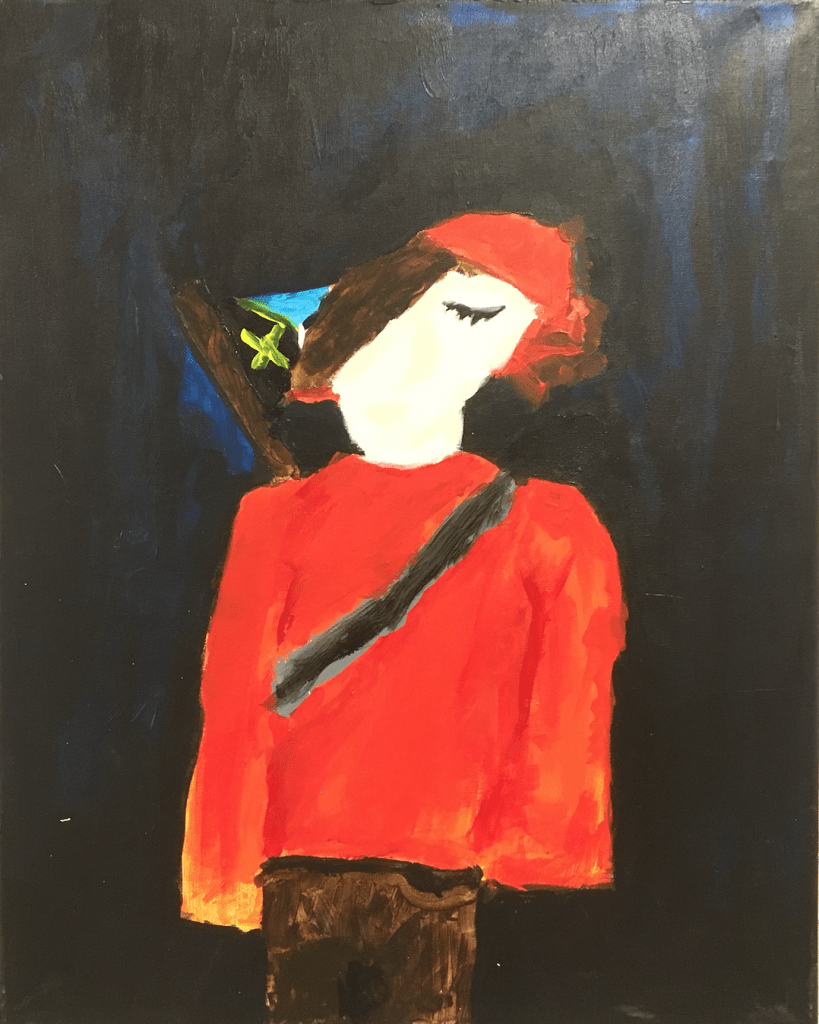
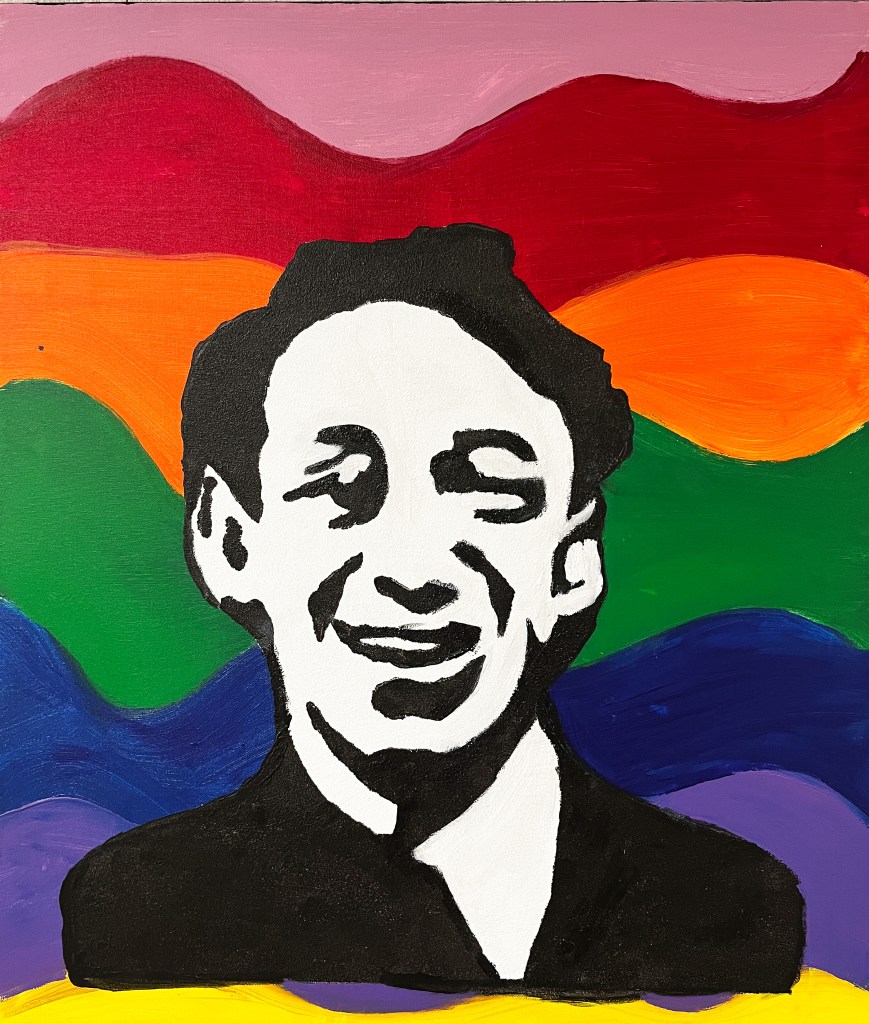
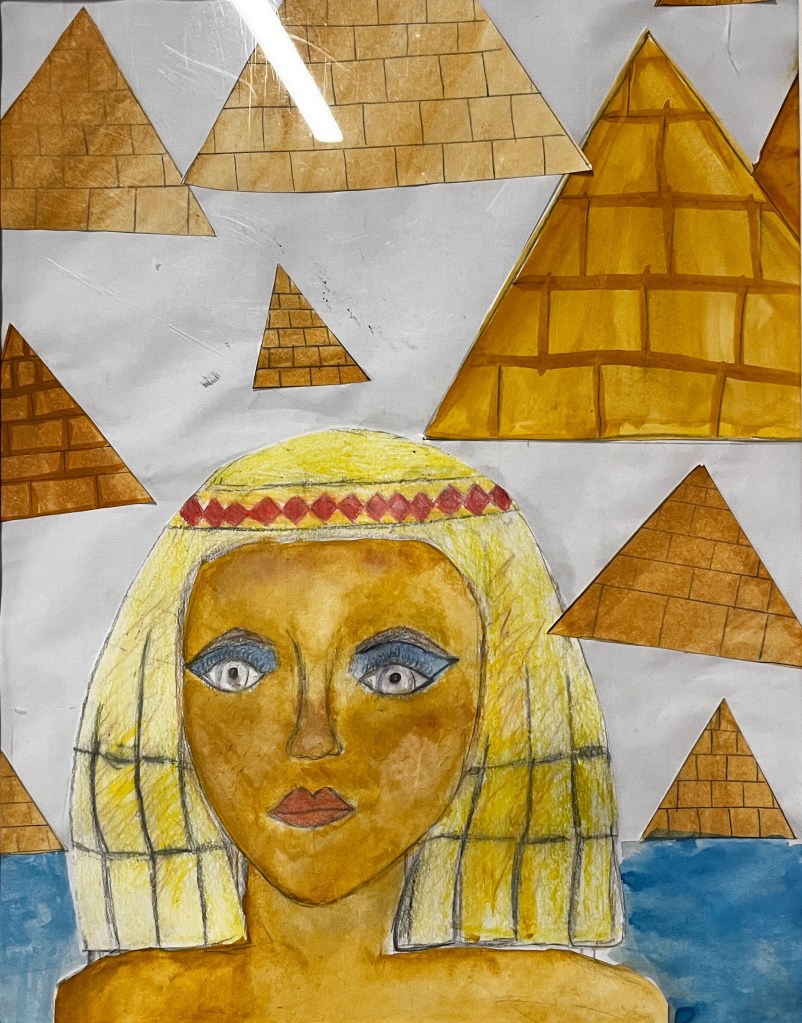
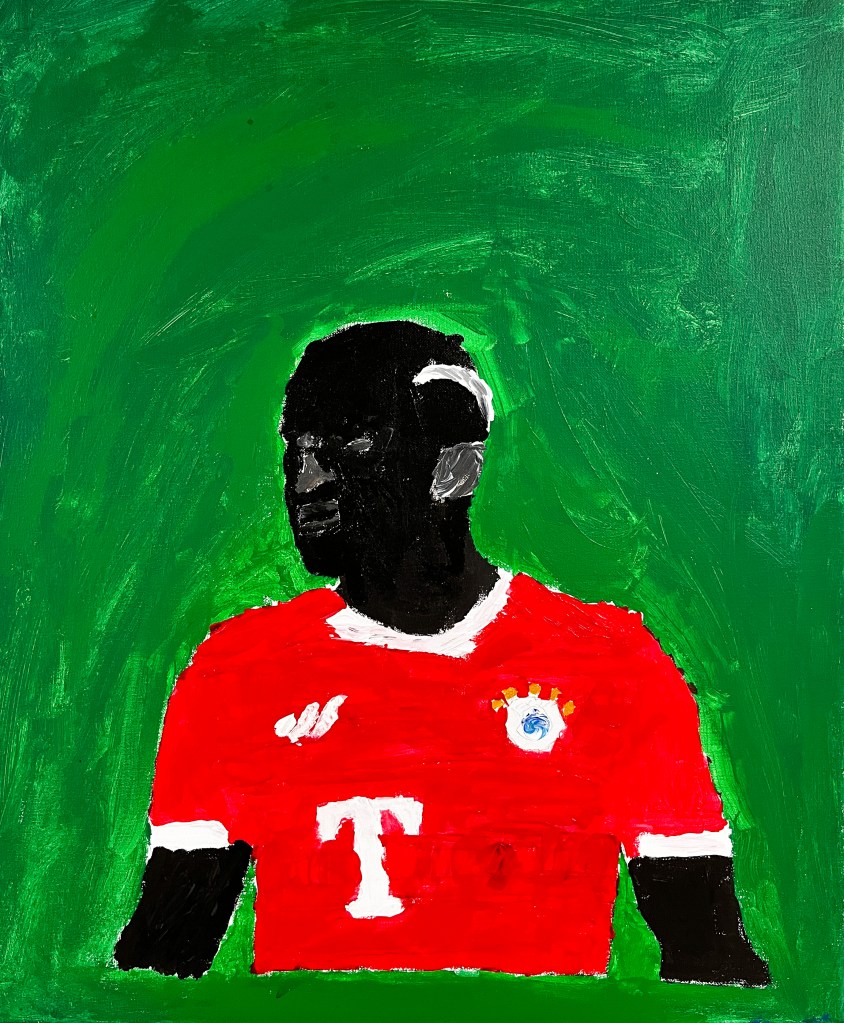
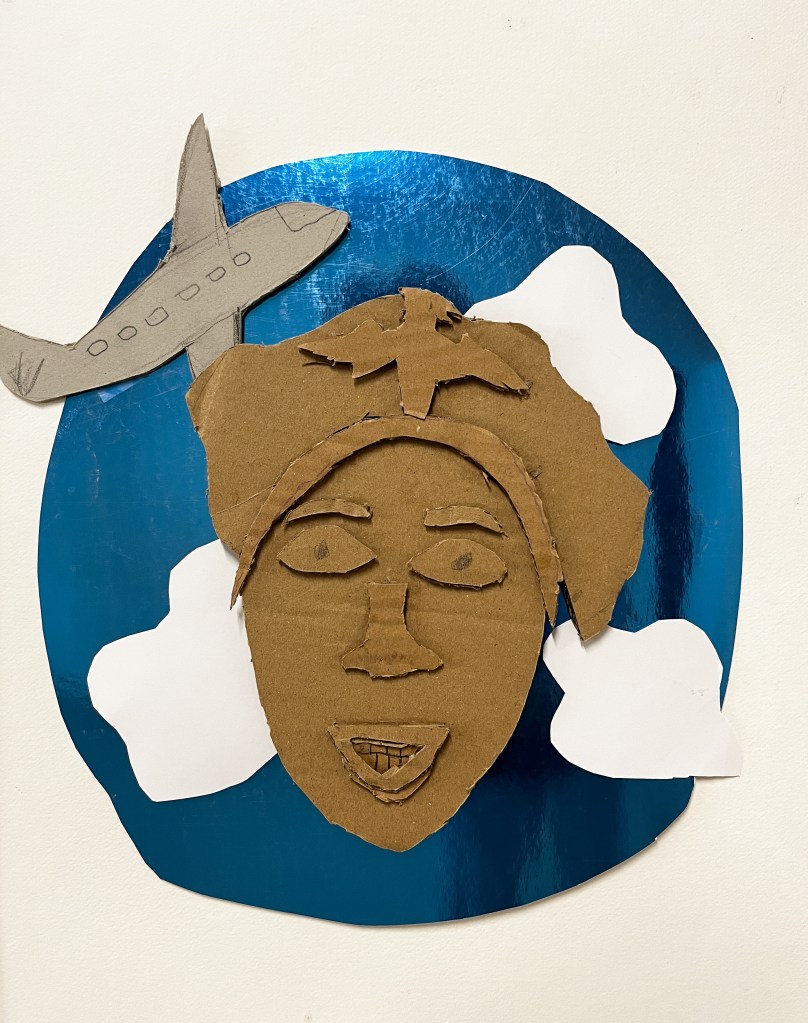
Students study drawing, painting, and sculpting portraits and a variety of artists. The focus is people who made a difference in our lives, some have never had recognition for the contributions they have made. Then students create a portrait of their chosen person in any media that suits their intention.
The main inspiration for this unit is the book Hidden Figures (2016), and the film with the same name which is loosely based on the book, about three female African-American mathematicians: Katherine Goble Johnson , Dorothy Vaughan, and Mary Jackson, who worked at NASA during the Space Race. The students discuss this book in their English class, so there is a loose collaboration between the subjects.
The goal is to next year make this collaboration more formal by having the students write about their chosen subject after research and present this together with their sketches and artworks.
GRASPS
GOAL: Creating work that represents under-presented people the artists, presented people and the audience make a new connection that is fair and inclusive
ROLE: Portrait artists
AUDIENCE: Our school community
SITUATION: Many people make a difference in our lives, even people we have never met or who might not be famous for it.
PRODUCT: Portrait of a person who makes a difference in our live
STANDARDS: A Investigating, B Developing, C Creating, D Reflecting
Materials
Students are free to use any media, any technique, any art making form they choose. They should always be able to explain and justify their choices.
In some years, all students want to paint, in other years students want to work more with collage or clay.
During the skills building phase students practice with pencils, watercolour – and acrylic paint, clay and cardboard.
How the unit evolves through student inquiry
Sometimes students choose to represent a person closer to home, such as a family member or even themselves! As long as the students can justify their choices, it is school appropriate, and doesn’t hurt others, they may choose any person as their subject.
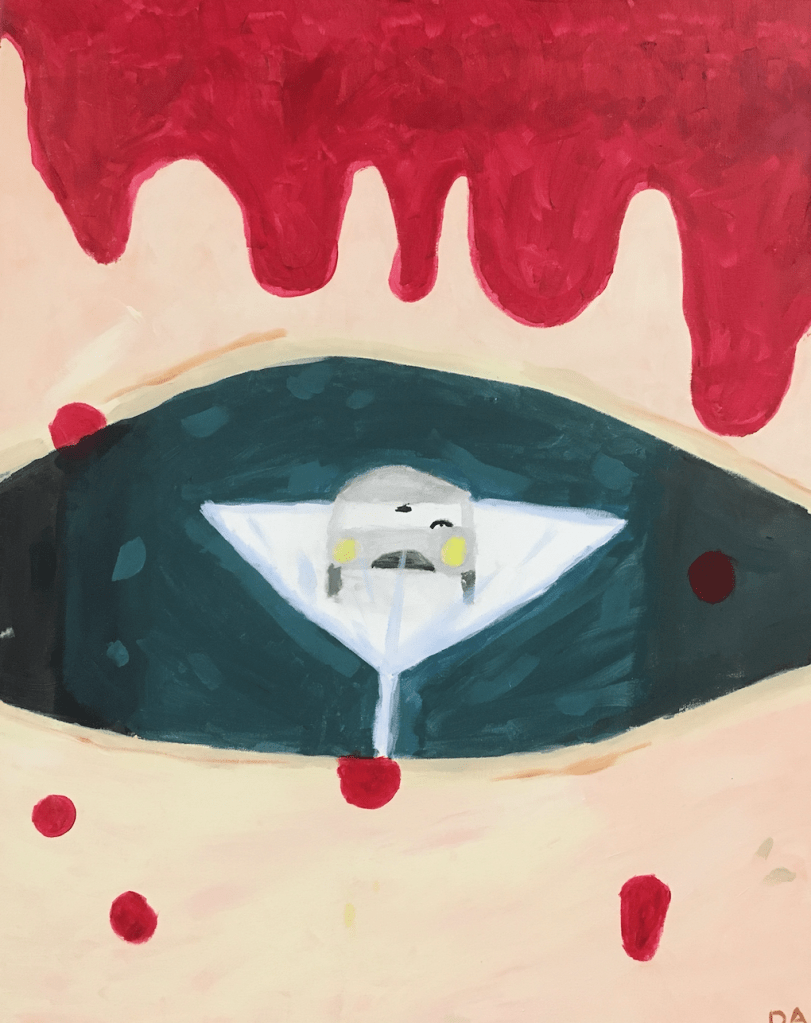
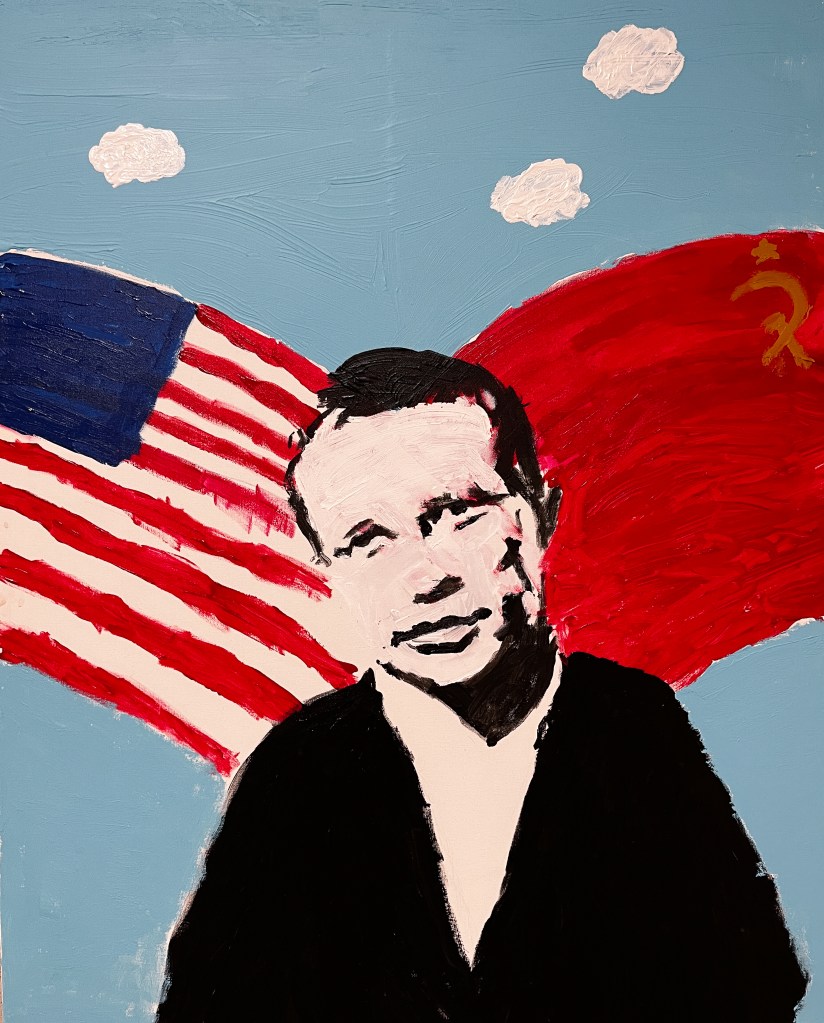
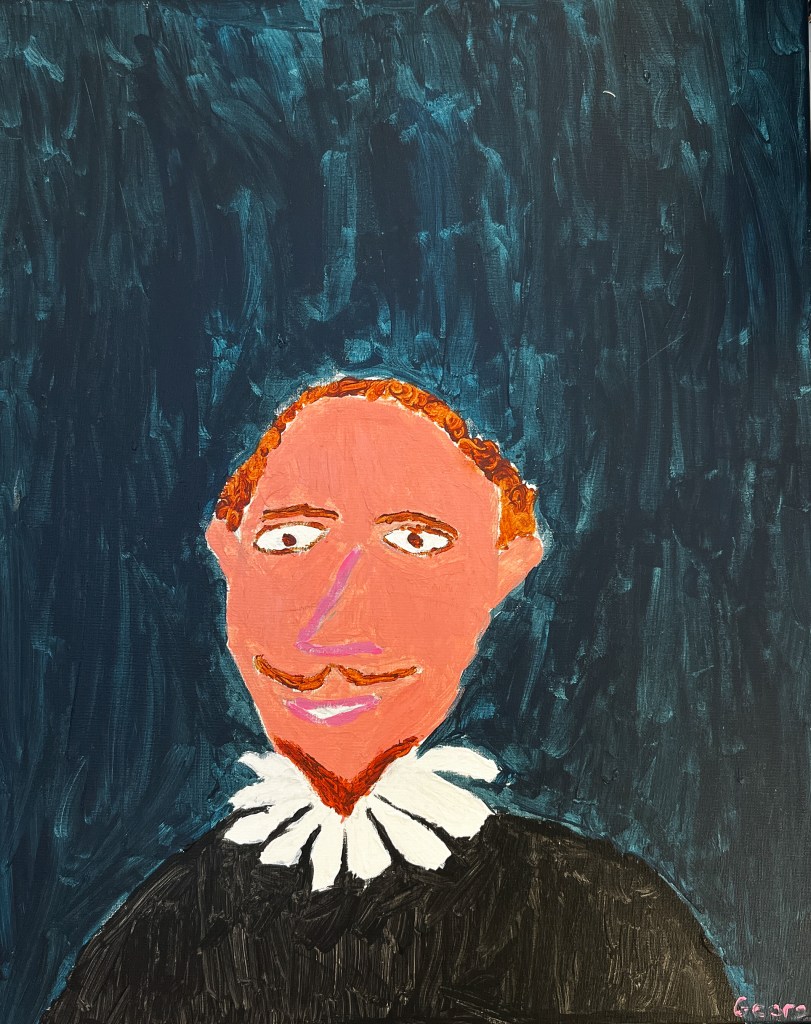
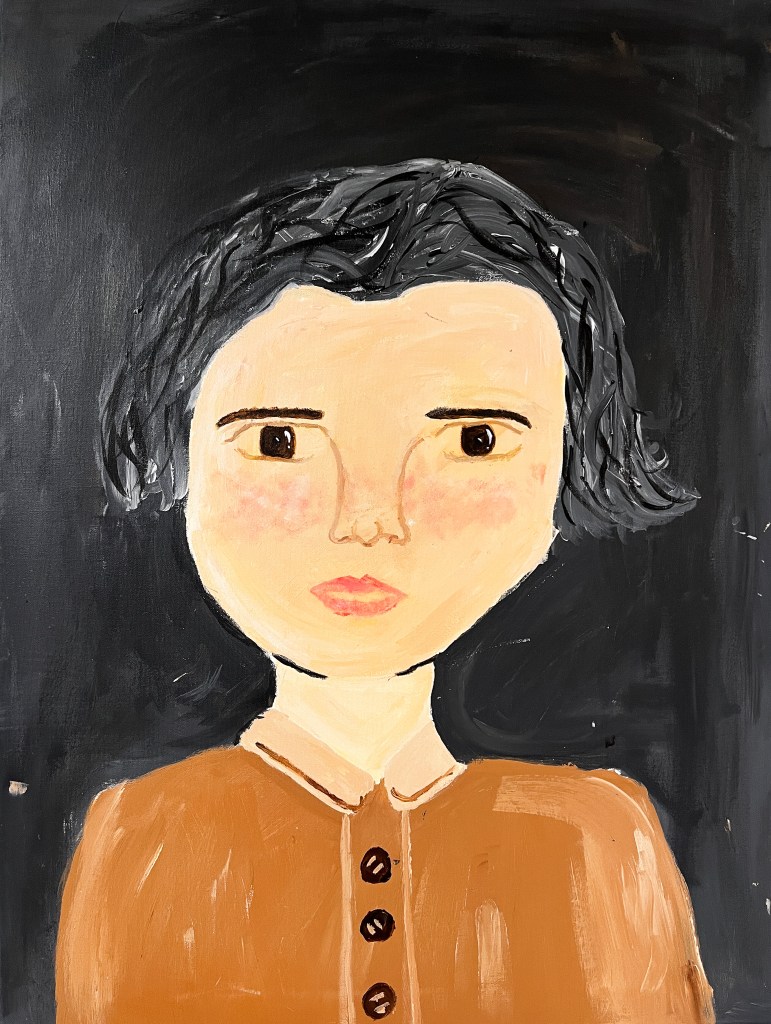
Although we practice and explore portraiture during the skills-building phase of the unit, students do not have to create a classic portrait and may work in any style that they feel best represents the person they are focussing on. This has resulted in some very abstract works where concepts and technique were at the forefront.
Provocations
I start each lesson with a provocation, this can be a video, an artwork, a question, a newspaper article, etc. Sometimes I change the provocation depending on student inquiry and what might be current.
Here are some I used this unit:
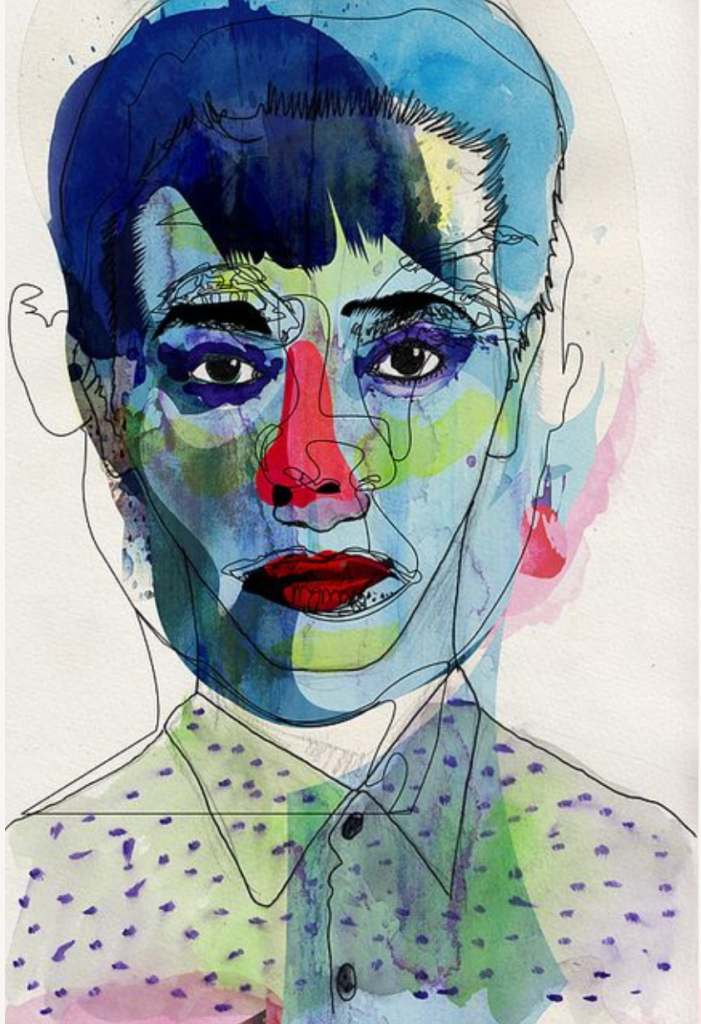
http://www.alvarotapia.com
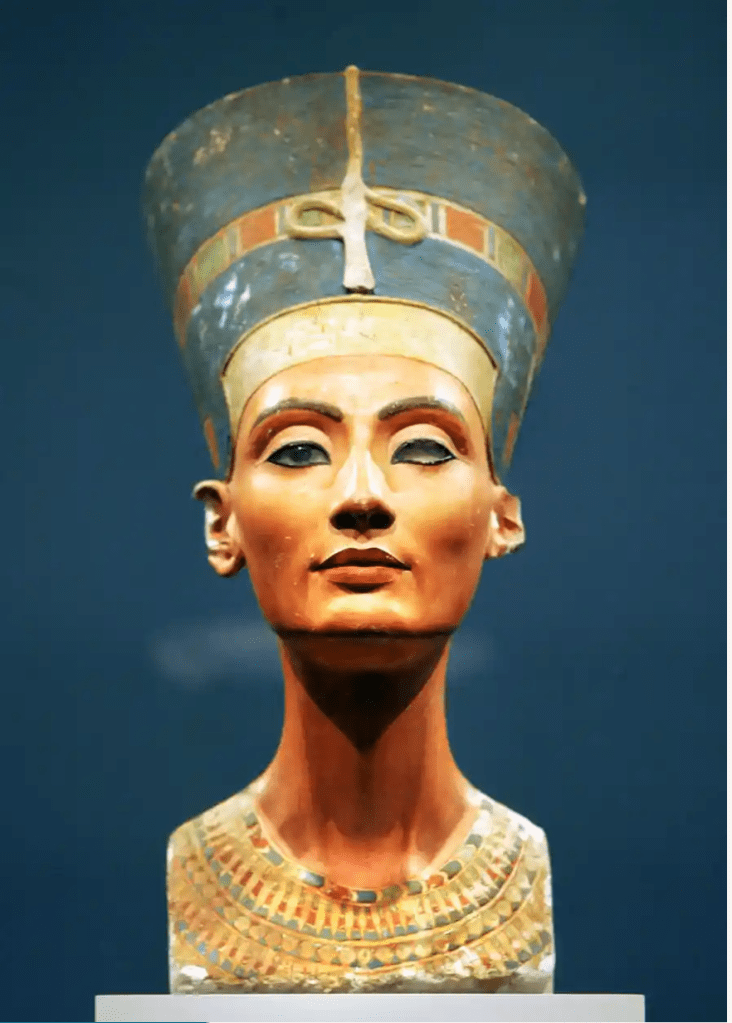
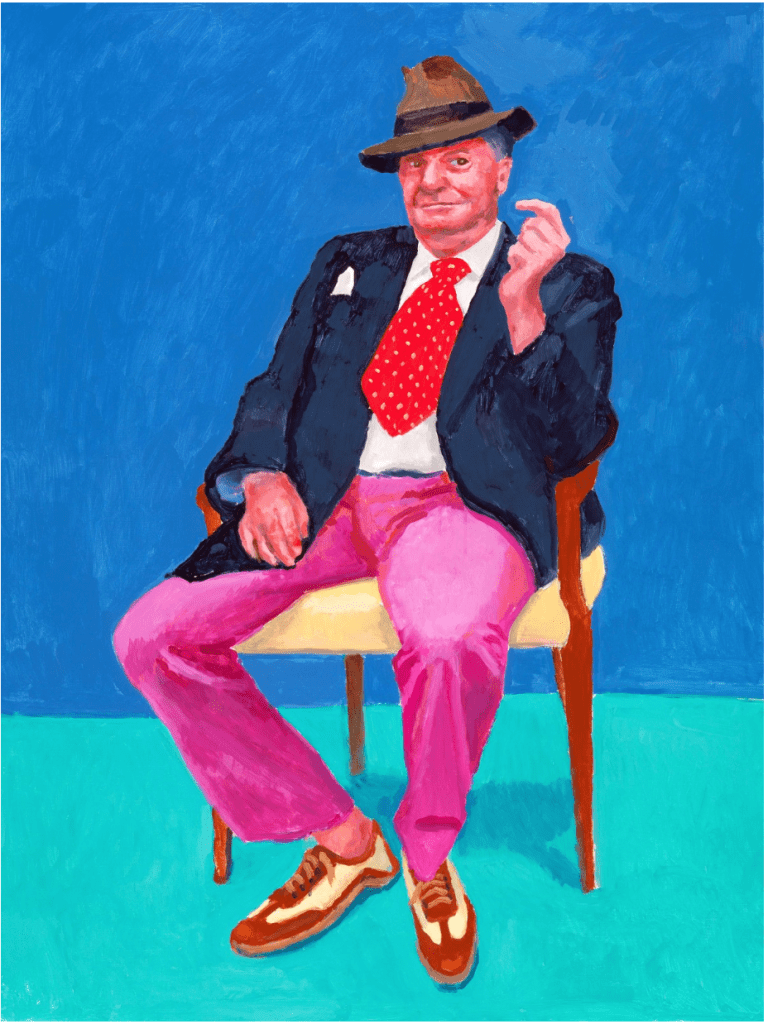
https://www.hockney.com/works/paintings/82-portraits
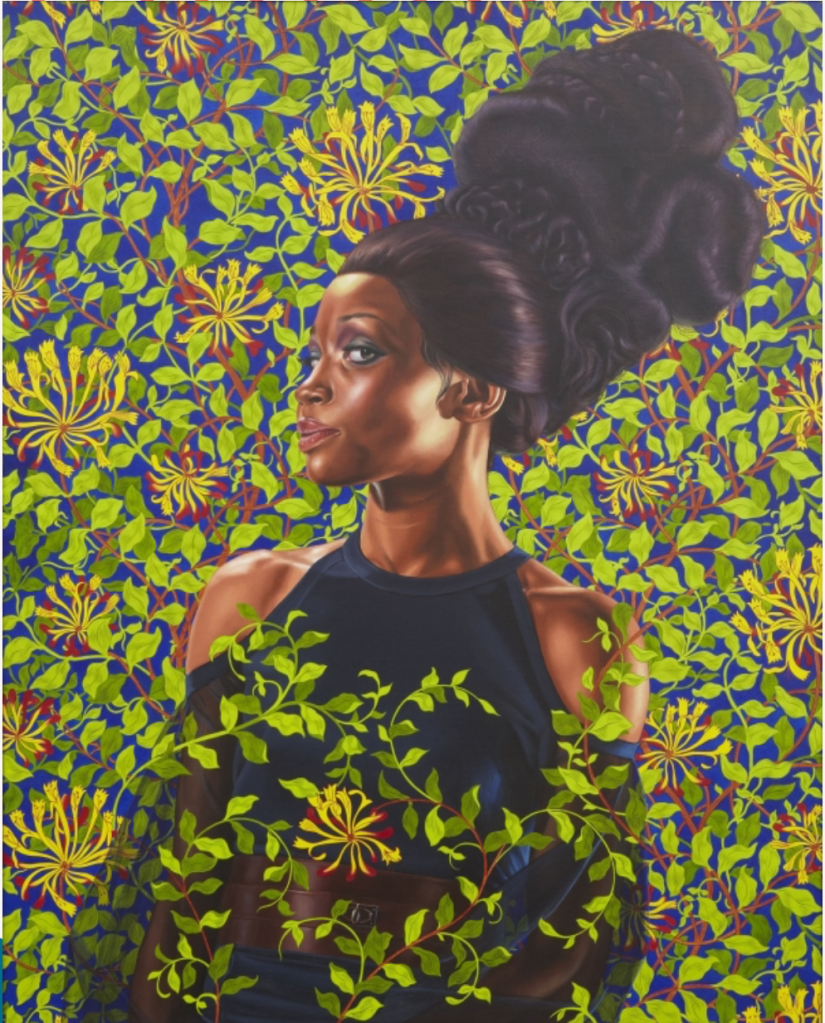
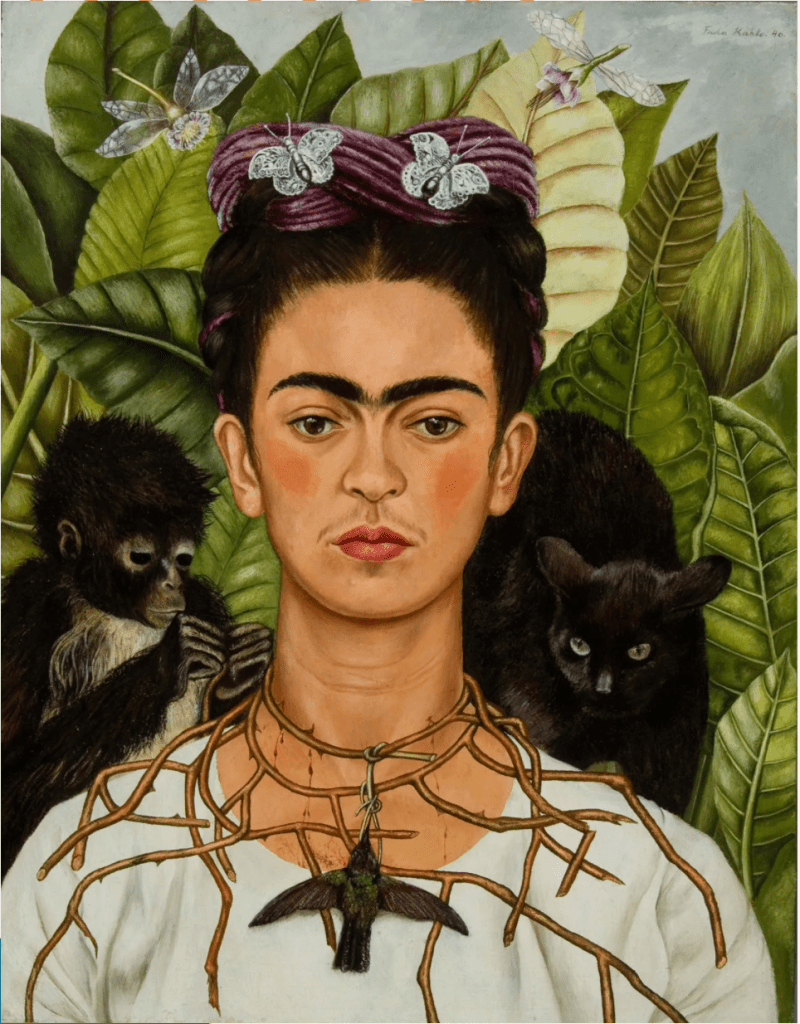
https://www.vogue.com/article/frida-kahlo-art-summer-style-inspiration
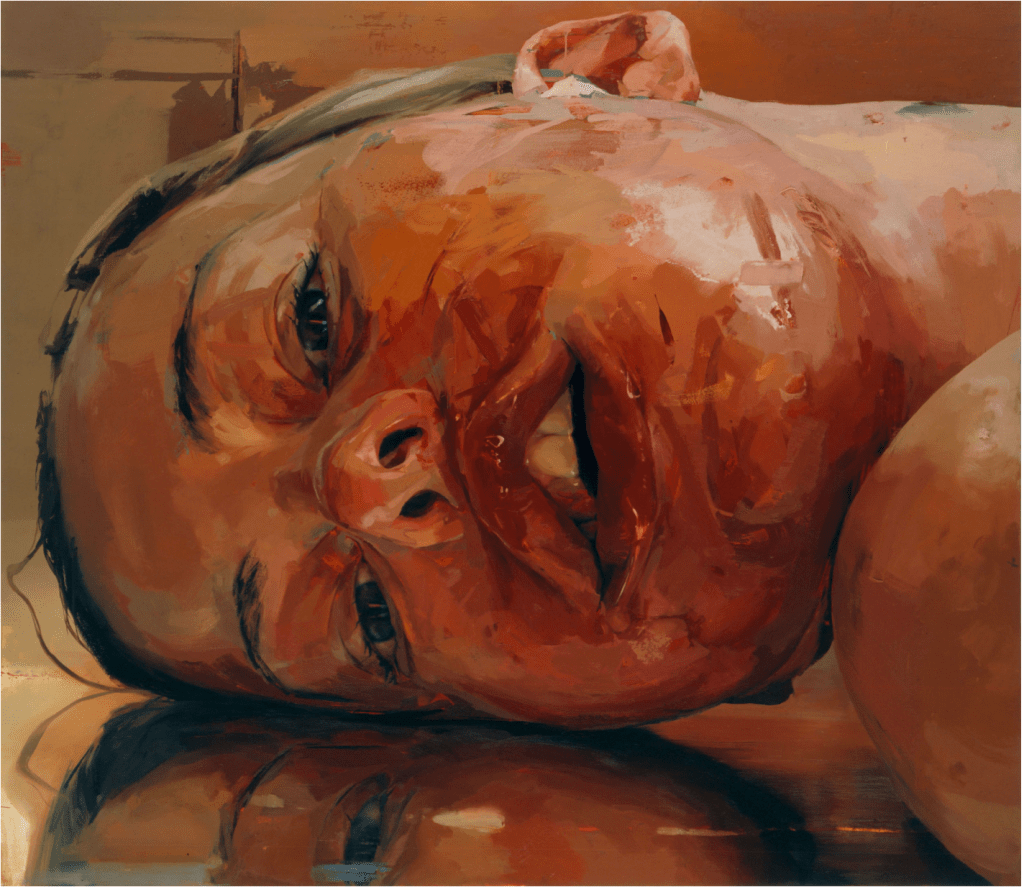
https://gagosian.com/artists/jenny-saville/
https://www.youtube.com/watch?v=MSBl-VQJOP8
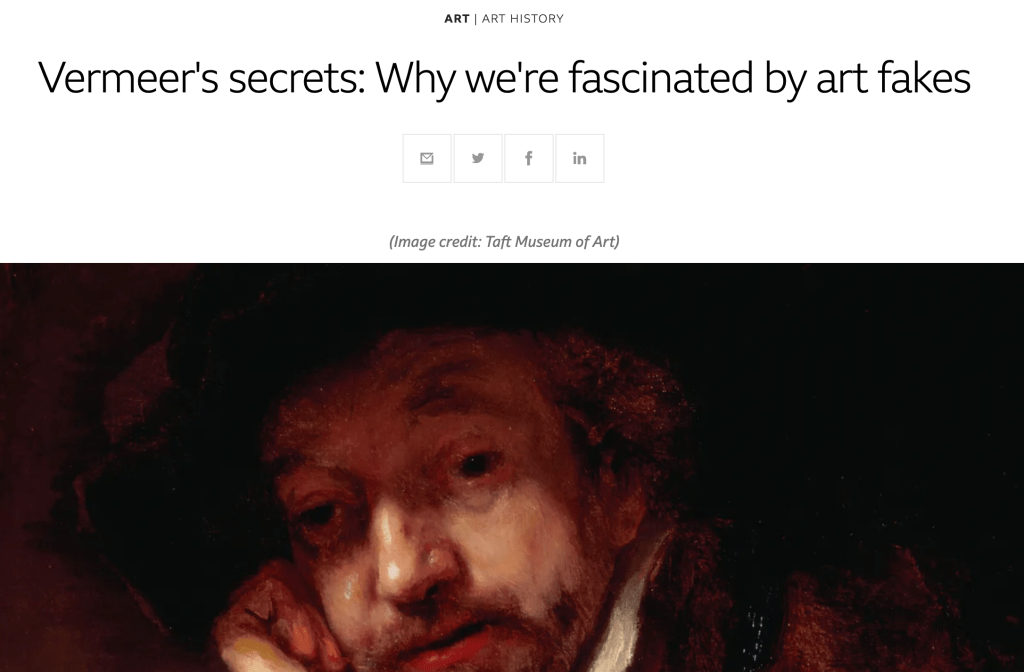
Criteria A: Investigating
At the end of year 1/Novice stage, students should be able to:
i. investigate a movement(s) or genre(s) in their chosen arts discipline, related to the statement of Inquiry
ii. describe an artwork or performance from the chosen movement(s) or genre(s).
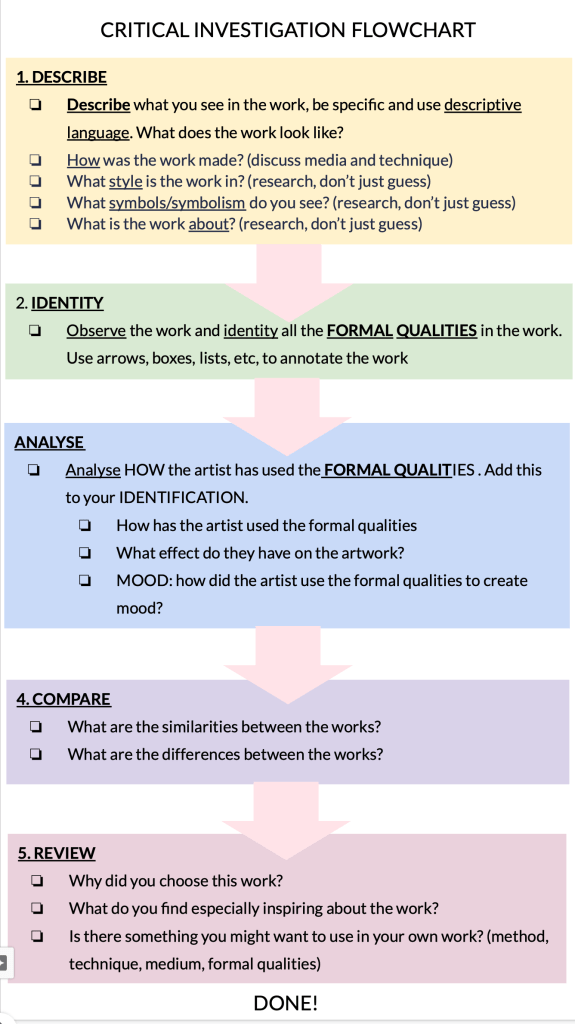
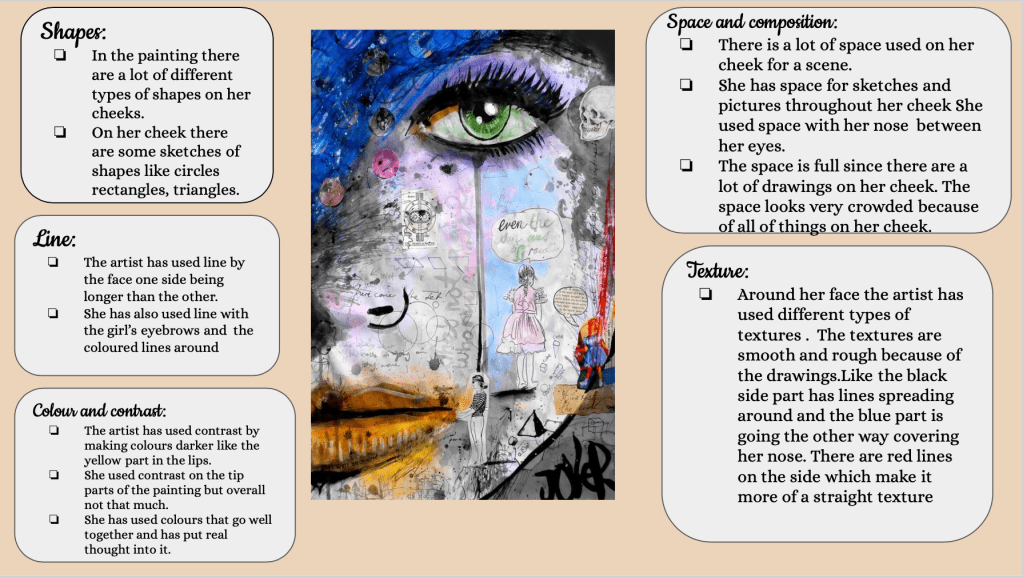
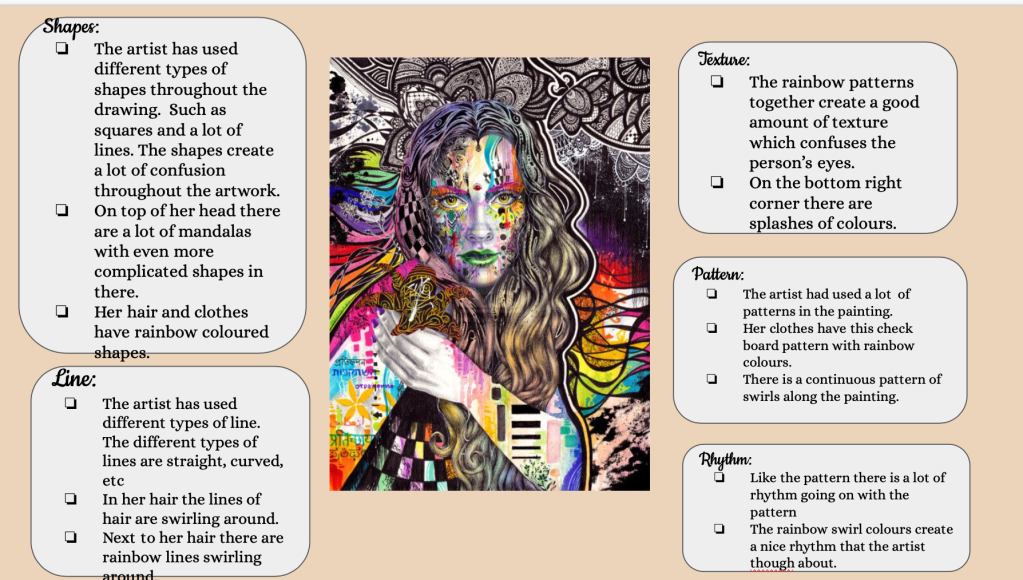
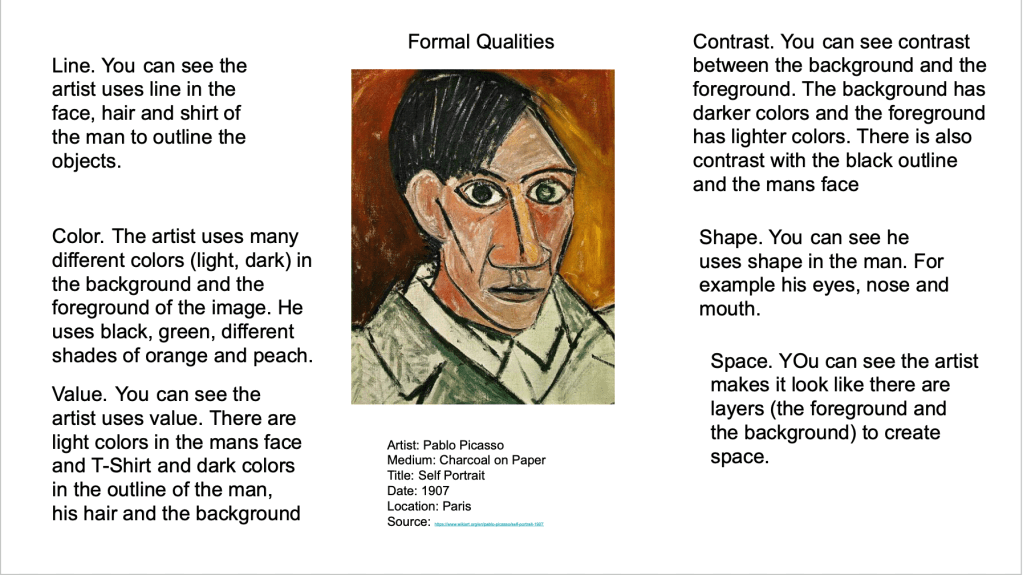
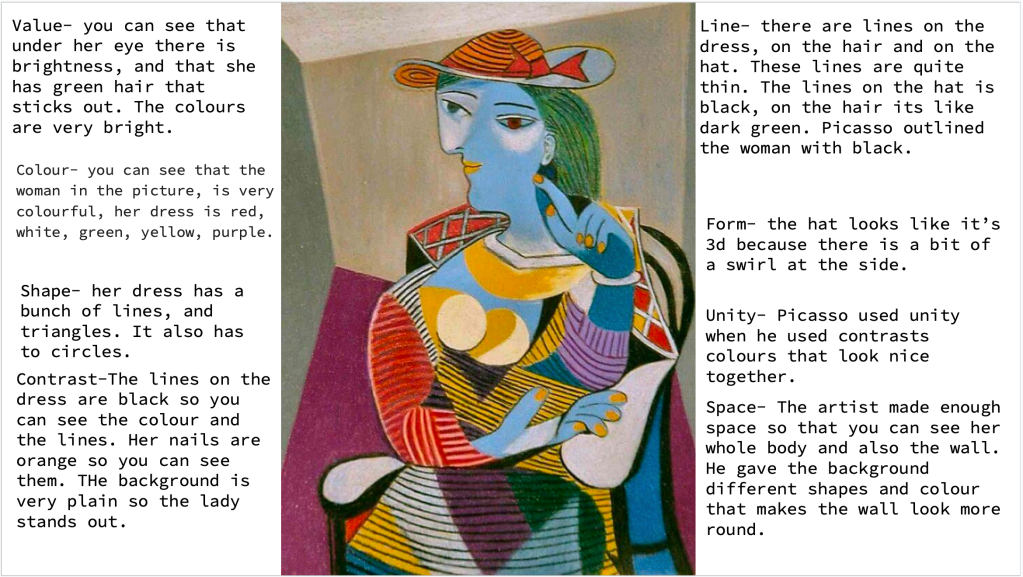
Students choose two portrait artworks by different artists for their investigation and follow these steps:
- Describe the artworks
- Describe the style, symbols, interpretation
- Identity and describe the relevant formal qualities
- Compare the two works
- Review their research by discussing what they found inspiring about the works and what they might use in their own work
Most students do this in a google slide, but some choose to do it in their process journal (sketchbook) or on a poster. Which ever the student feels most comfortable with and how they prefer to work.
I also give students the option of creating a video or making voice recordings which they can embed in google slides.
Some EAL learners find it easier to write in their preferred language first and then translate it using a dictionary or translation tool. For this criteria I am looking for the student’s understanding and careful observation of the works and formal qualities, in which ever format or language might work best for the student.
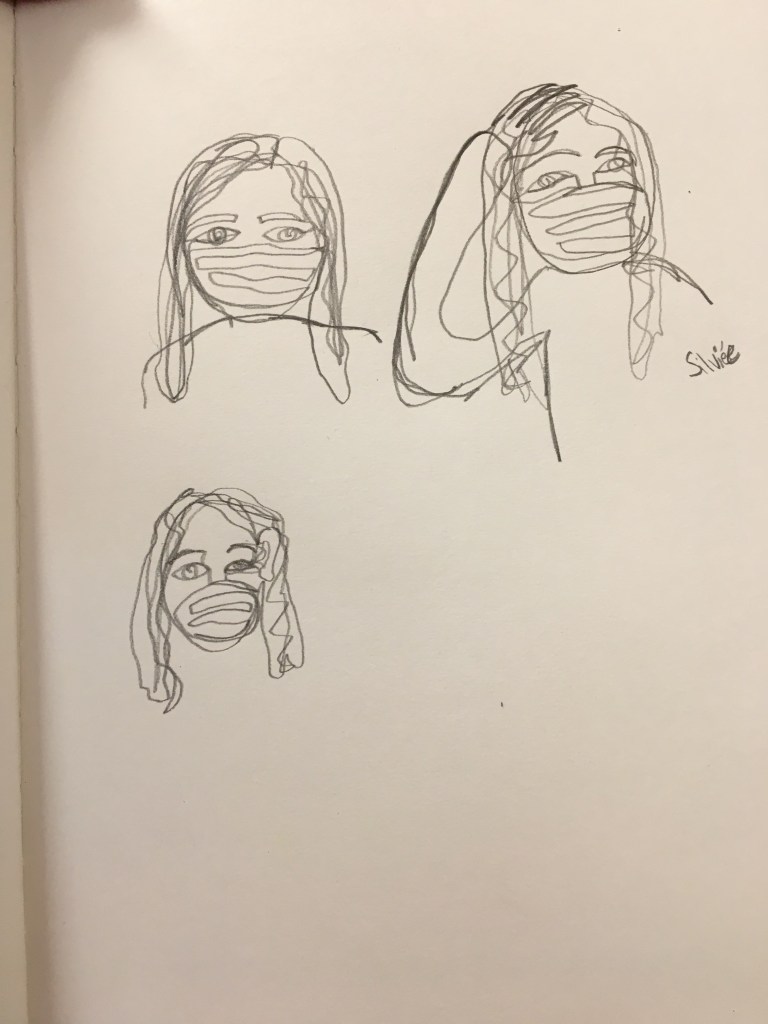
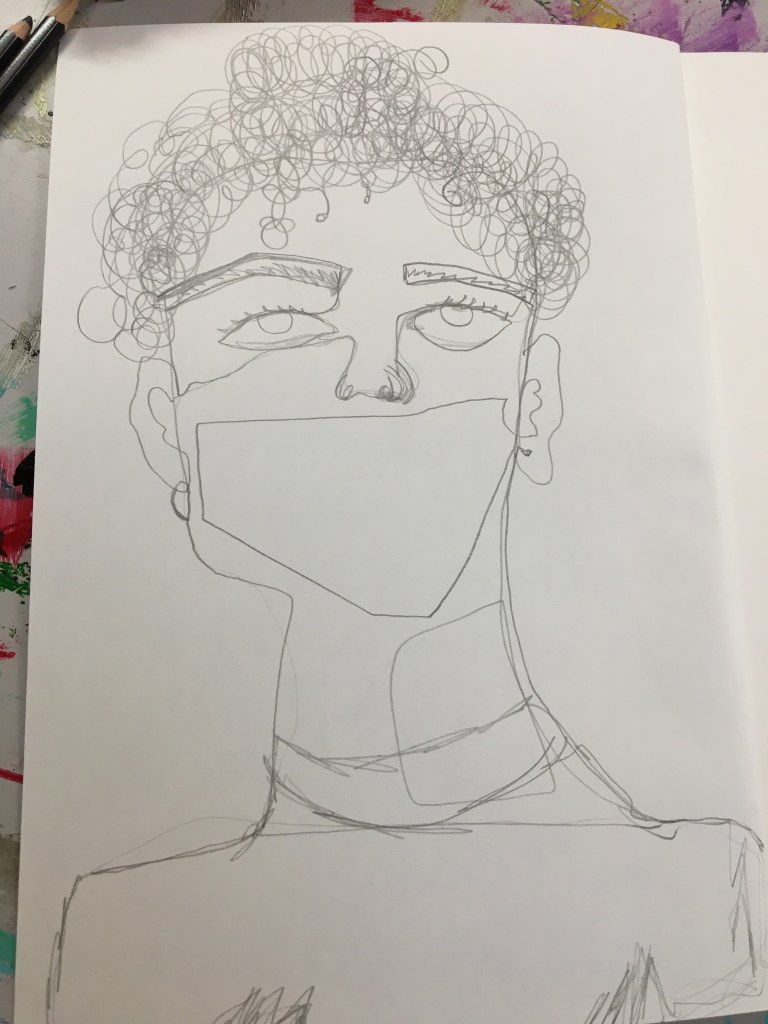
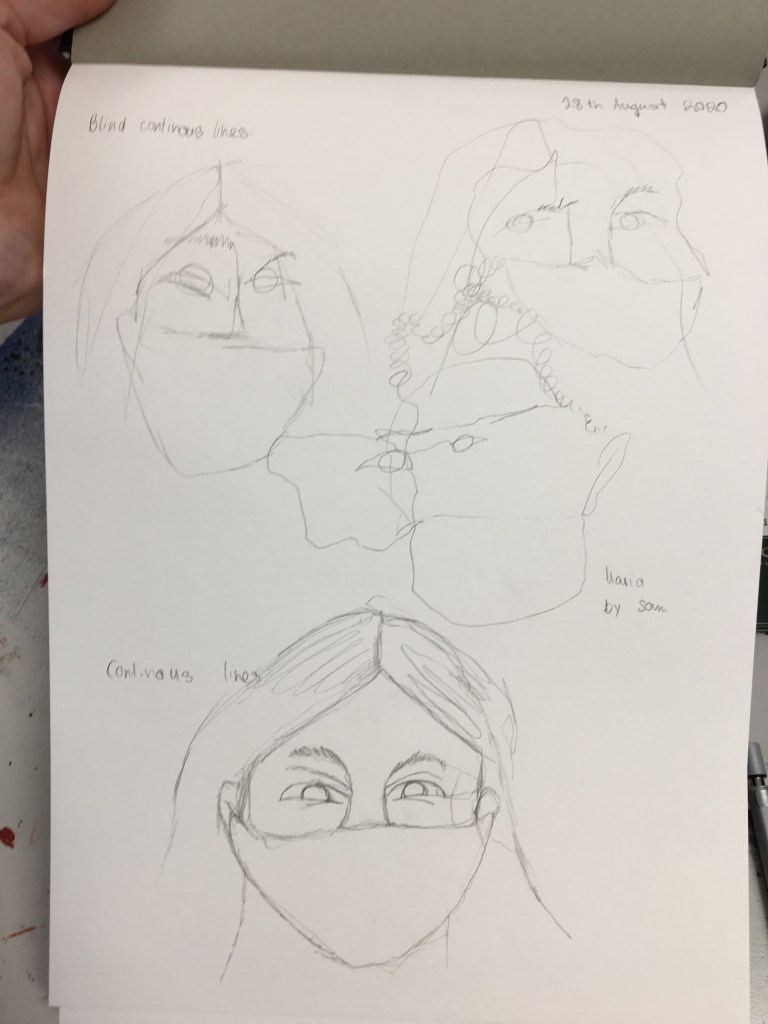
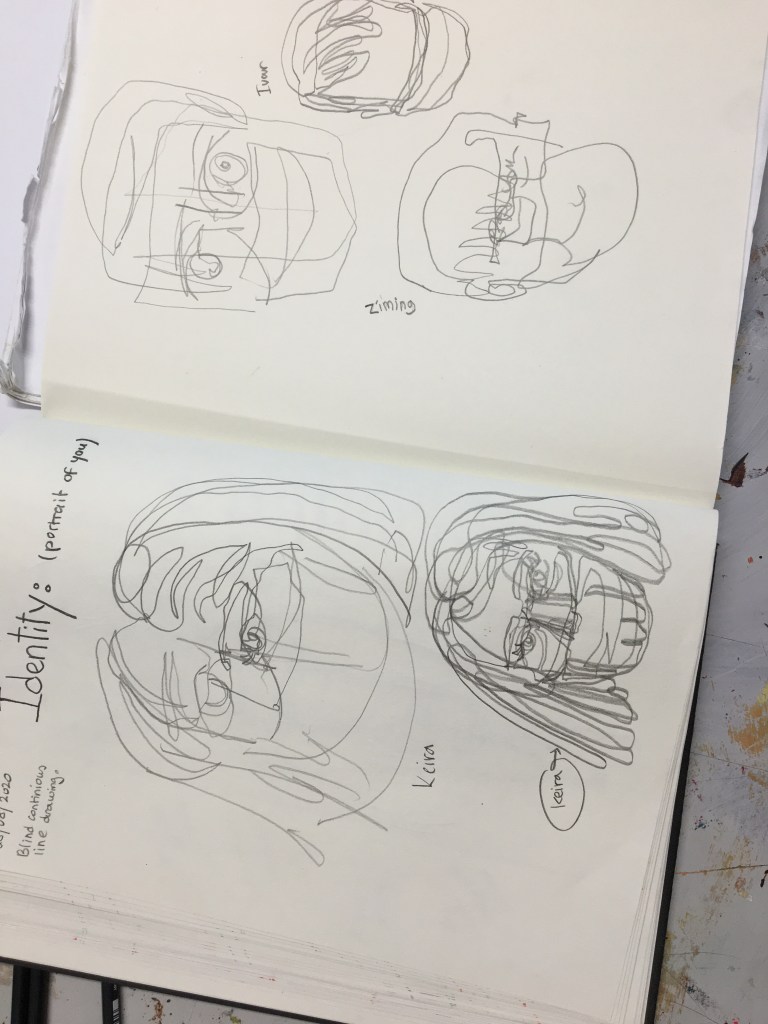
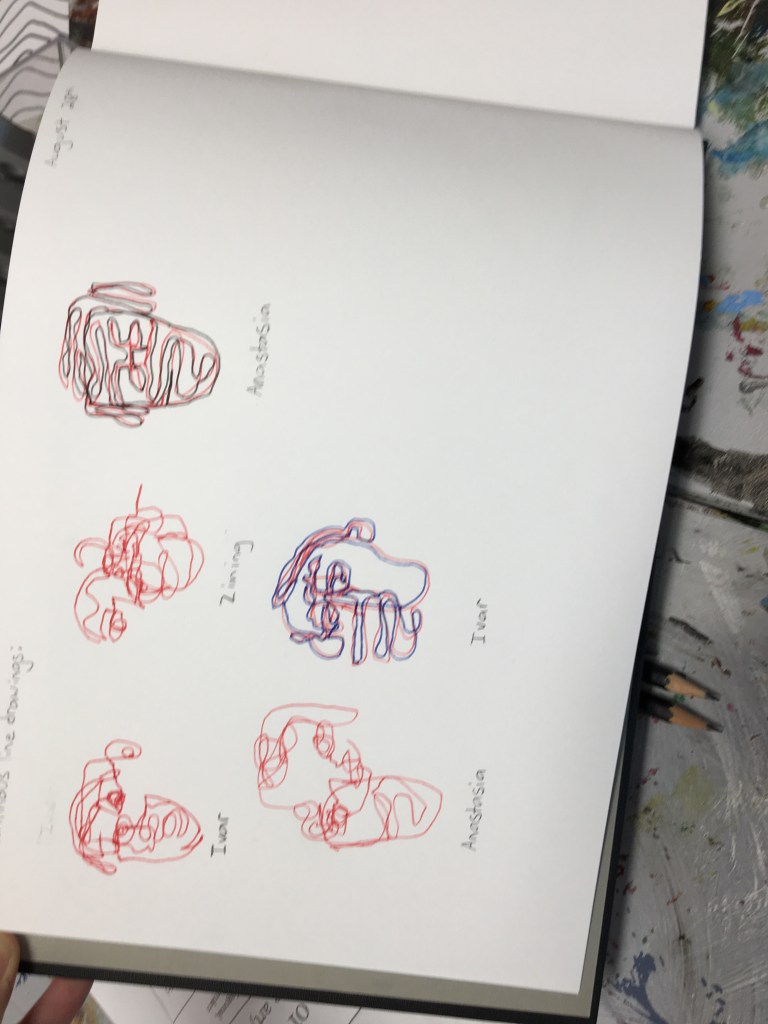
Practice Exercise: (Blind) Continuous line portraits

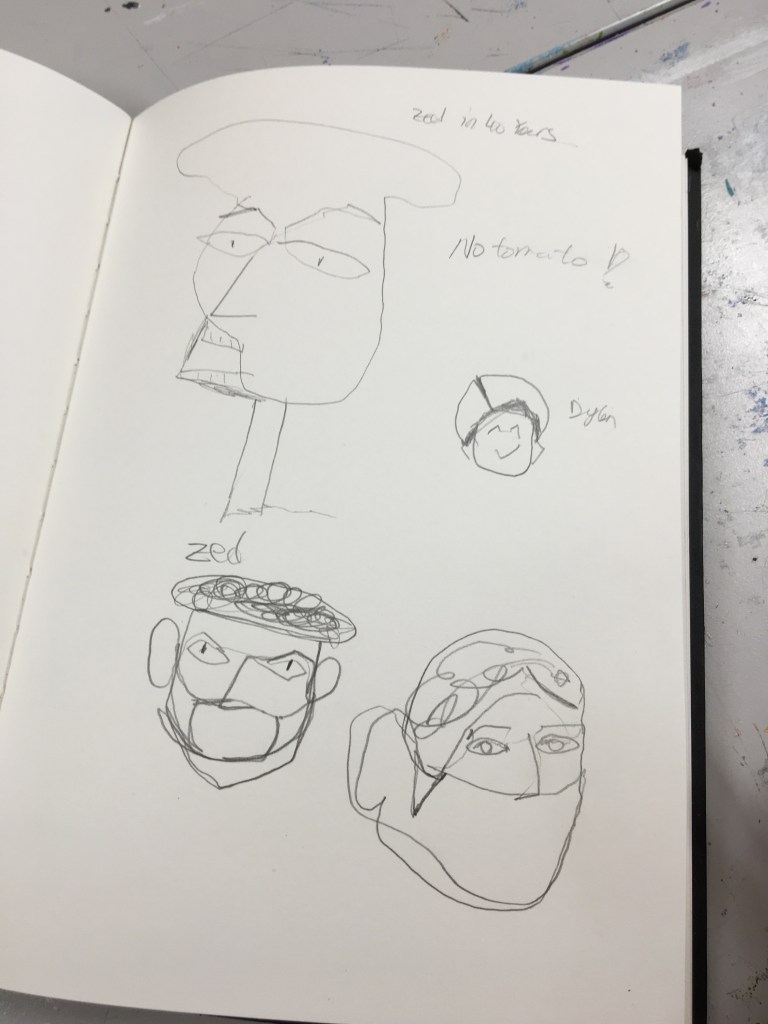
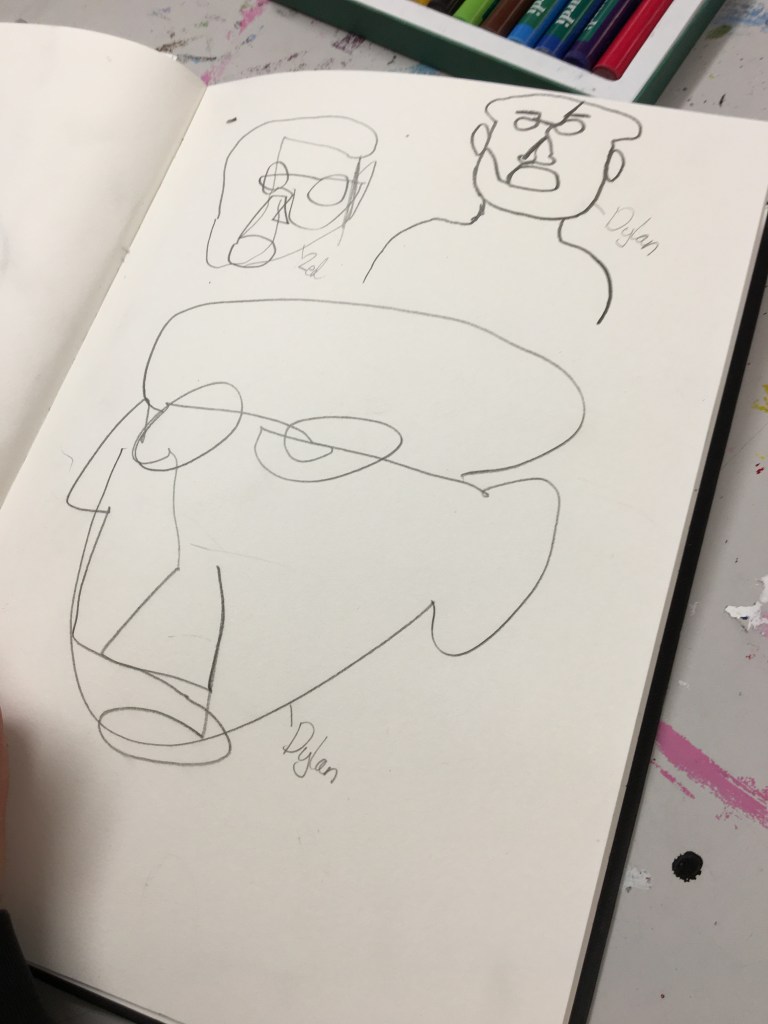



Practice Exercise: Negative Portraits
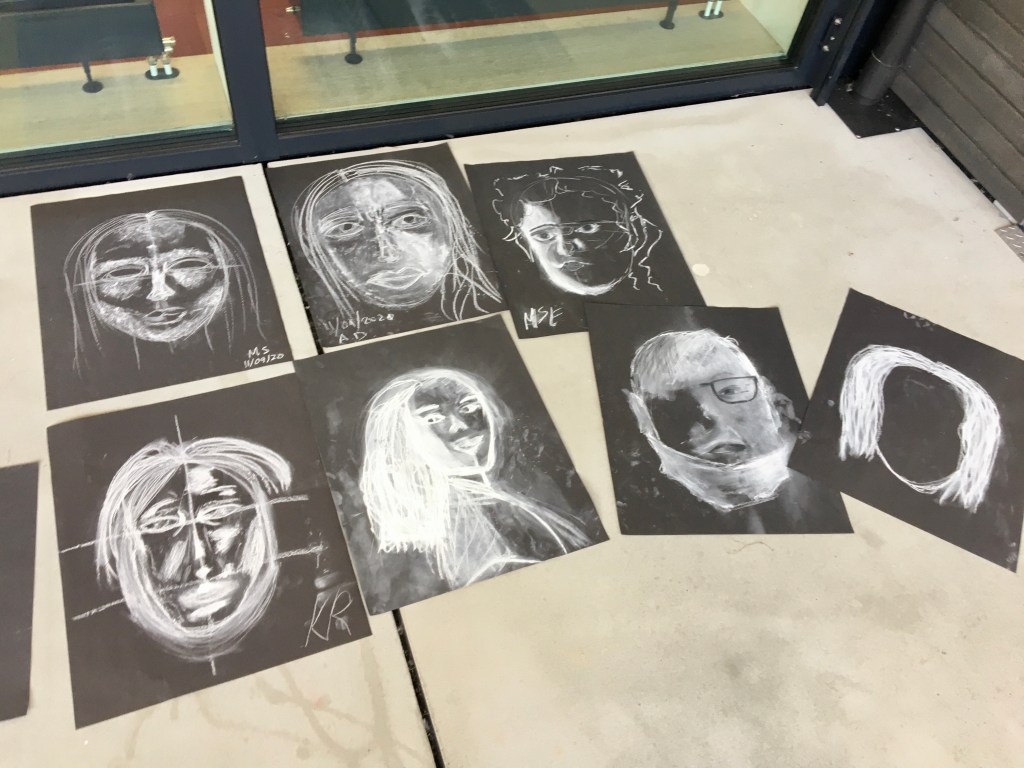
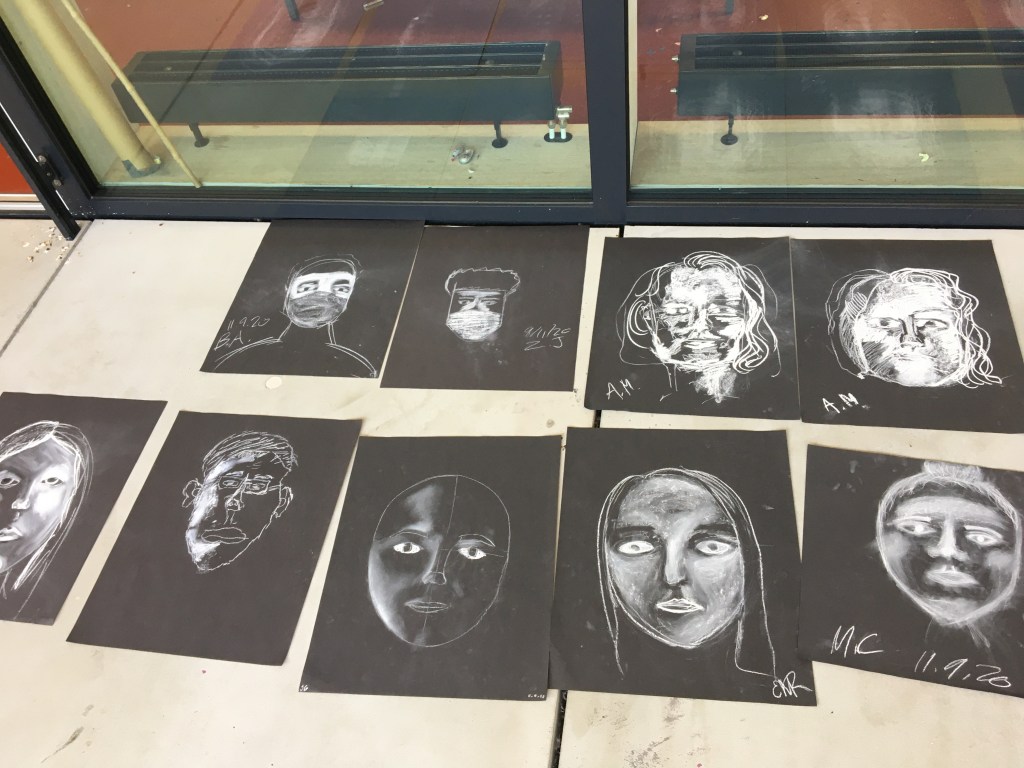
Practice Exercise: Inky Shadows
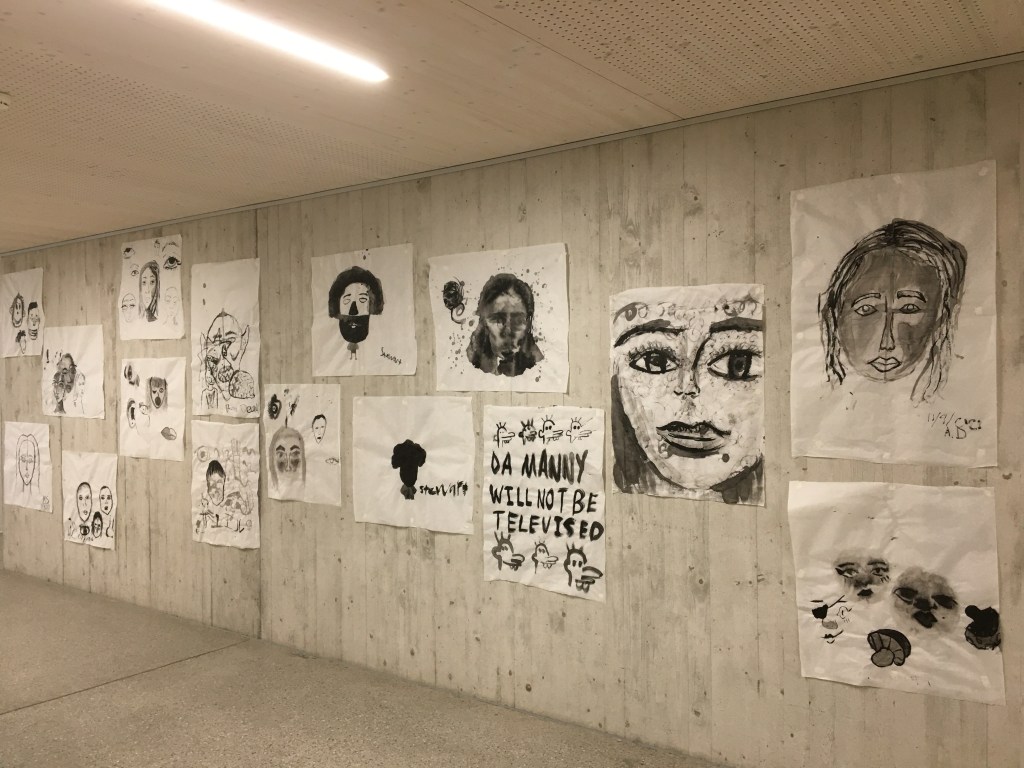
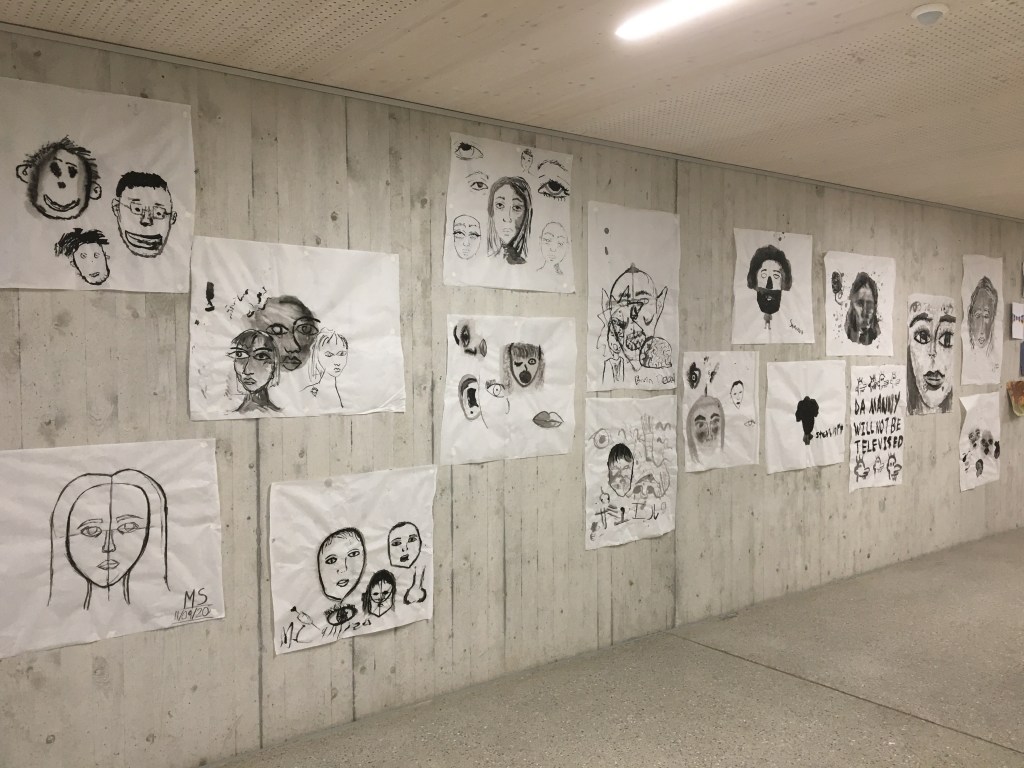
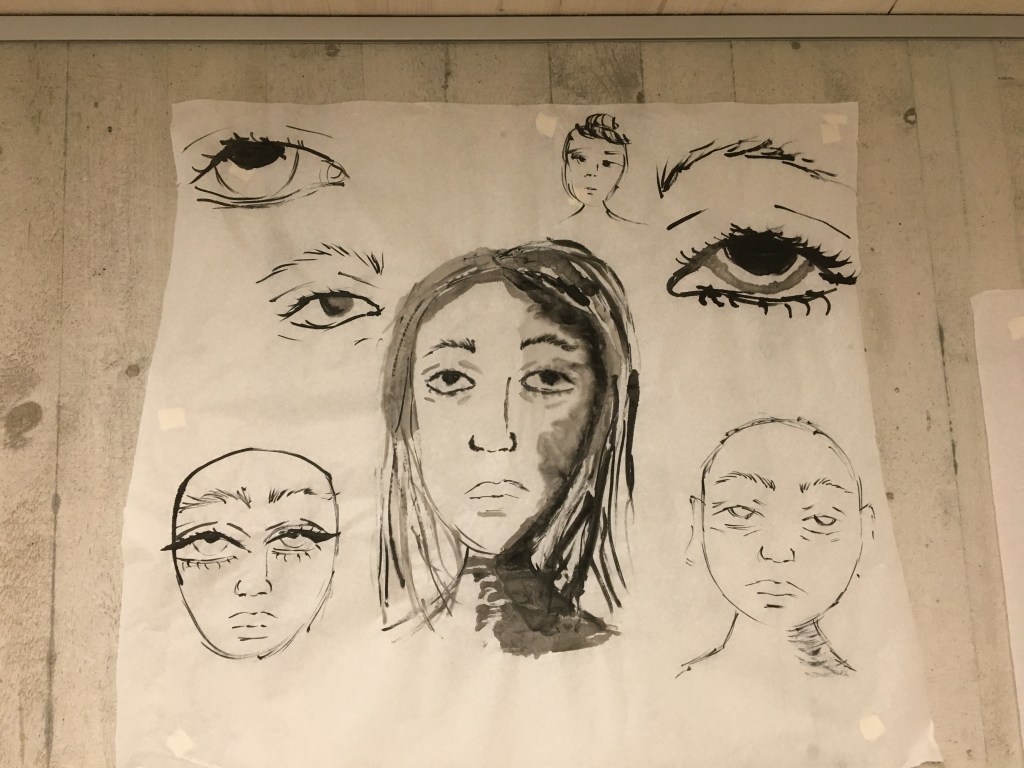

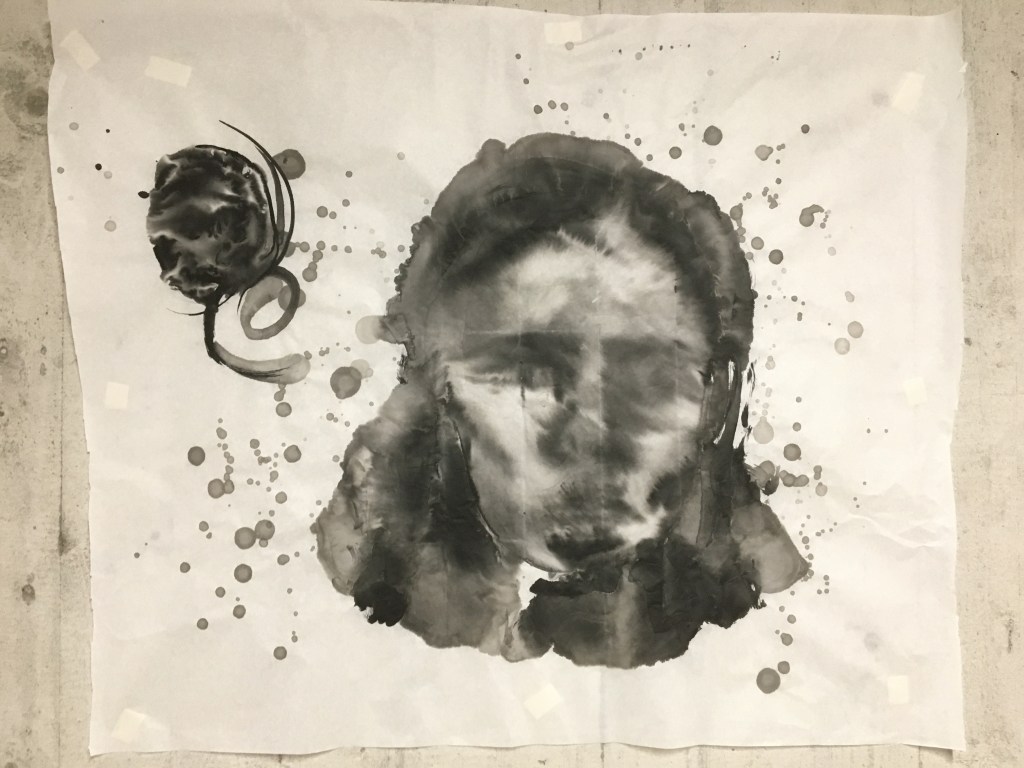
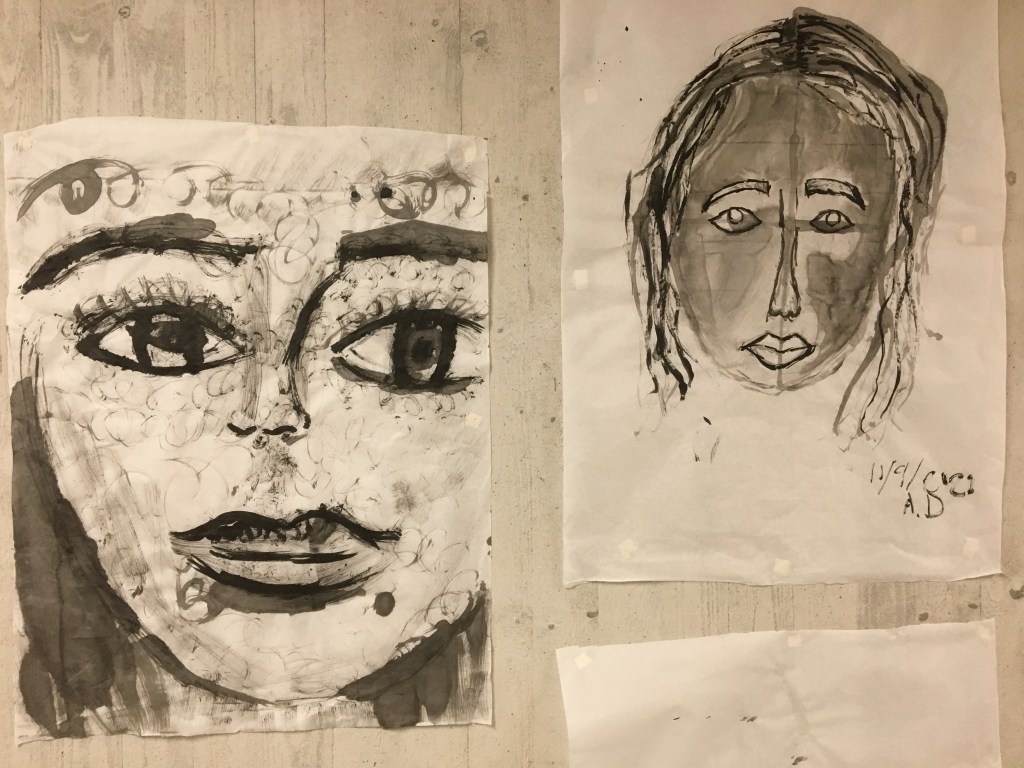
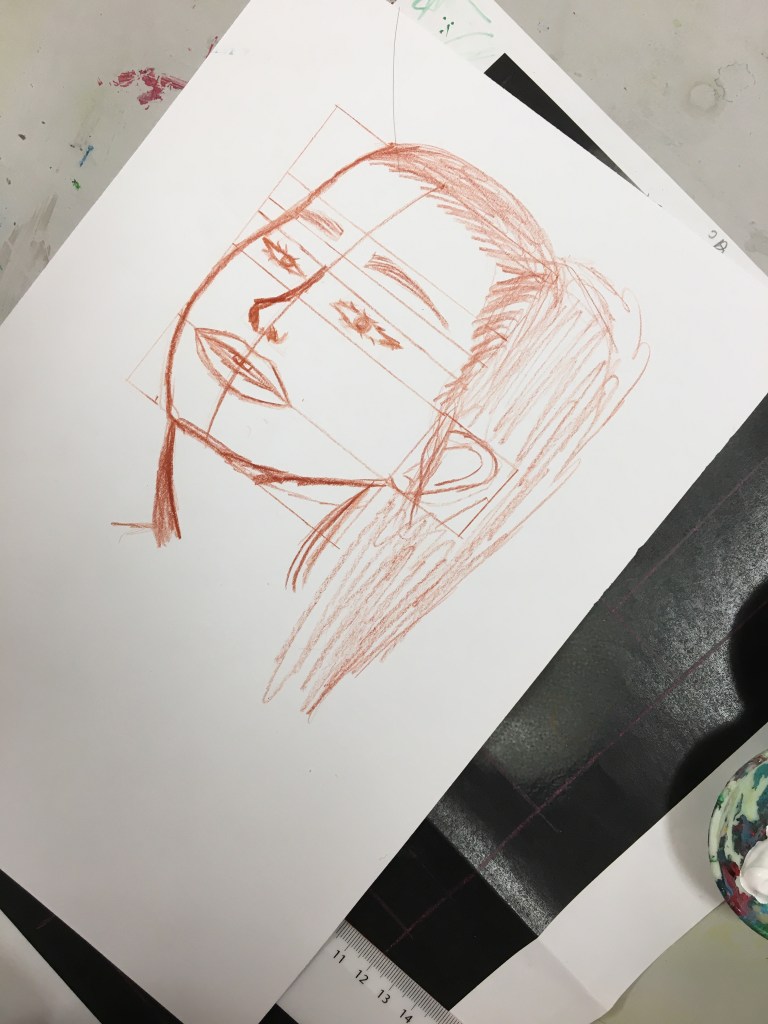
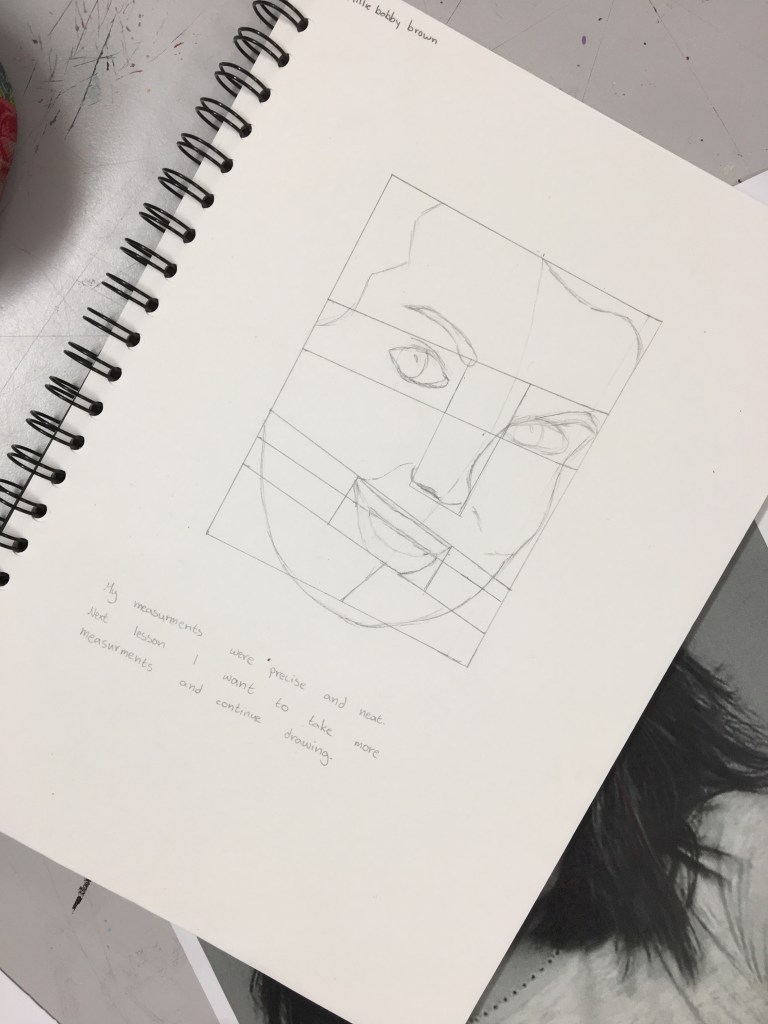
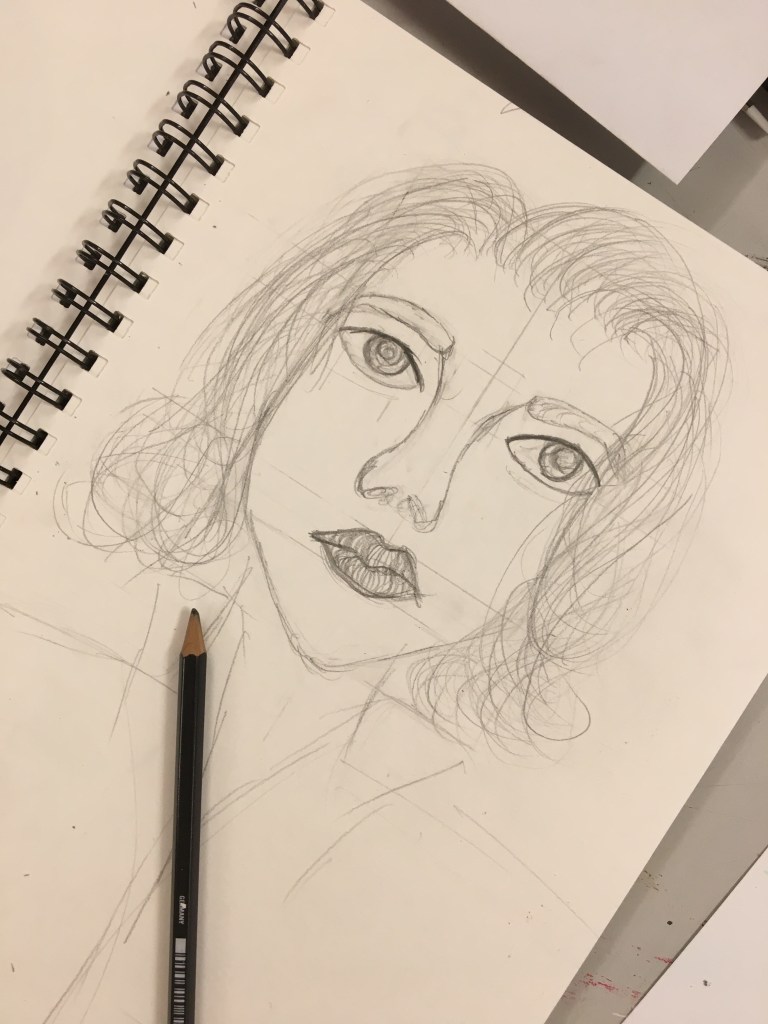
Practice Exercise: Made to Measure

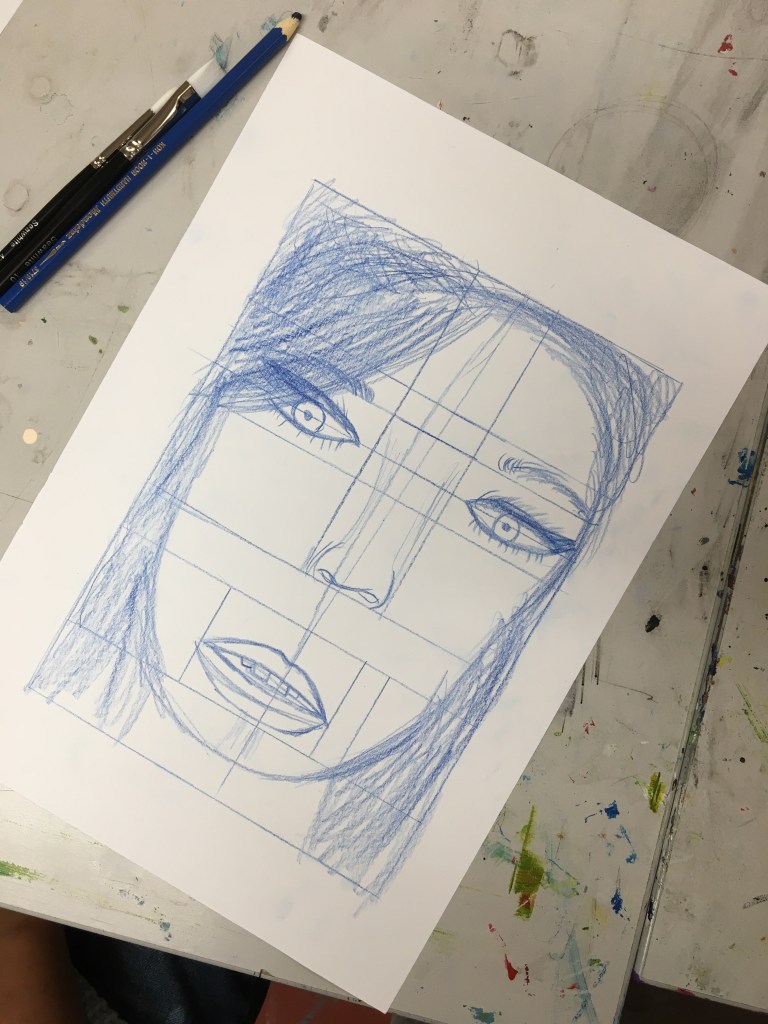

Criteria B: Developing
At the end of year 1/Novice stage, students should be able to:
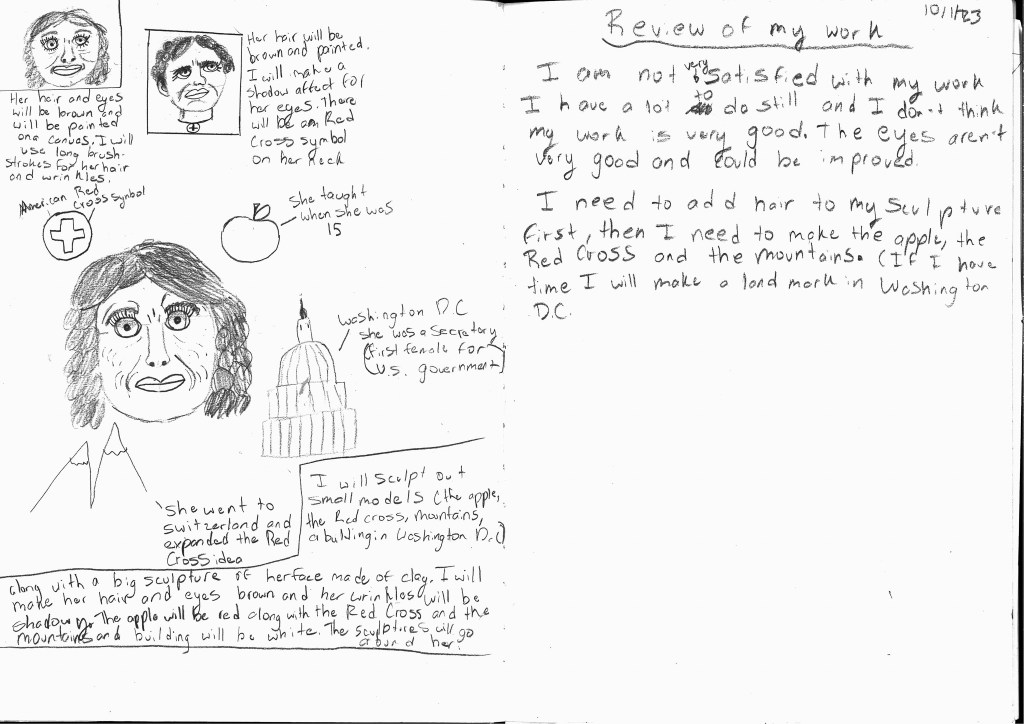
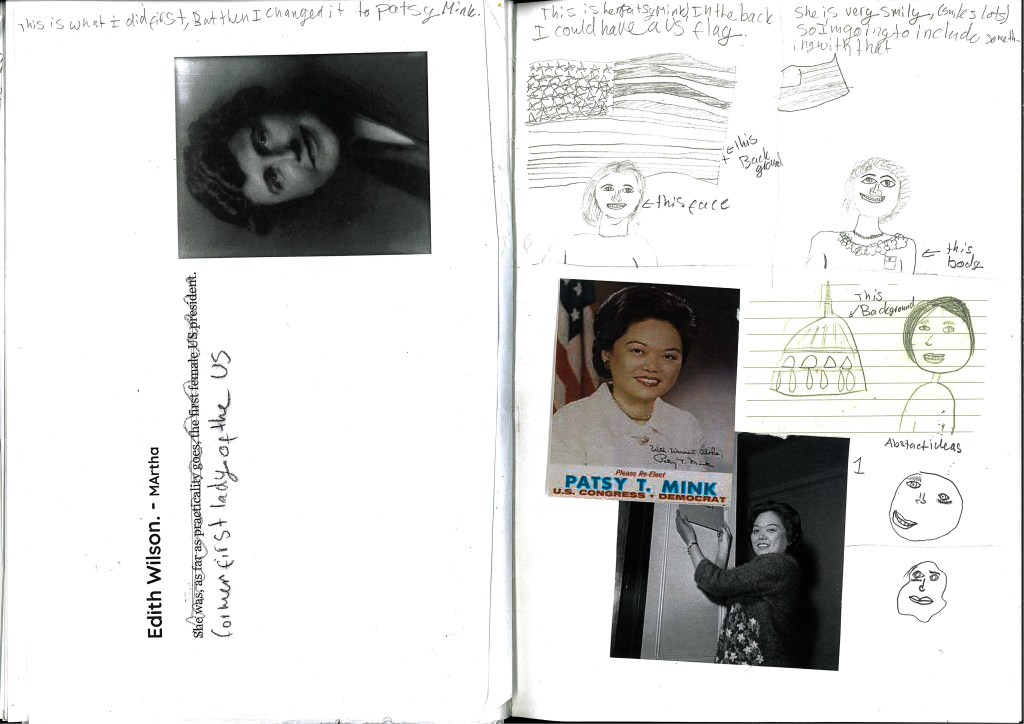
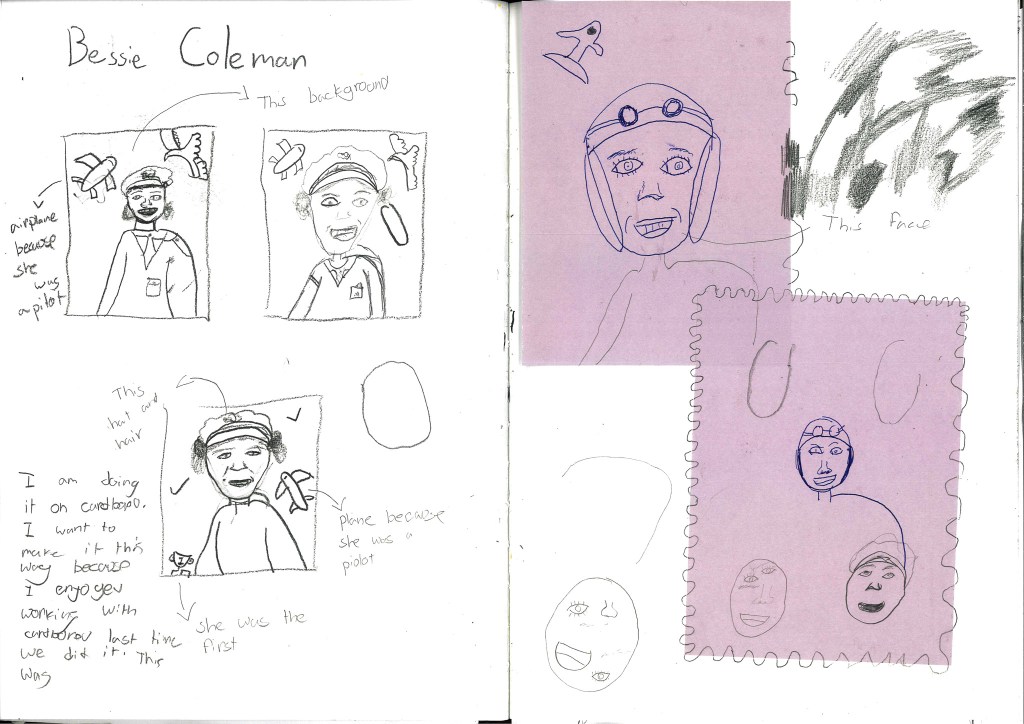
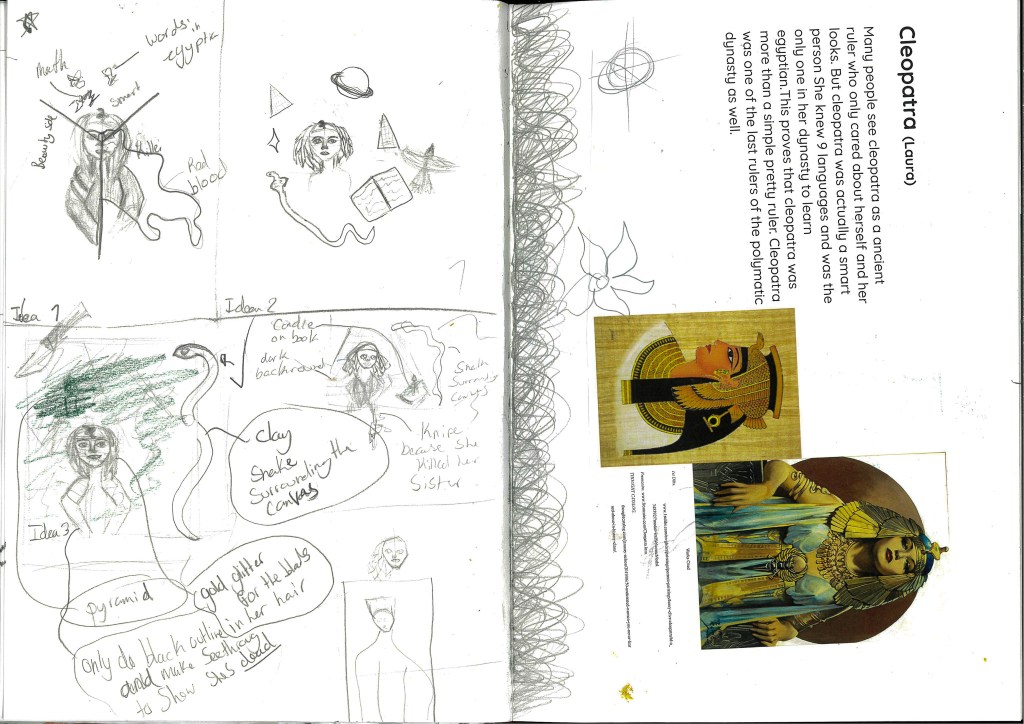
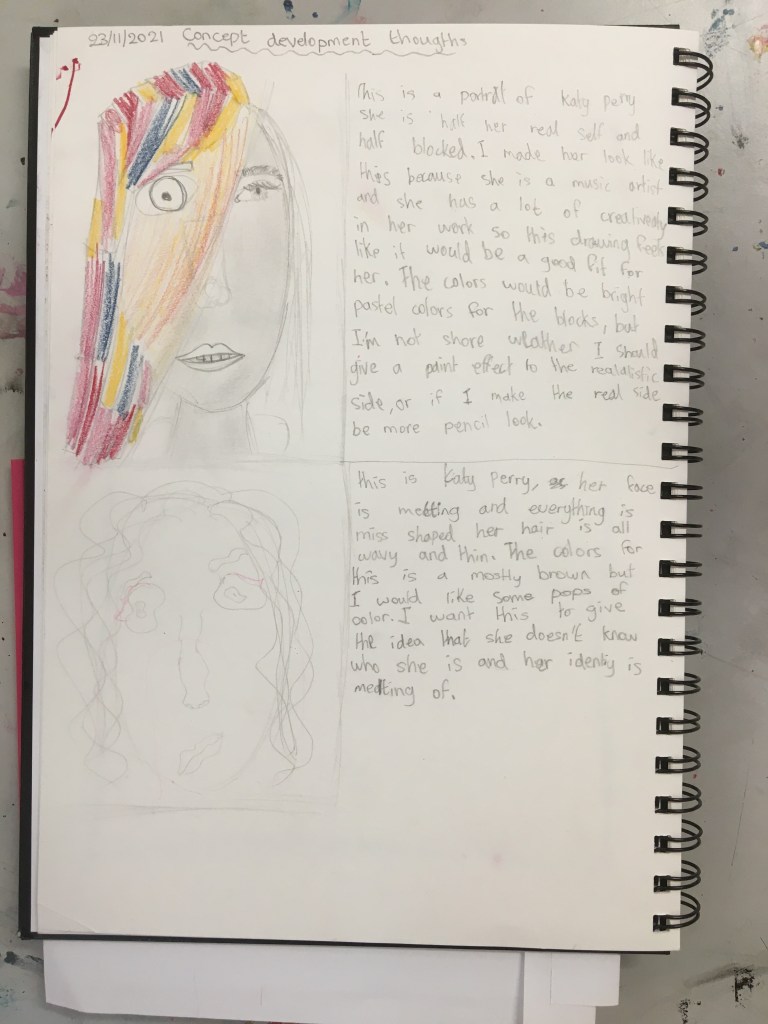
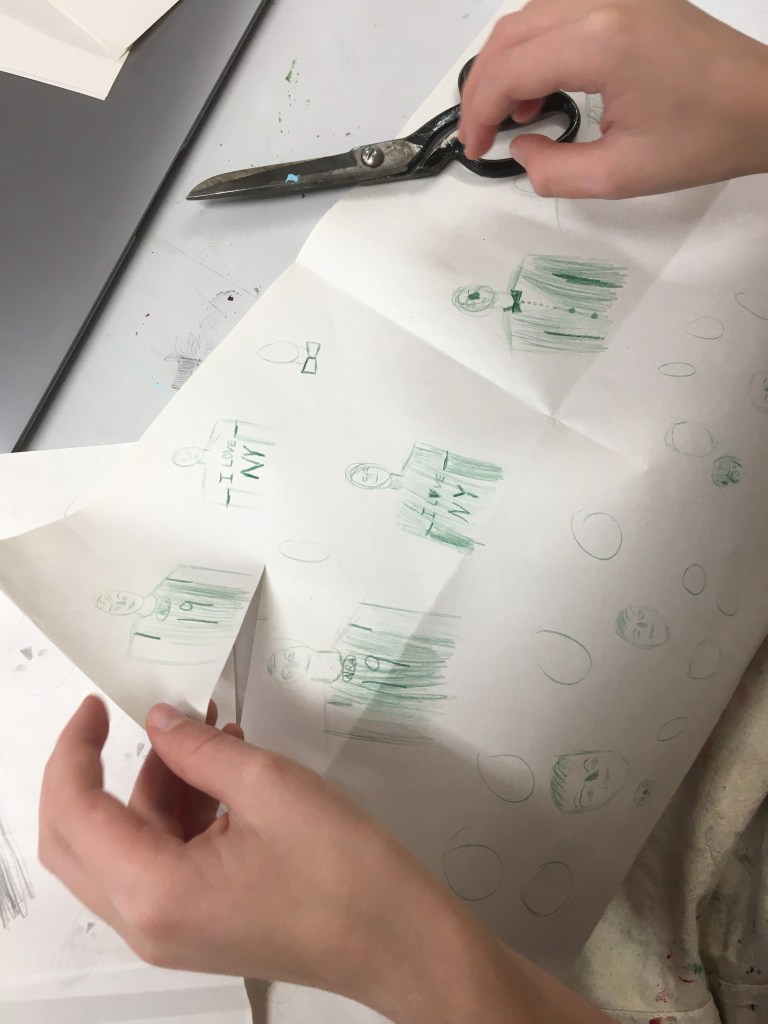
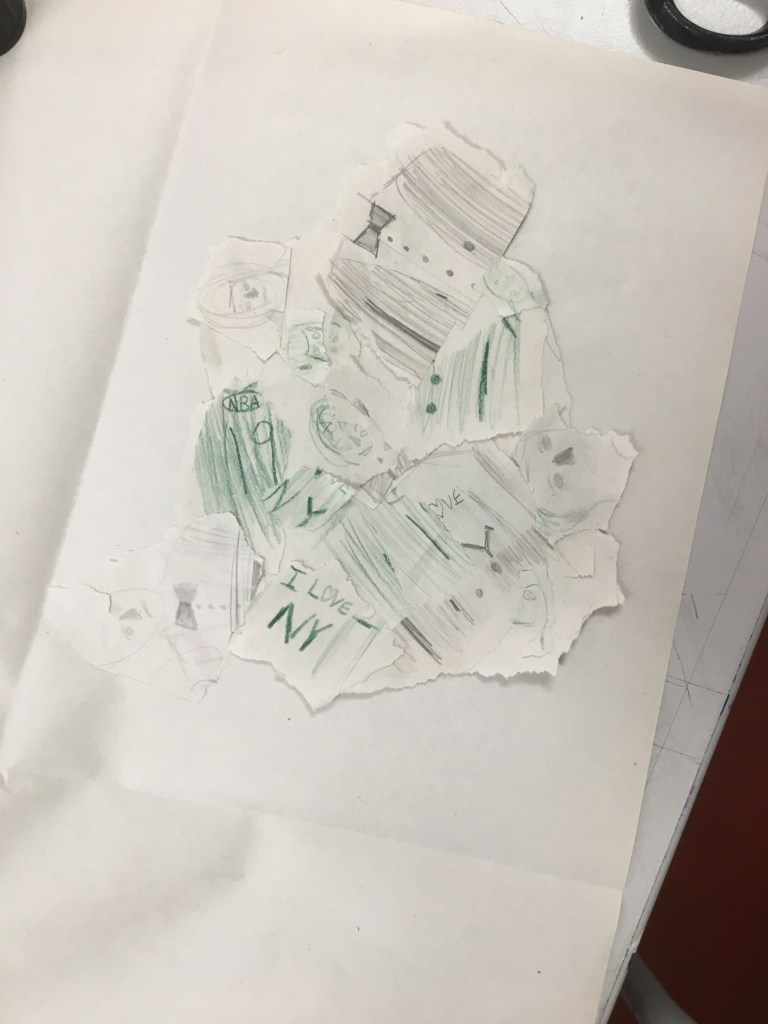
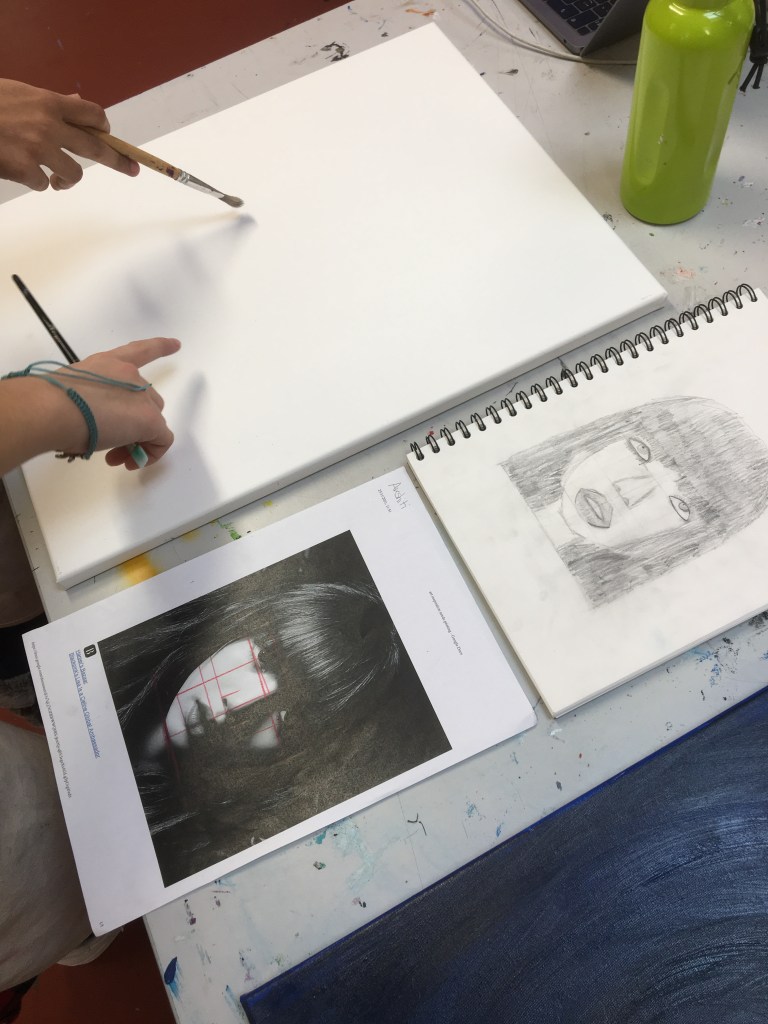
i. practically explore ideas to inform the the development of a final artwork or performance
ii. present a clear artistic intention for the final artwork or performance in line with the statement of inquiry.
Students follow these steps:
- Review research:
What have you learned? What was inspiring? What might you use in your own work? - Alternative ideas:
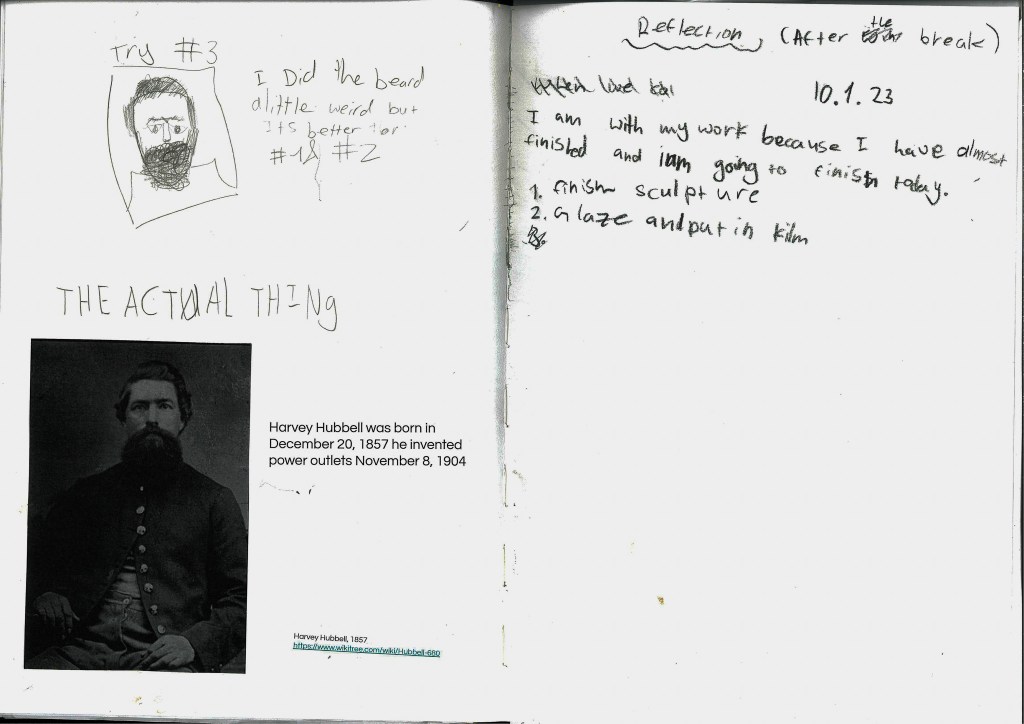
At least 3 alternative ideas, sketches, reference images (cite all images that are not yours), notes explaining all your ideas - Choose your favourite idea: make a larger more detailed sketch, add additional notes, what is so special about this idea?
- Intention:
WHAT: I want to make….because…..
LOOKS: I want to use this composition/formal qualities…. Because….
TECHNIQUE: I want to use these techniques….. because ….
MATERIAL: I want to make it with this surface/media/tools/material ….because….
TOOLS: I want to make use these tools….because….
INSPIRATION: I have been inspired by…. Because….
AUDIENCE: I want my audience to experience/feel/think/know/takeaway/etc…. because……
GAINS: I want to gain/learn/try/feel/etc through the creation of this work…. Because….. - Plan: When you have chosen your alternative, make a plan and include the steps you have to take, the materials you need, and a time frame in which you will finish the work. As you work, things might change, but this is okay! Just make a note of it.
- Use subject specific language
Criteria C: Creating
At the end of year 1/Novice stage, students should be able to:
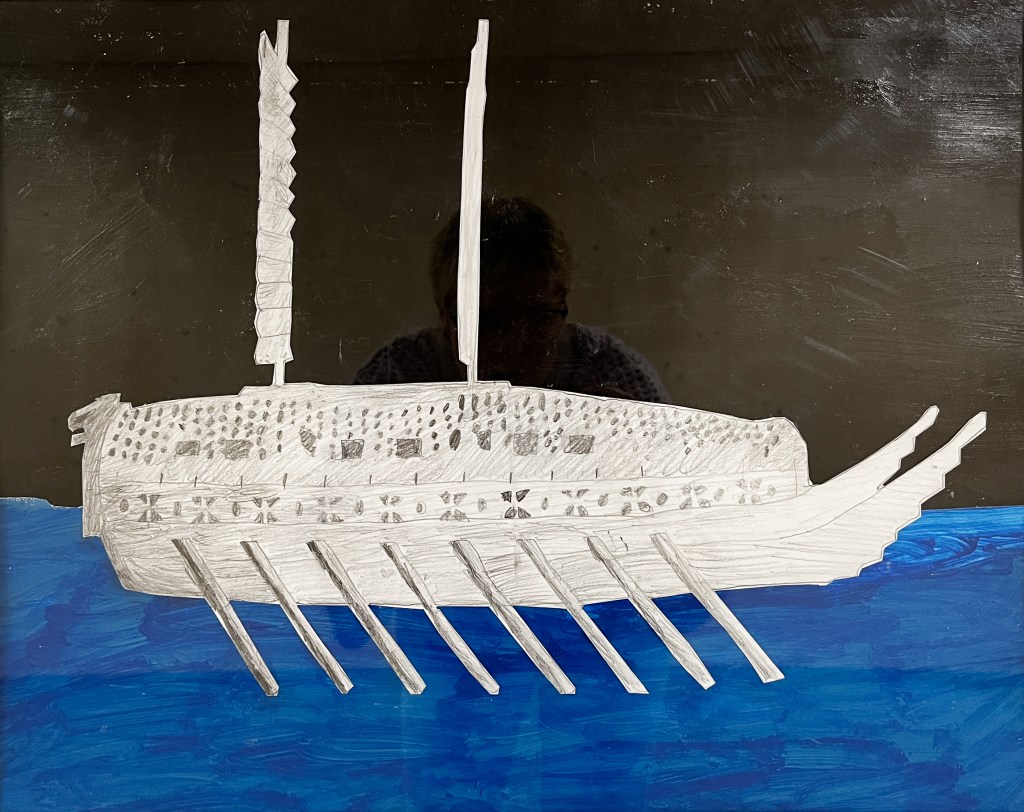
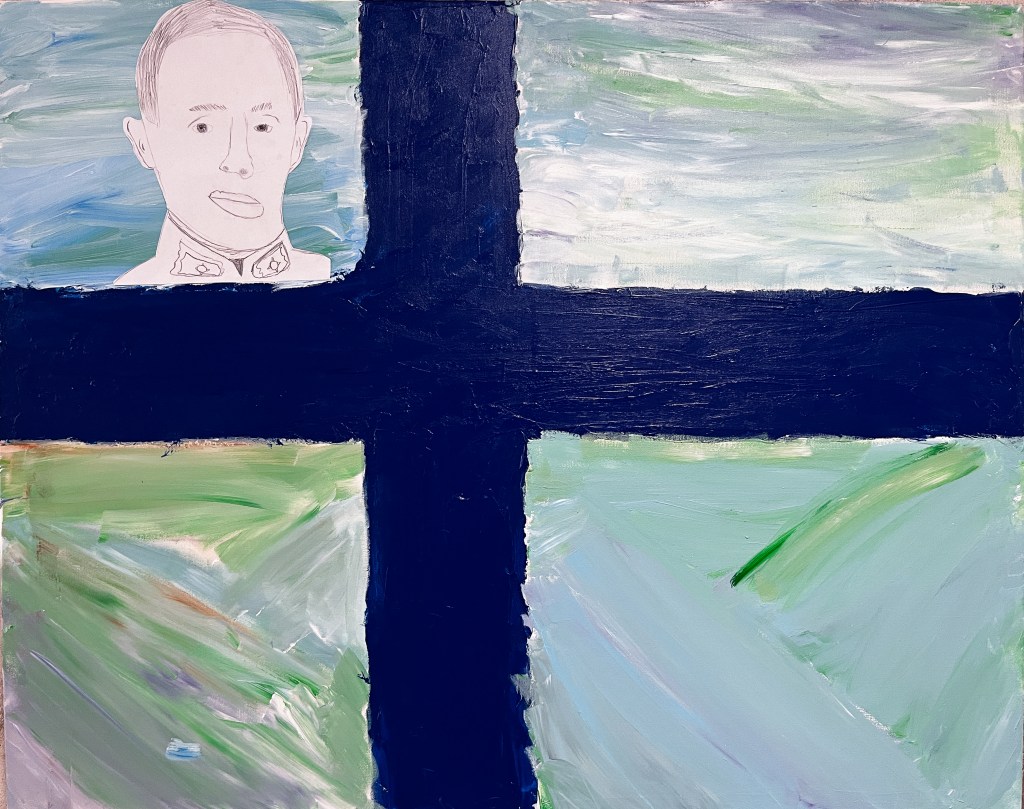
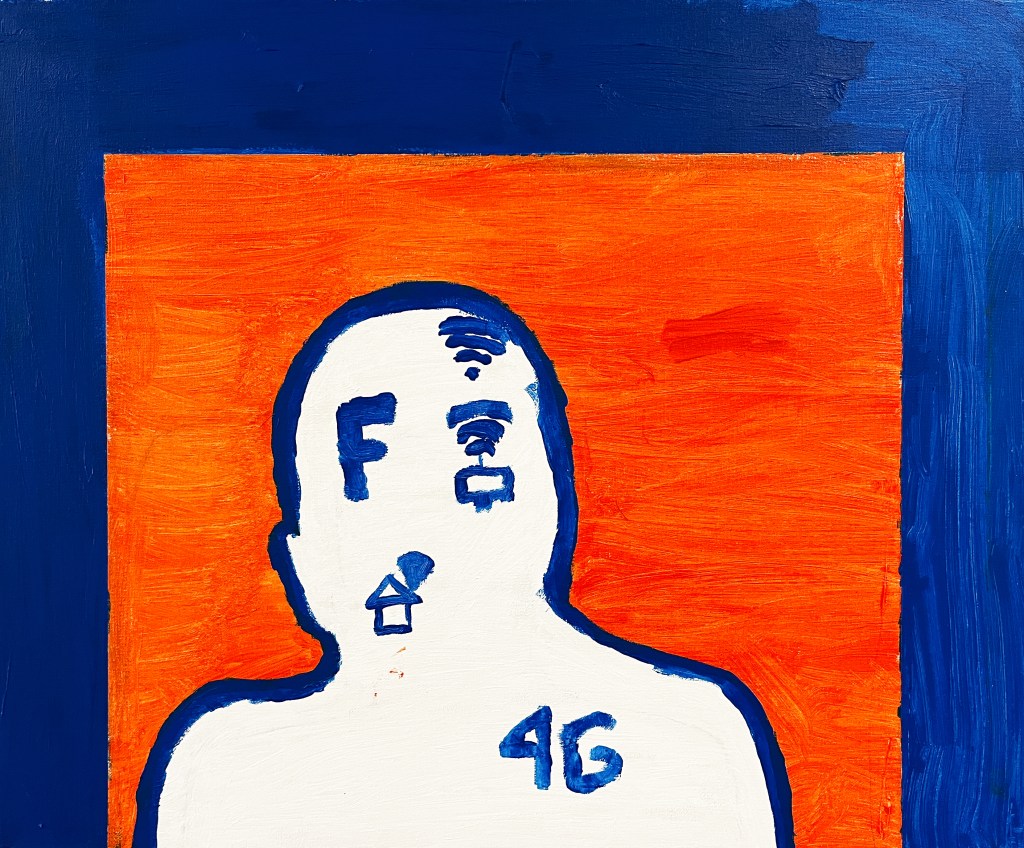
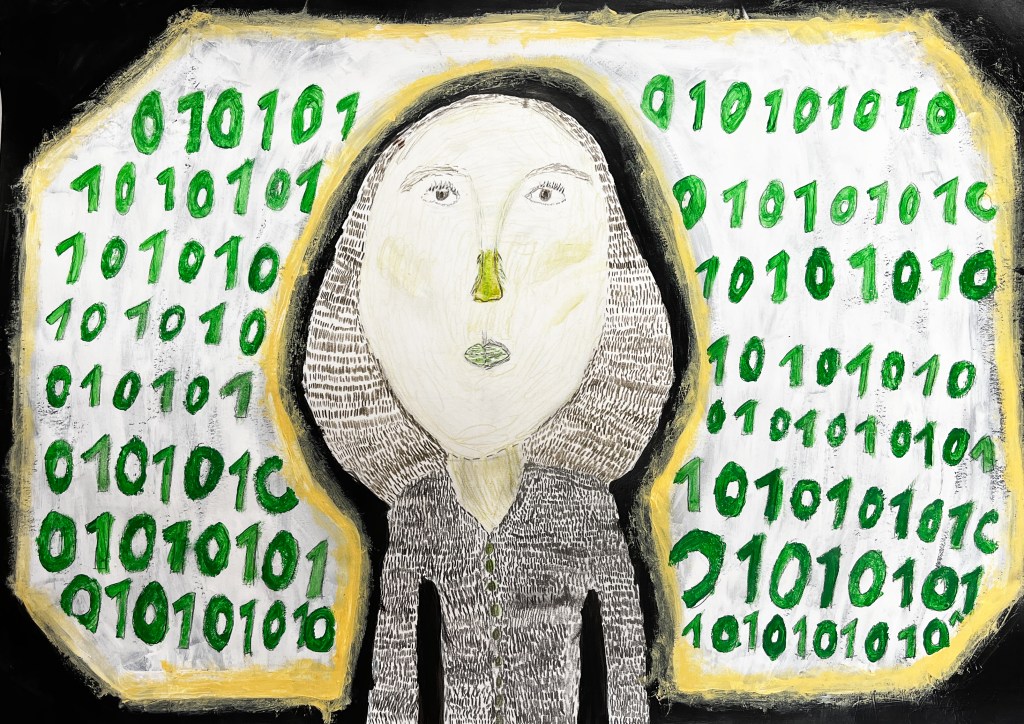
i. create or perform an artwork.



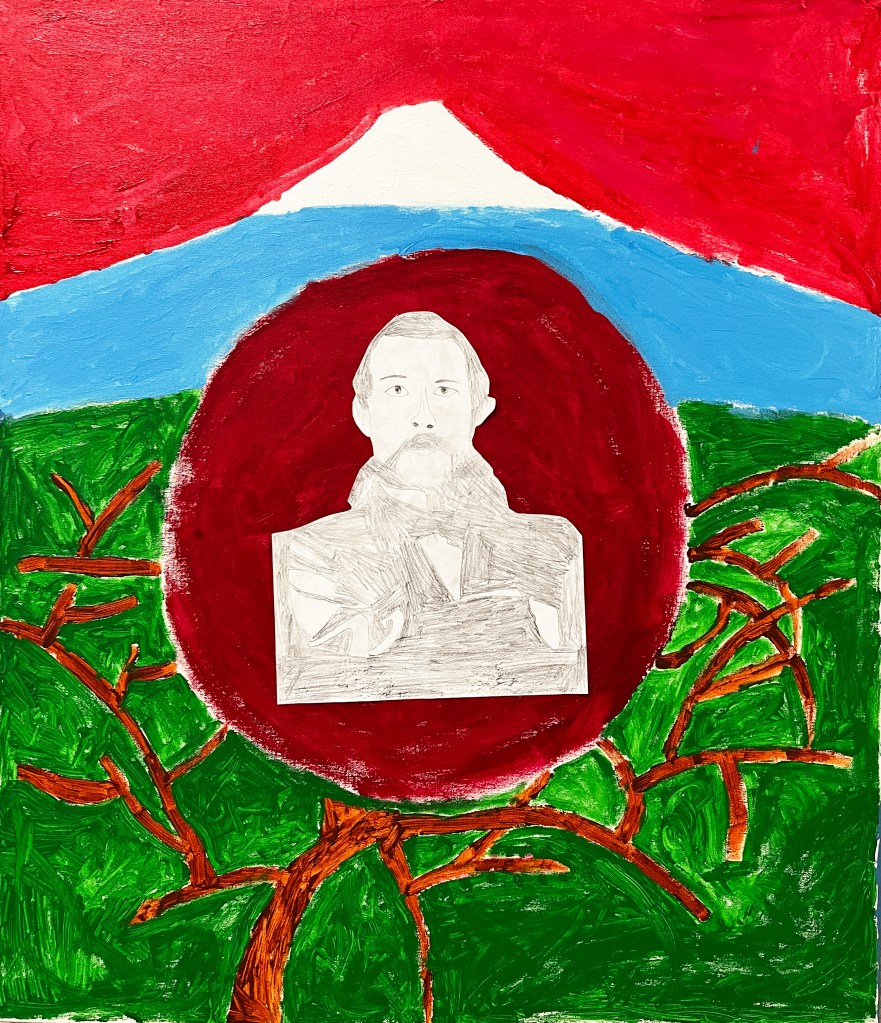
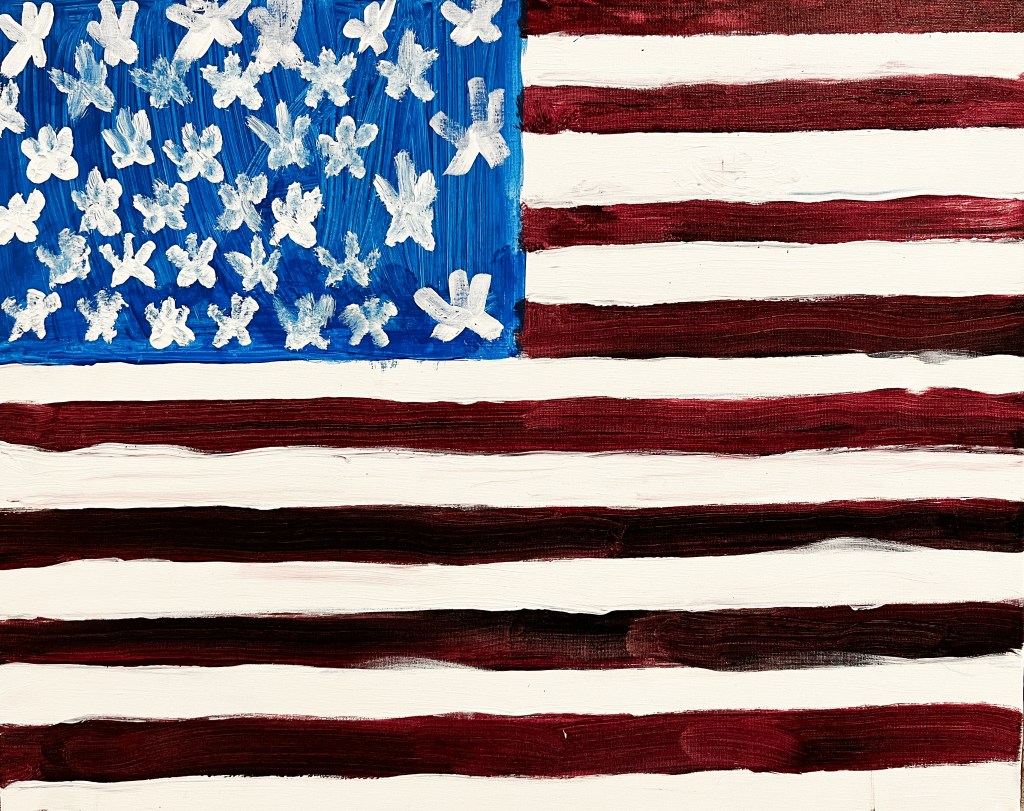
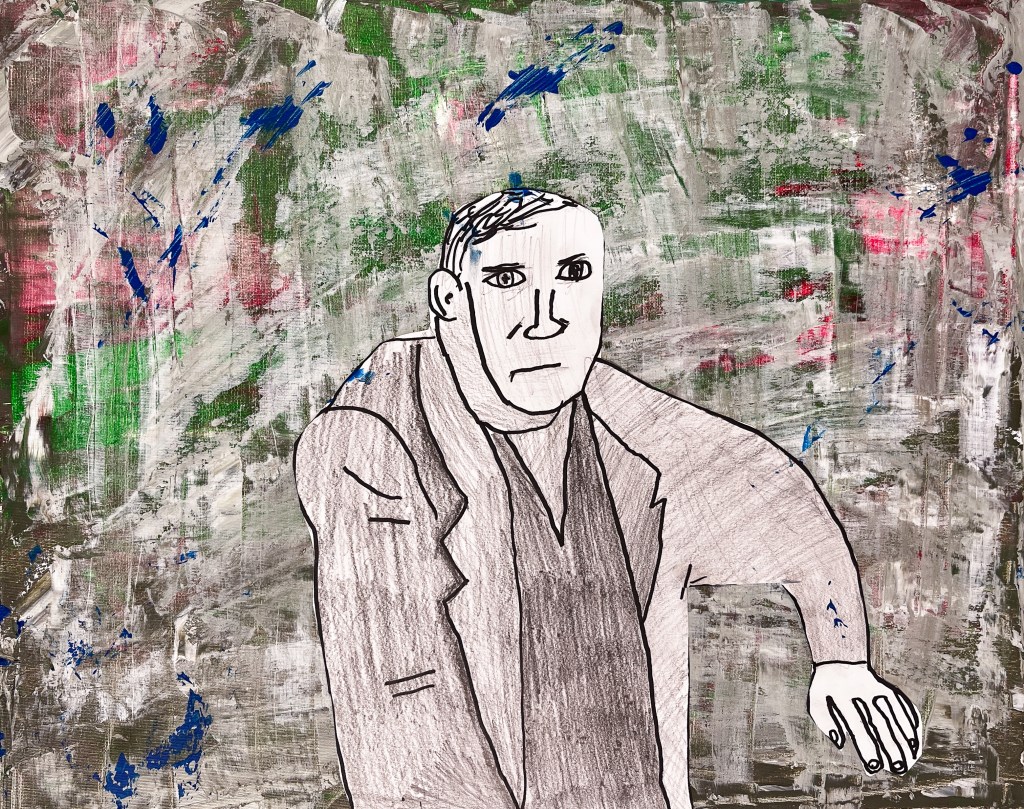
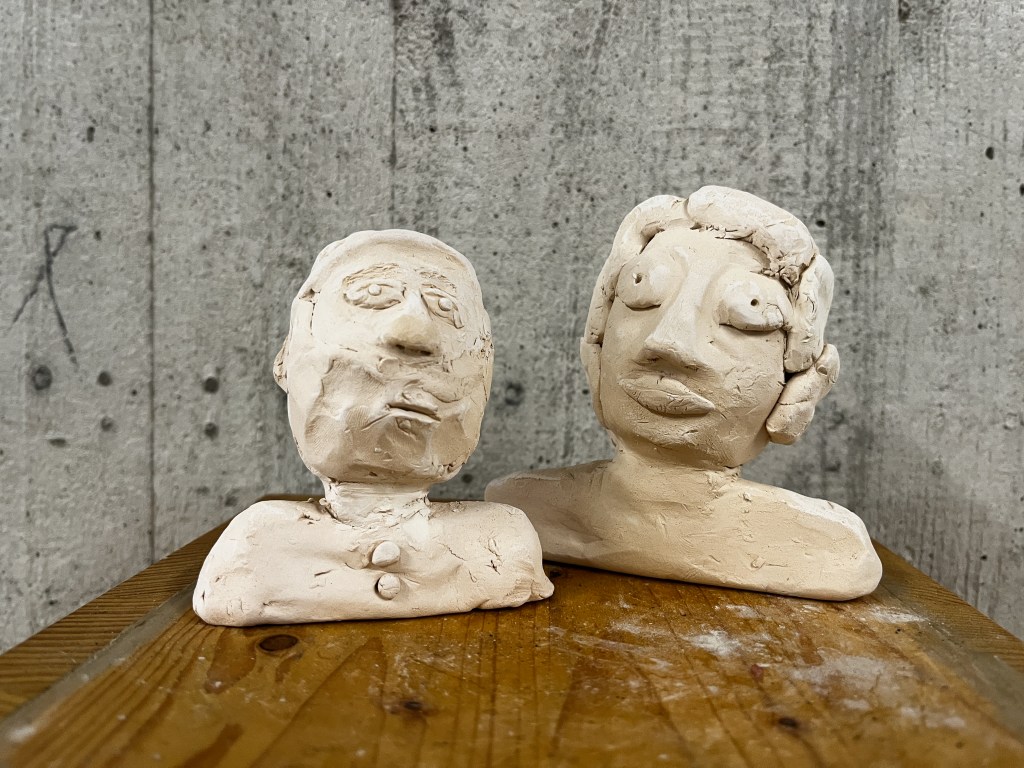

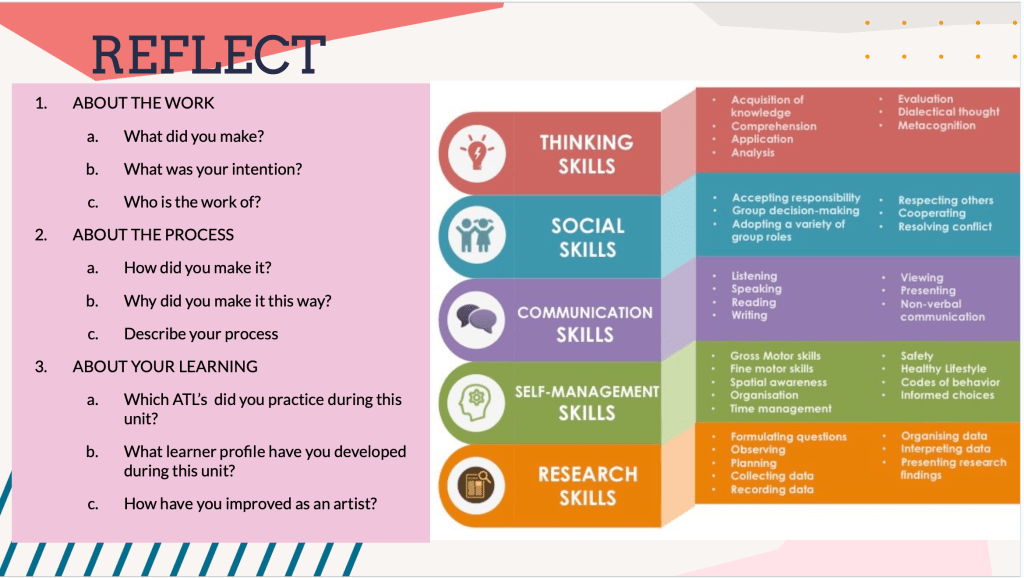
Criteria D: Reflecting
At the end of year 1/Novice stage, students should be able to:
i. appraise their own artwork or performance
ii. reflect on their development as an artist.
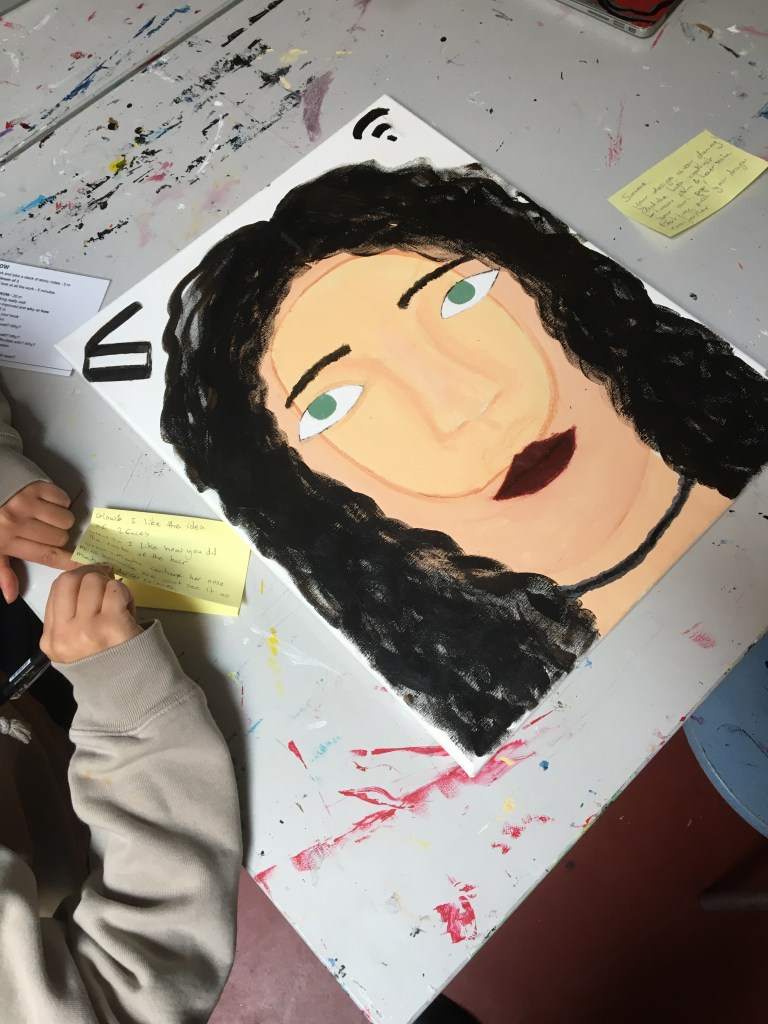
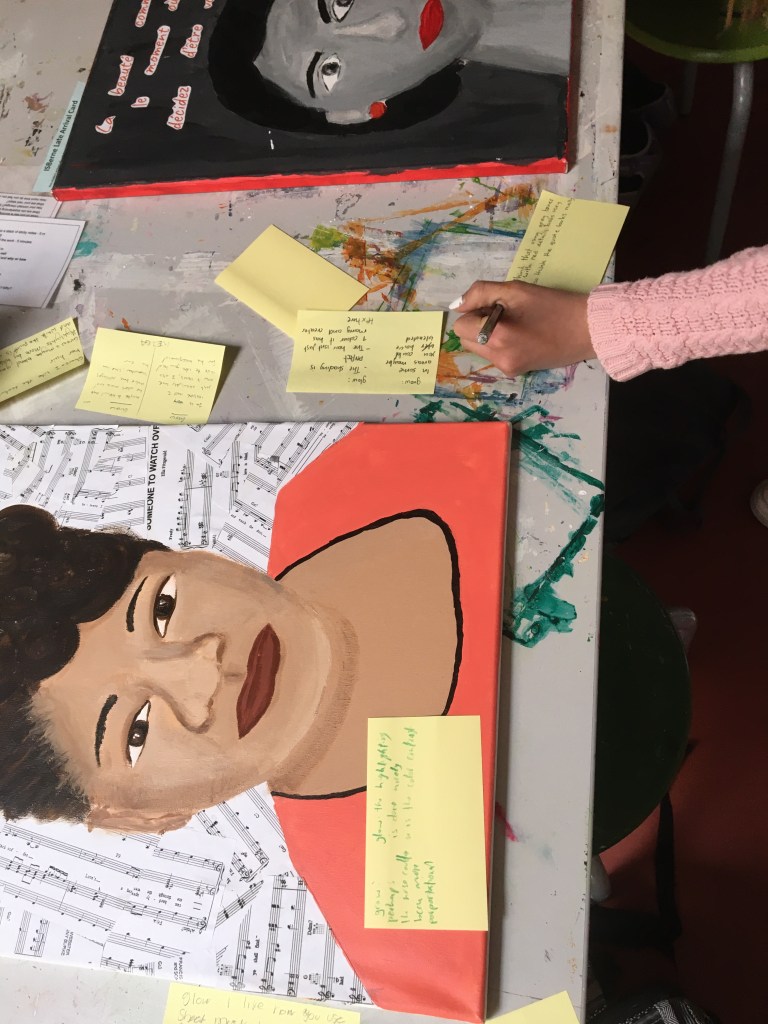
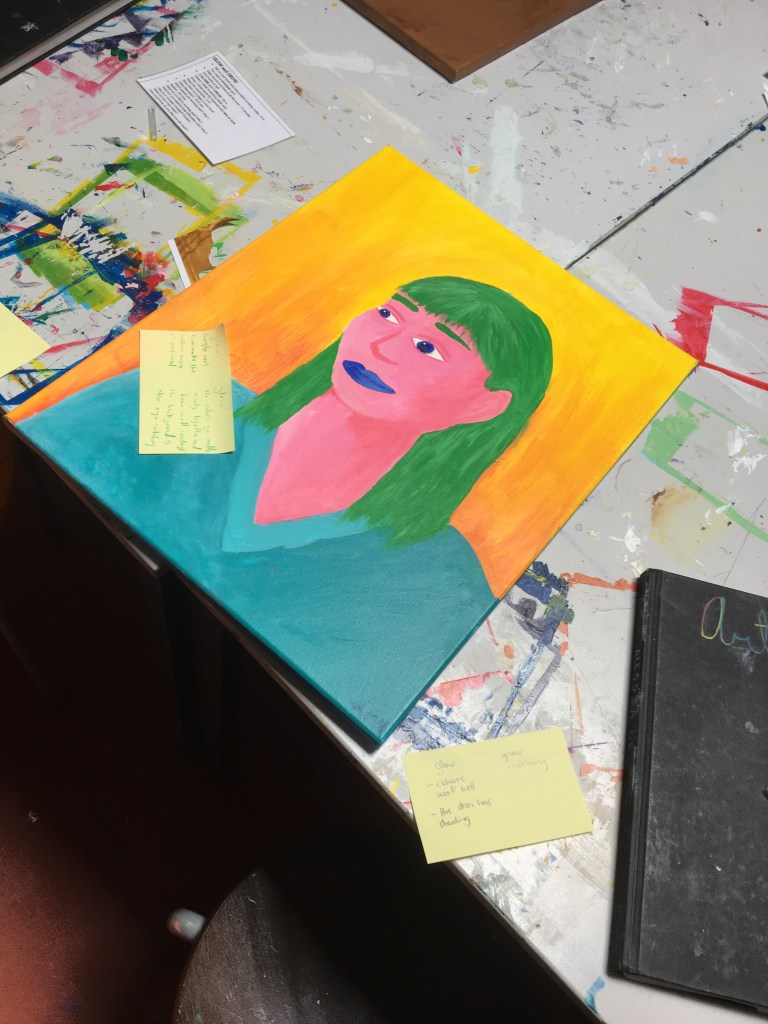
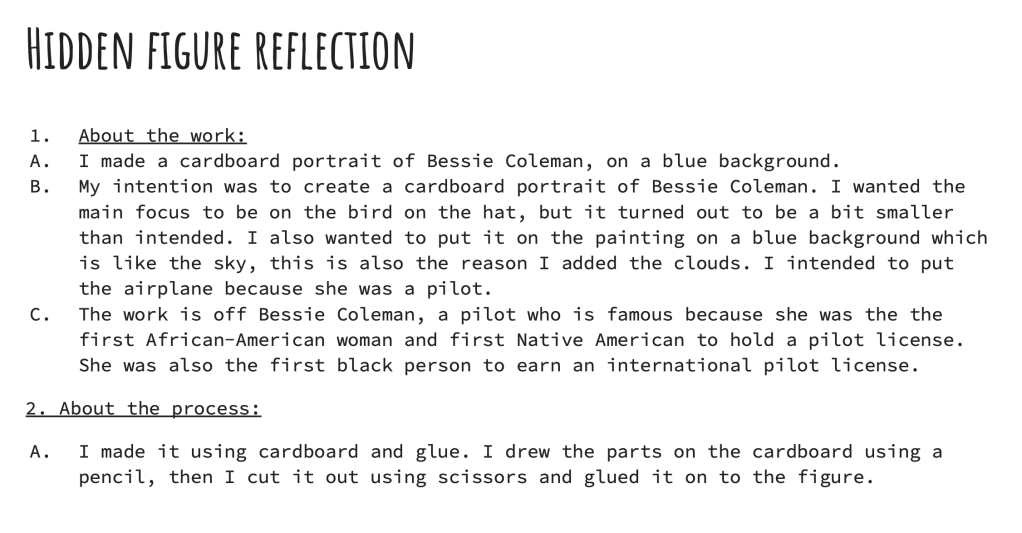
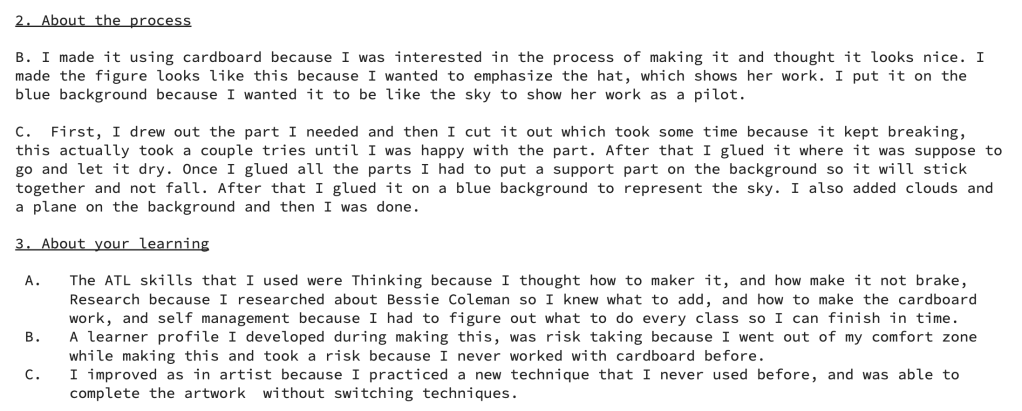
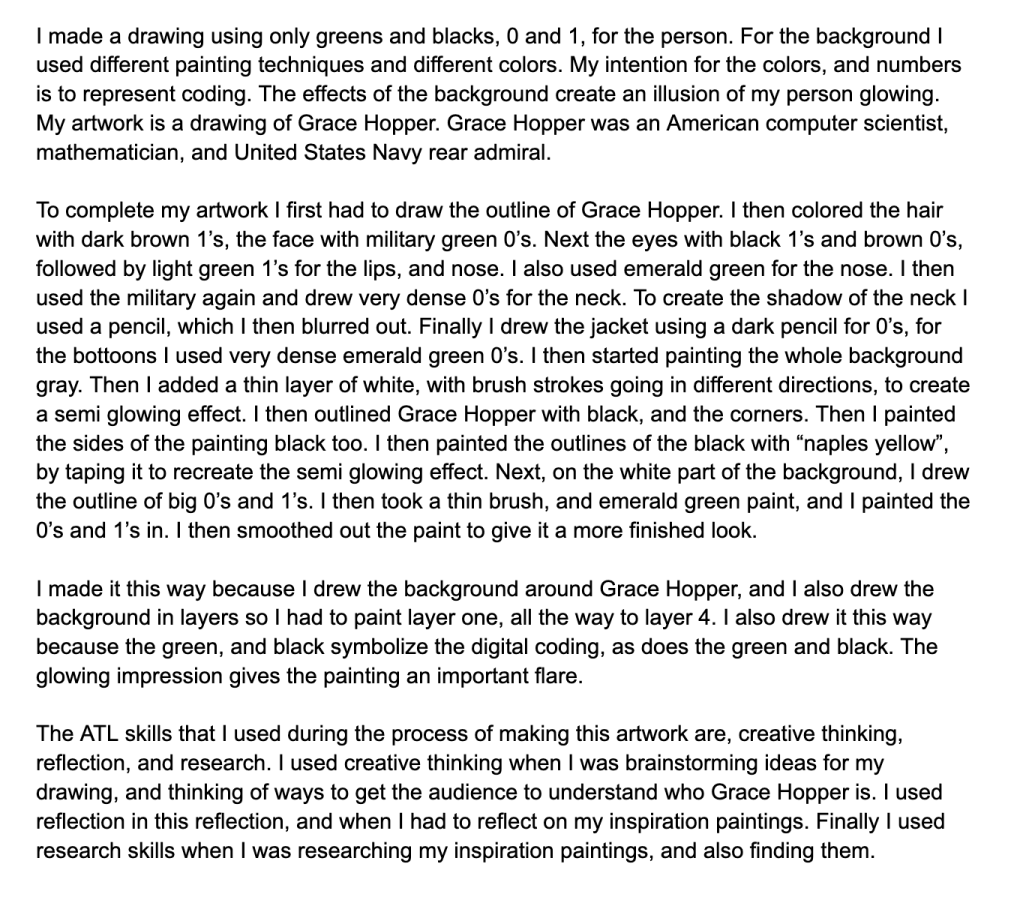
Students give each other feedback at several points during the unit using the “two stars, one wish” routine. Each student is invited to give feedback to three other students on post-its. Then students reflect on next steps or, like here, before writing their final reflection.



 Where the Art is