
-
Embroidery Collages

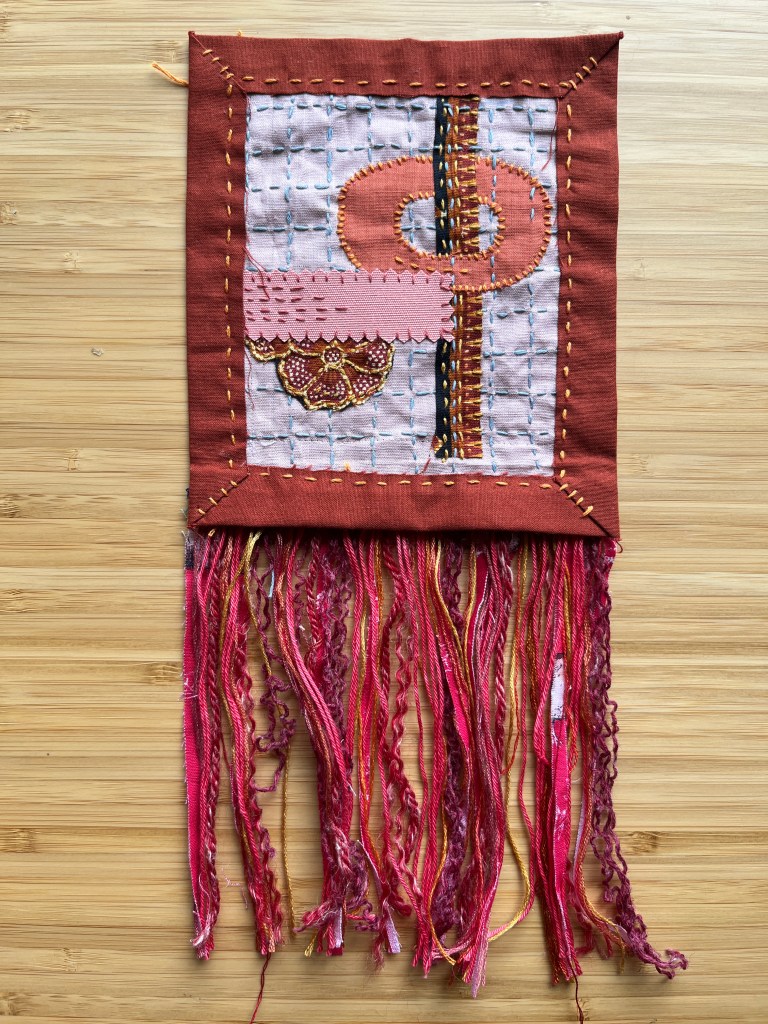
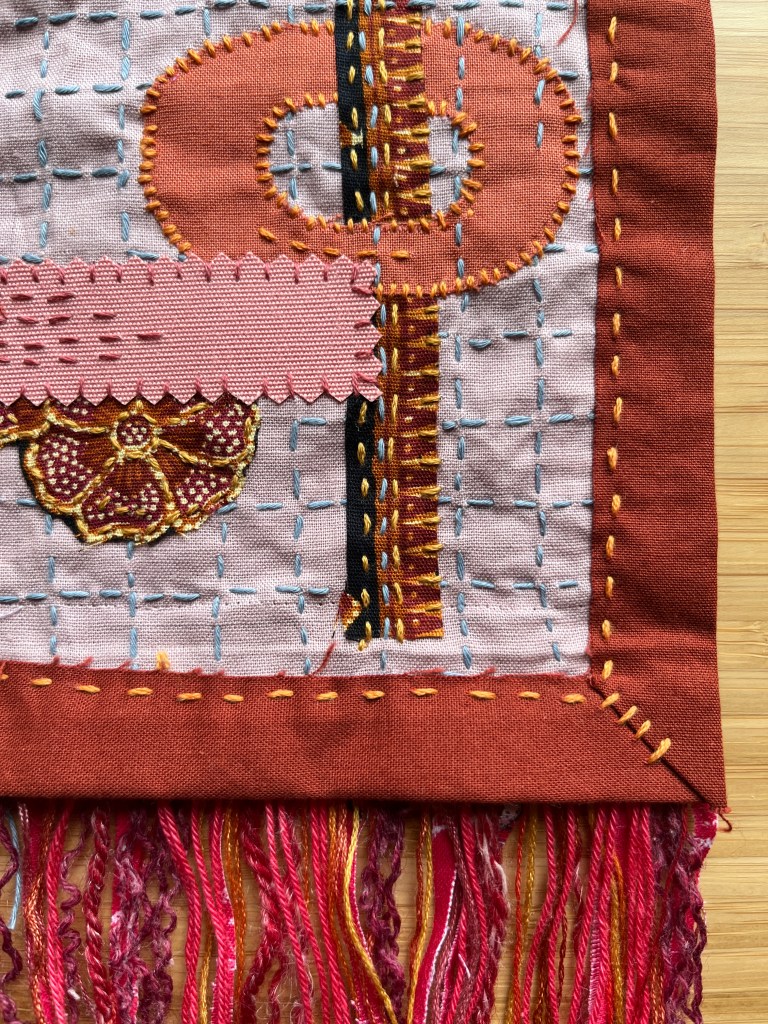
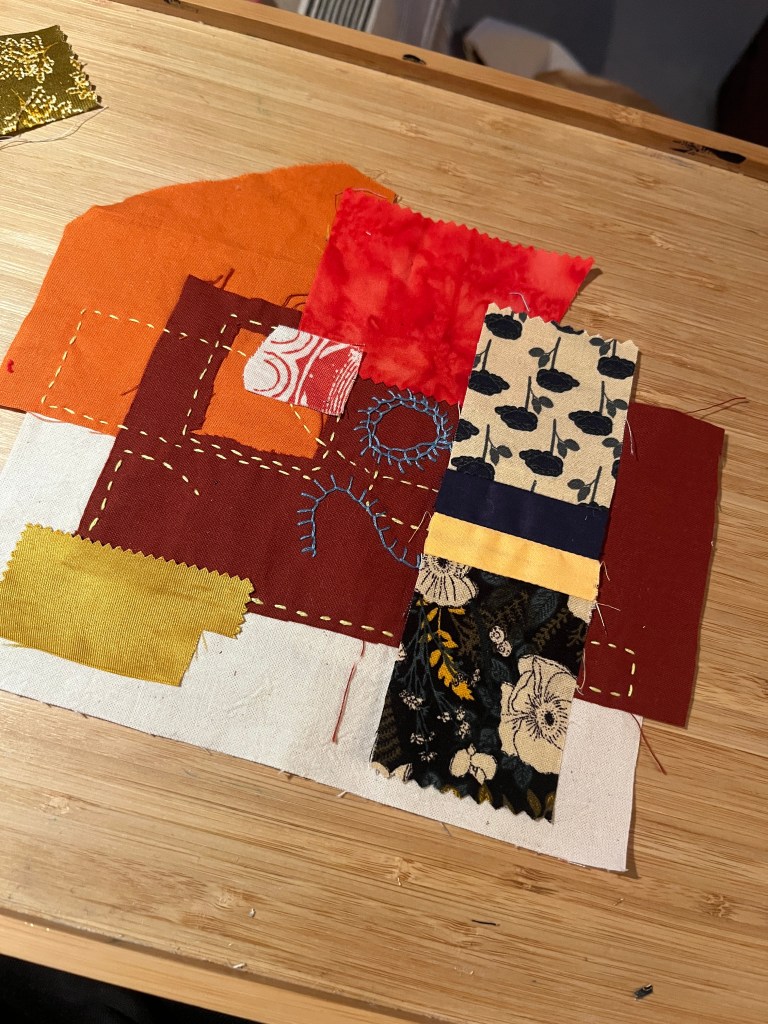
I guess my first embroidered collage was an example I made for my Textile Art students earlier this school year. To introduce them to simple appliqué and embroidery, I planned t have them make small collages from fabric and stitch them together using Sashiko patterns. I made this little arrangement; it’s about A5 size, I used glue stick to paste the collage together and then stitched using DMC embroidery threads.
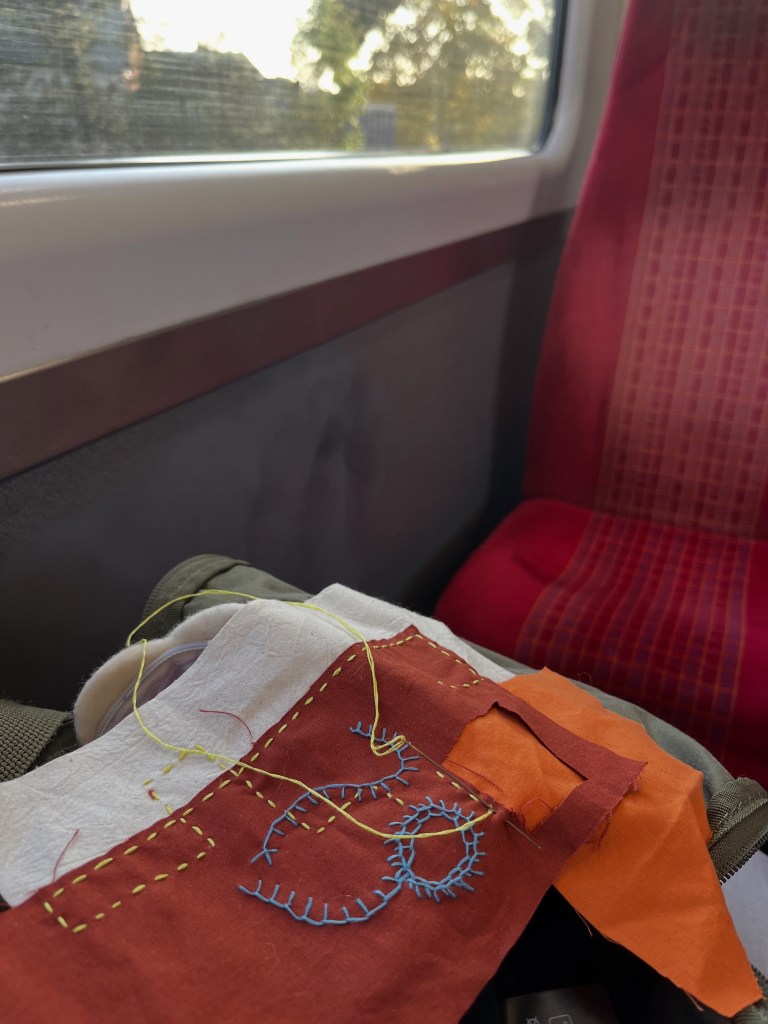
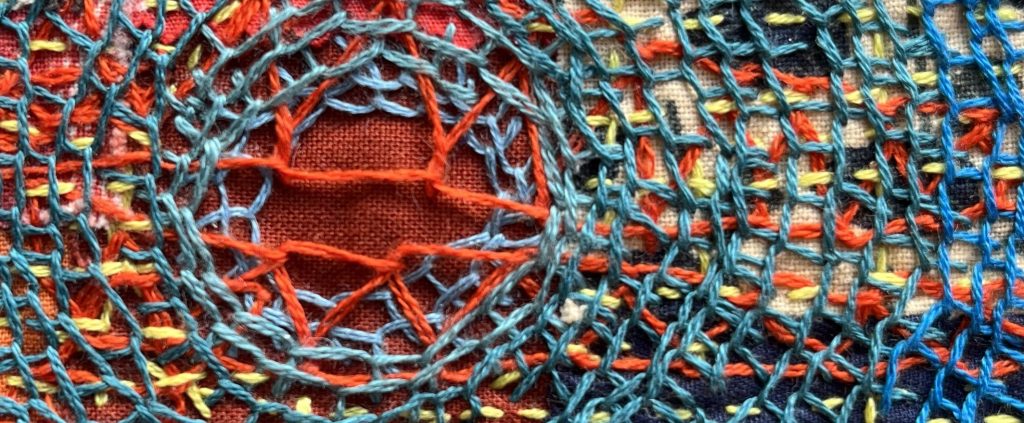
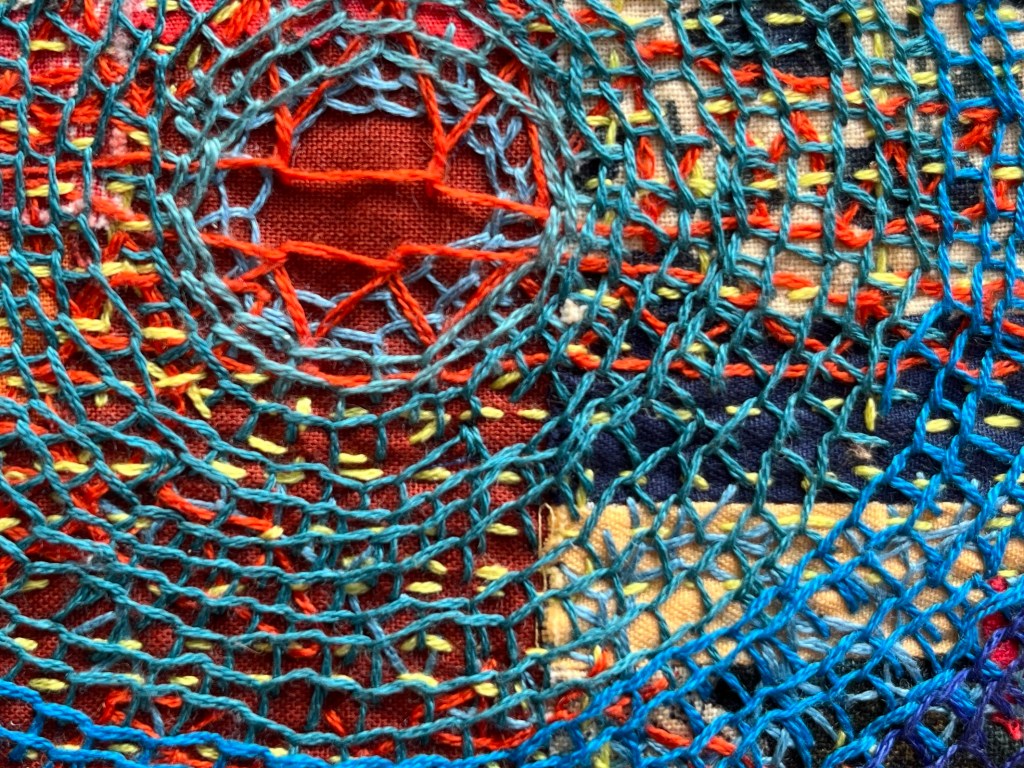
Then later in the year, I went to the Knit + Stitch Show in London. In an effort not to be on my phone for the whole journey, I brought a little pouch with some thread and bits of fabric. It was meditative to slowly stitch while the world went by, listening to music and seeing where the thread would take me. What started as a few simple running stitches, turned into a complex net of layered blanket stitched I now title “Cast Your Net Wide”.
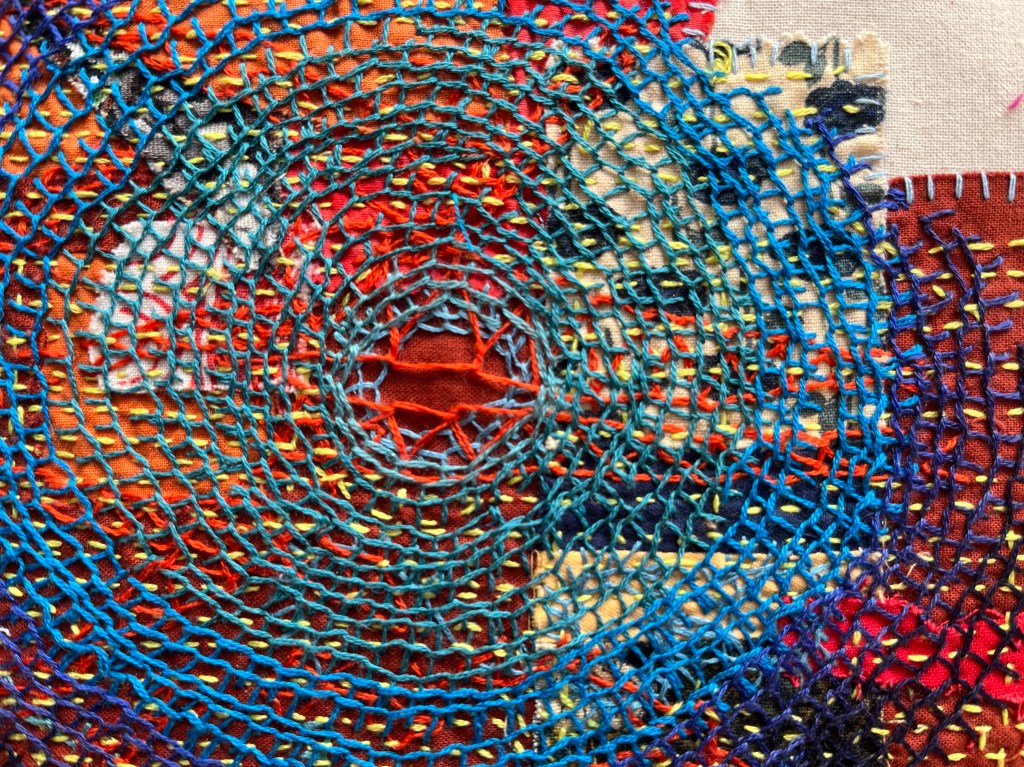
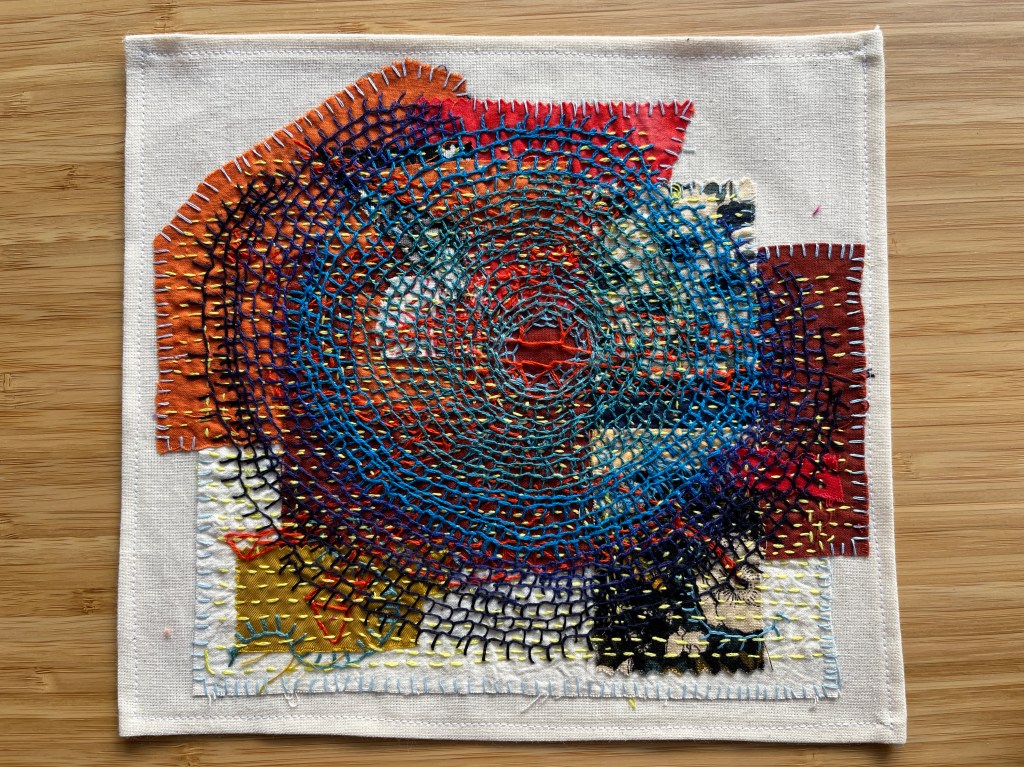
Liza Roos – Cast Your Net Wide Now, months later, I’m still making Embroidery Collages. I’m obsessed.
Liza Roos – Raindrops I keep finding new paths for the threads to follow, new colours, new textures beneath the stitches.
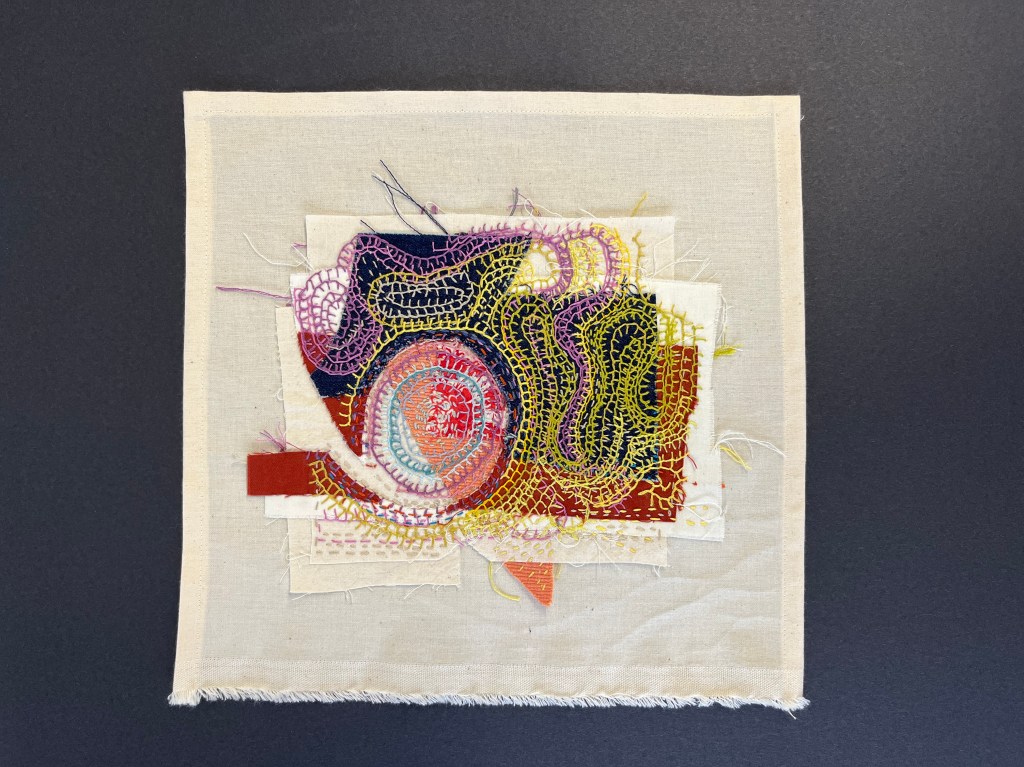
Liza Roos – Follow Along Once they’re done, I attach them to a piece of unbleached cotton and whip stitch them to secure them. I haven’t done this for all of them yet, but once done, they look really finished and quite lovely if I do say so myself!
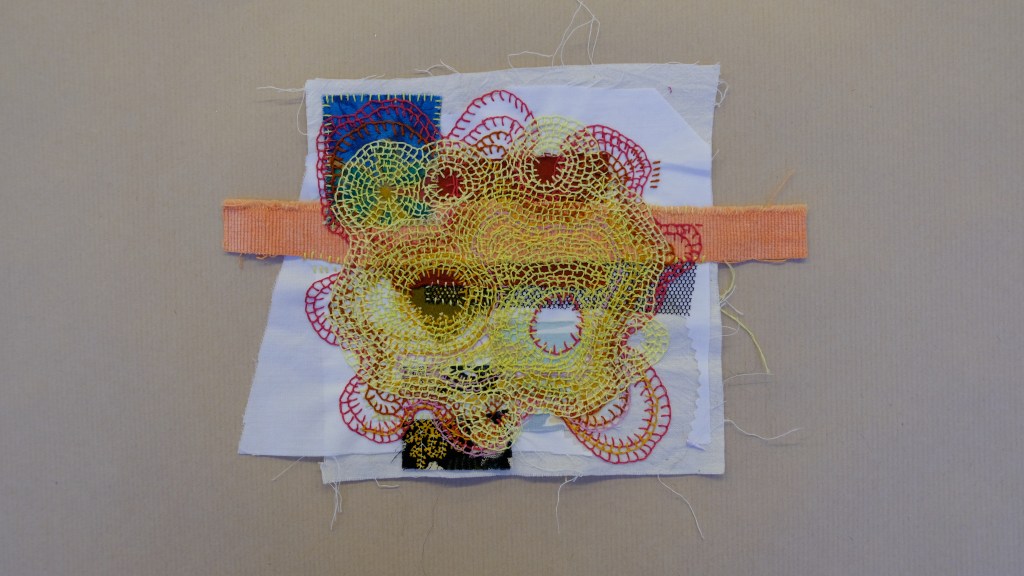
Liza Roos – Chicken of the Woods 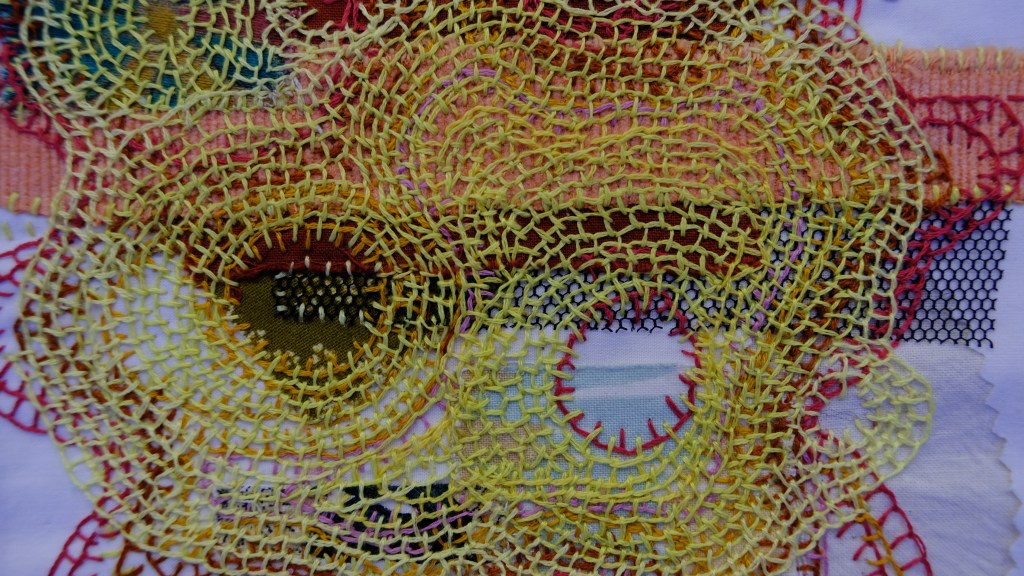
I have also started experimenting with using more definable imagery, such as this horse below. This means a more deliberate approach from the start. Here I created some suggestion of a landscape with the curved pieces of cotton and cord and the floral pieces in between. The horse looked so happy and it reminded me of the Body Groove saying, “We don’t walk, we strut!”
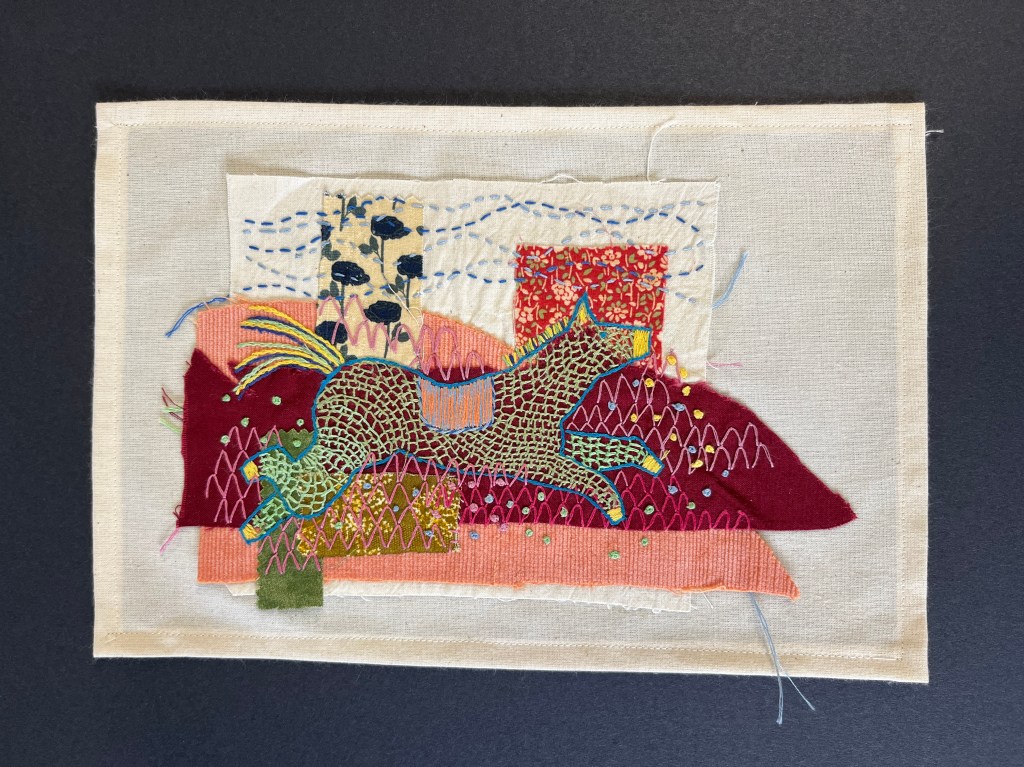
Liza Roos – Strut Now that I have a bit of a collection, I’m wondering how to display these. Shall I frame them, or perhaps add some firm backing so I can hang it with a string. I’ll have to experiment a bit. Any ideas are very welcome!
-
Knit and Stitch Show
Last October I went to the Knit + Stitch show in London at Alexandra Palace. It took what felt like forever to get there, but it was very much worth it! Not only are there lots of vendors for some great deals, but there were a lot of exhibiting artists.
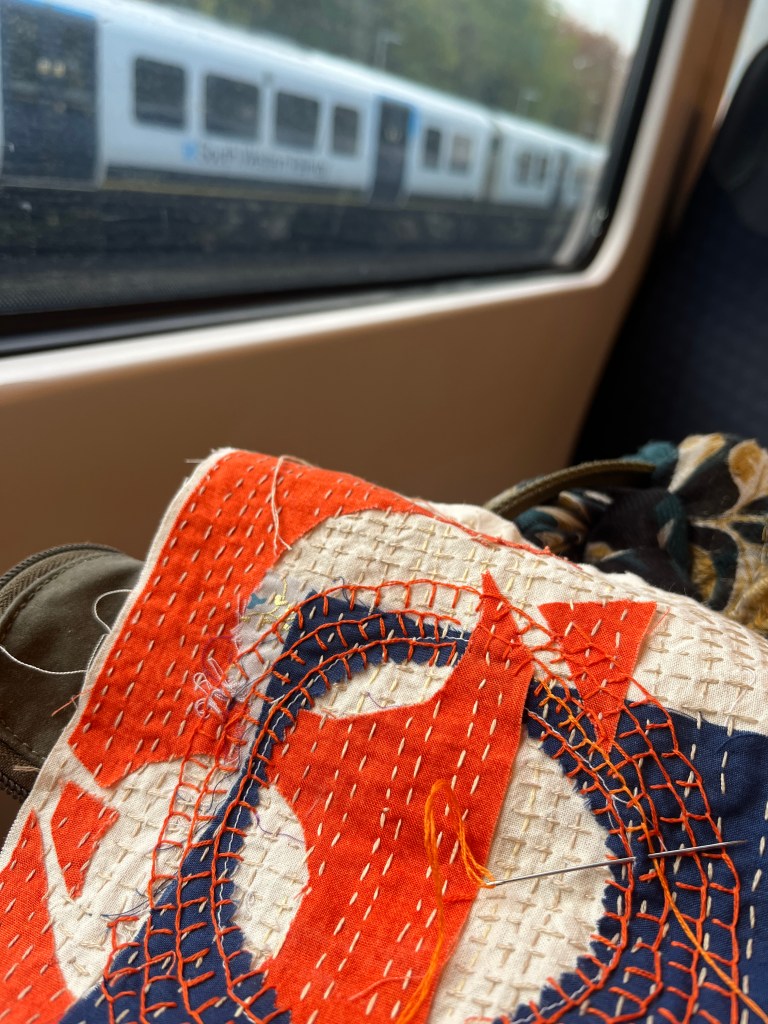
Slow stitching on the way 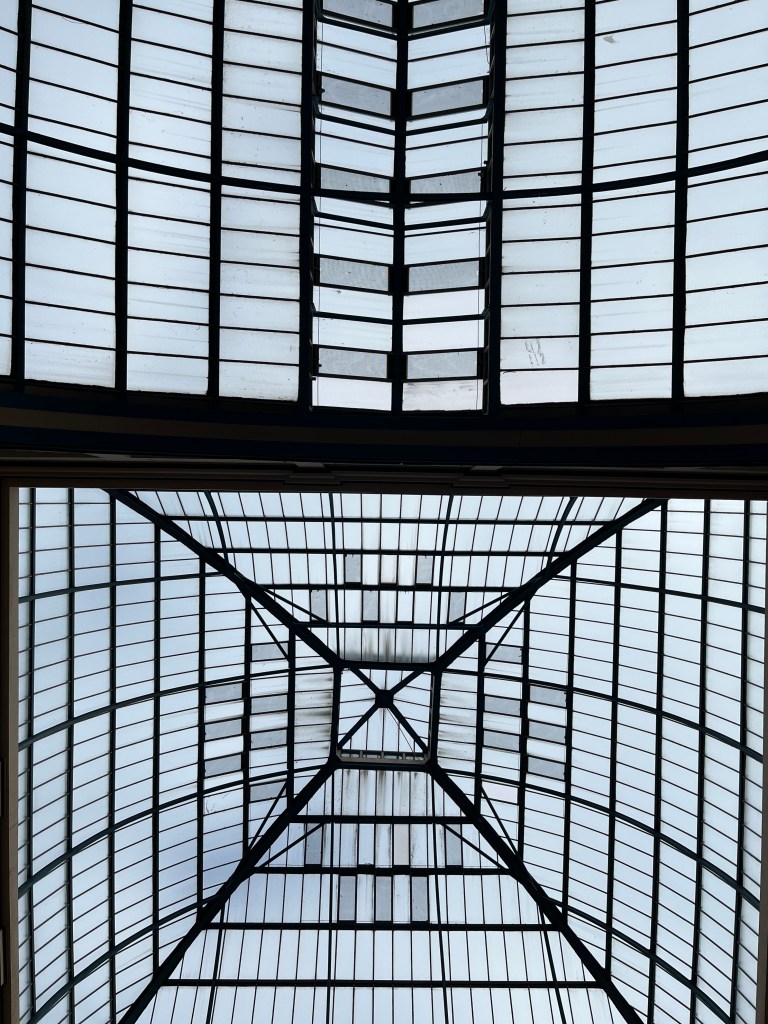
Alexandra Palace ceiling 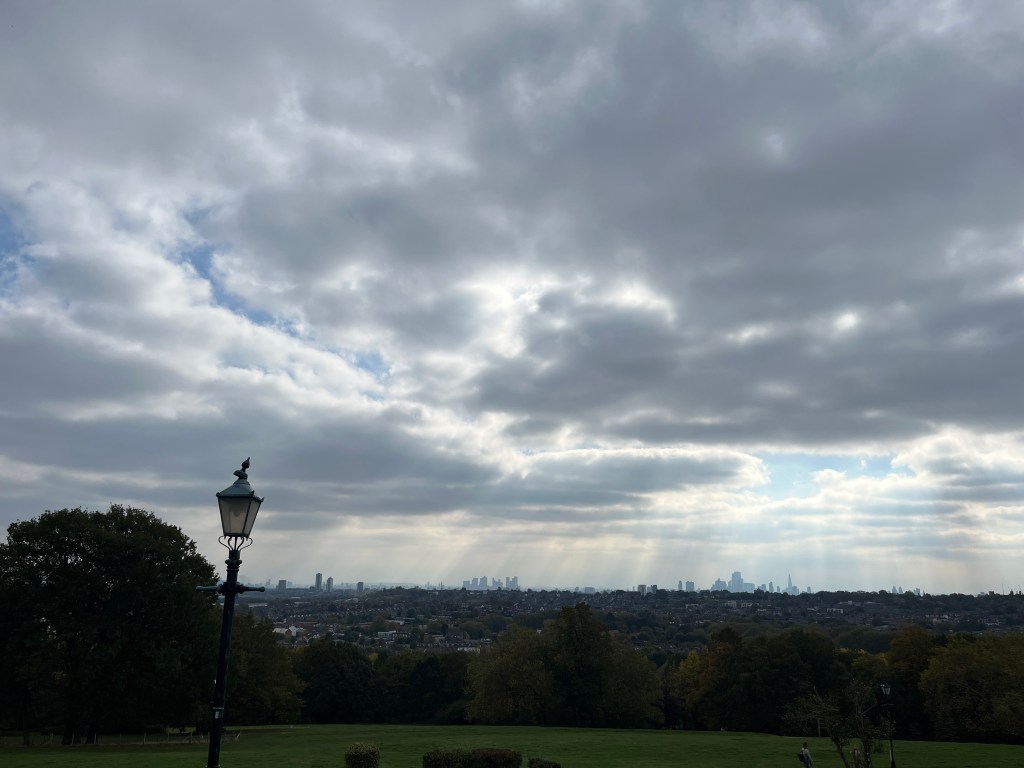
view over London from in front of Alexandra Palace Straight after entering was the first exhibition; a selection of works from The Quilt Collection. I was blown away by the intricacies of the works and delighted by the range of techniques.
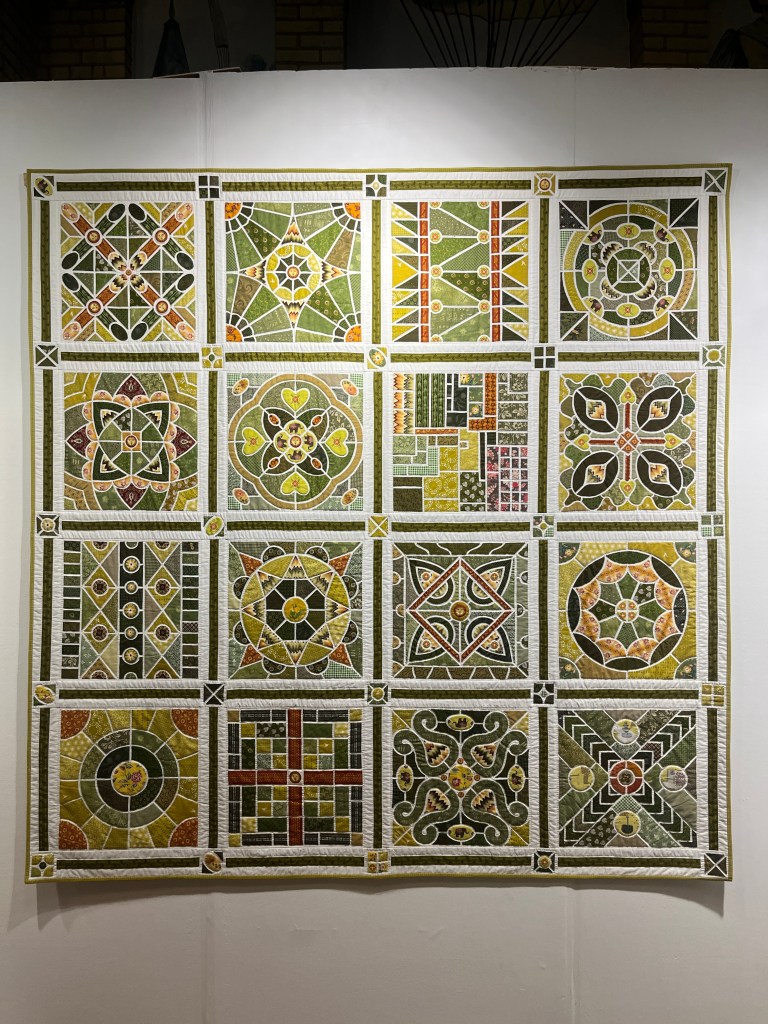
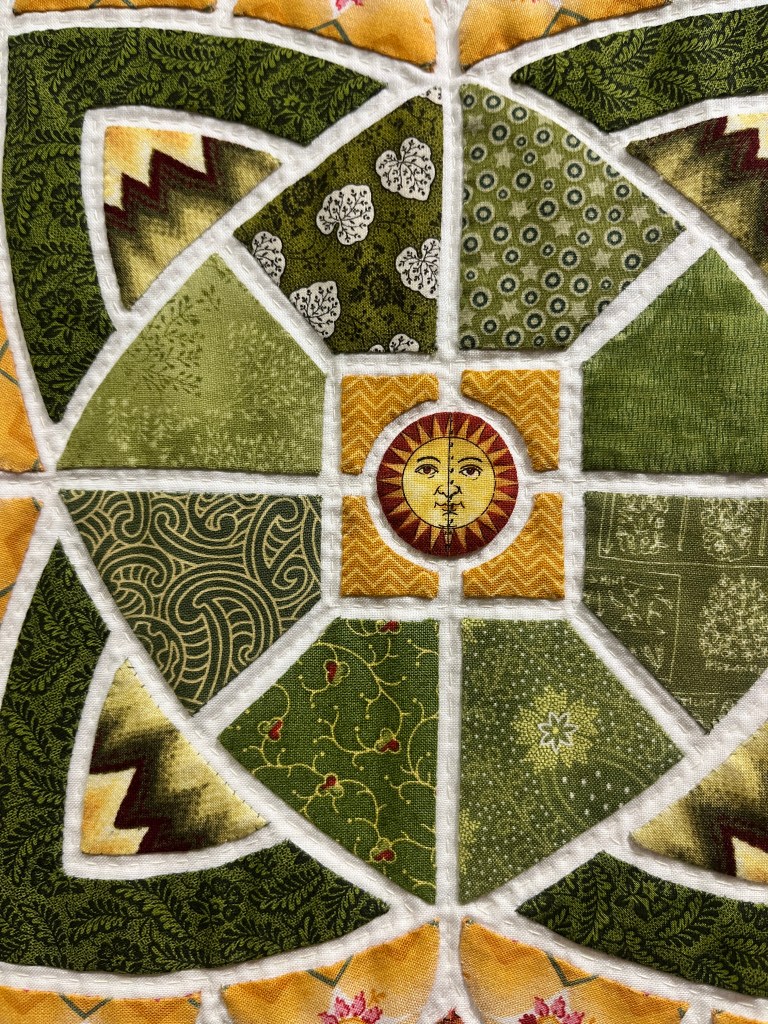
Traditional Category: Sonia Higgs, Parterre, hand appliqué, hand-quilting 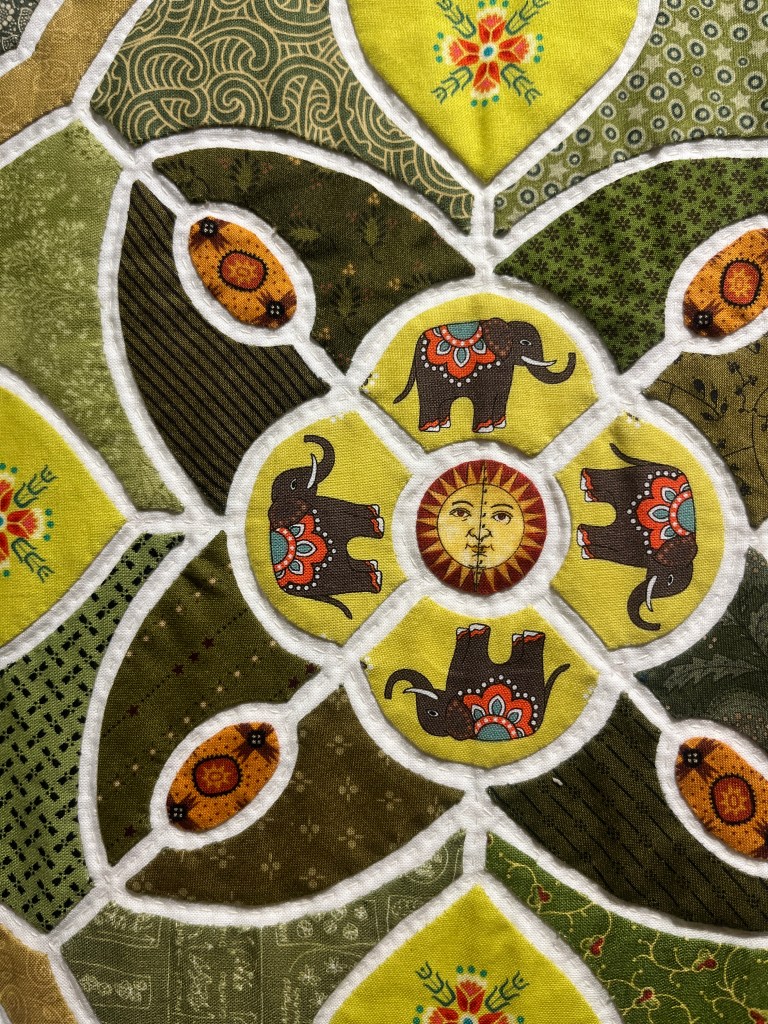
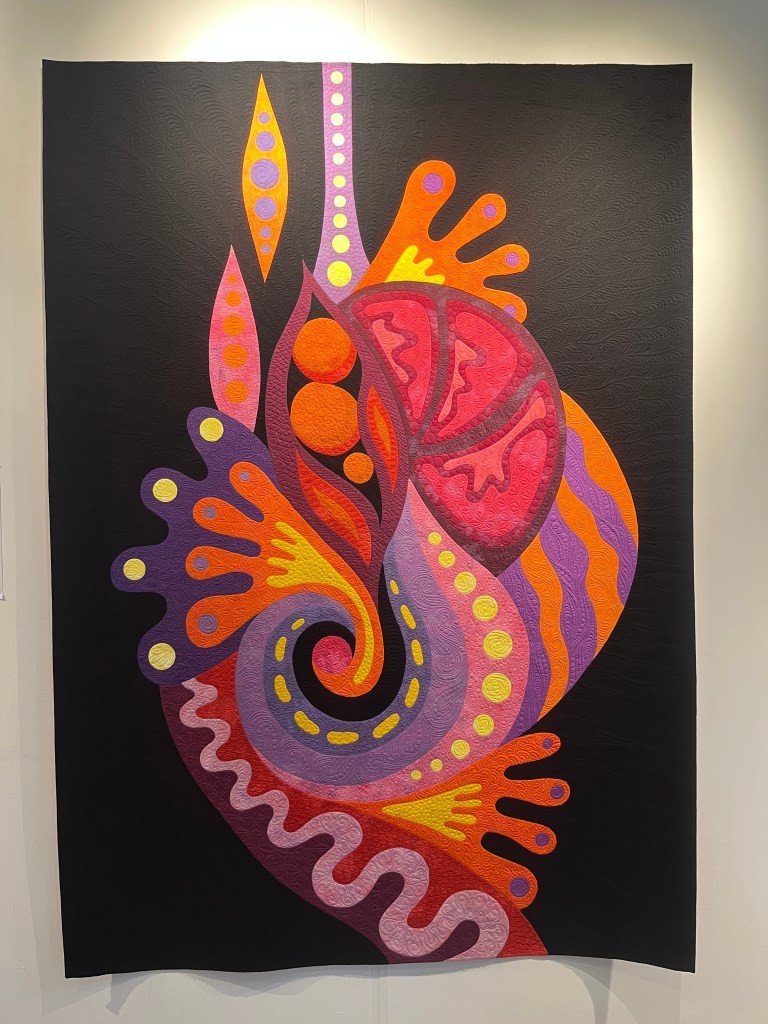
Contemporary Category: Vendulka Battais, Open to Interpretation, applipiecing, hand guided quilting on a longarm 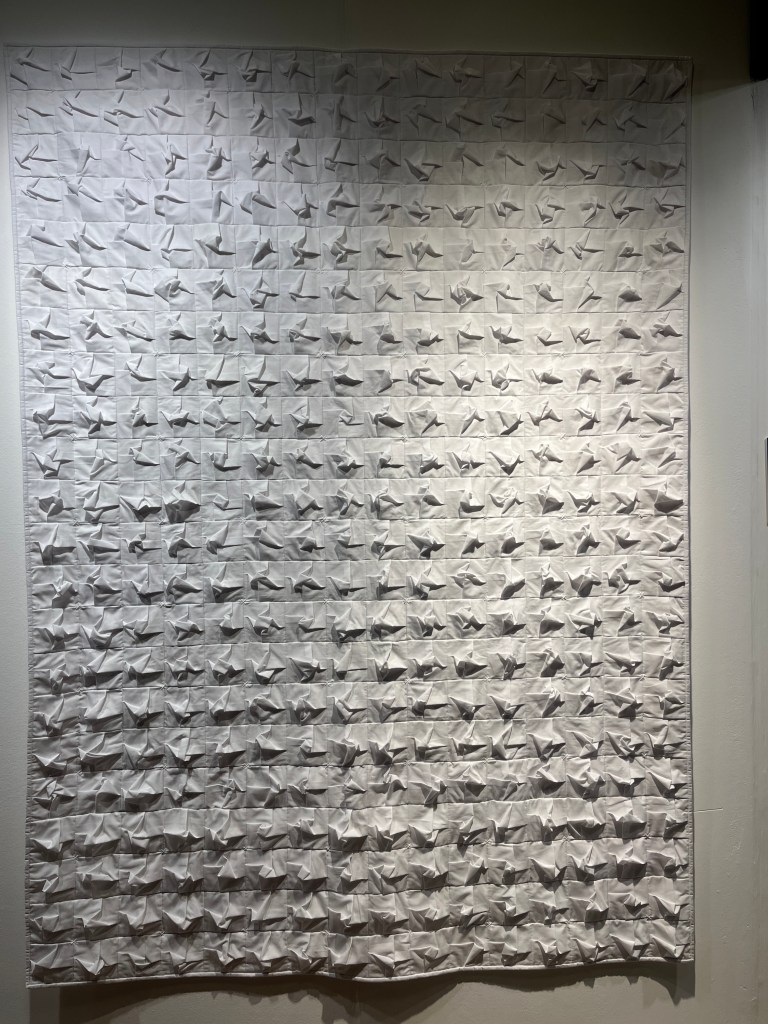
Sustainable Category: Janel Vavrenyuk, ‘Snot a Lab Coat Anymore, fabric folding, piecing, QAYC backing, hand tying quilting, machine binding 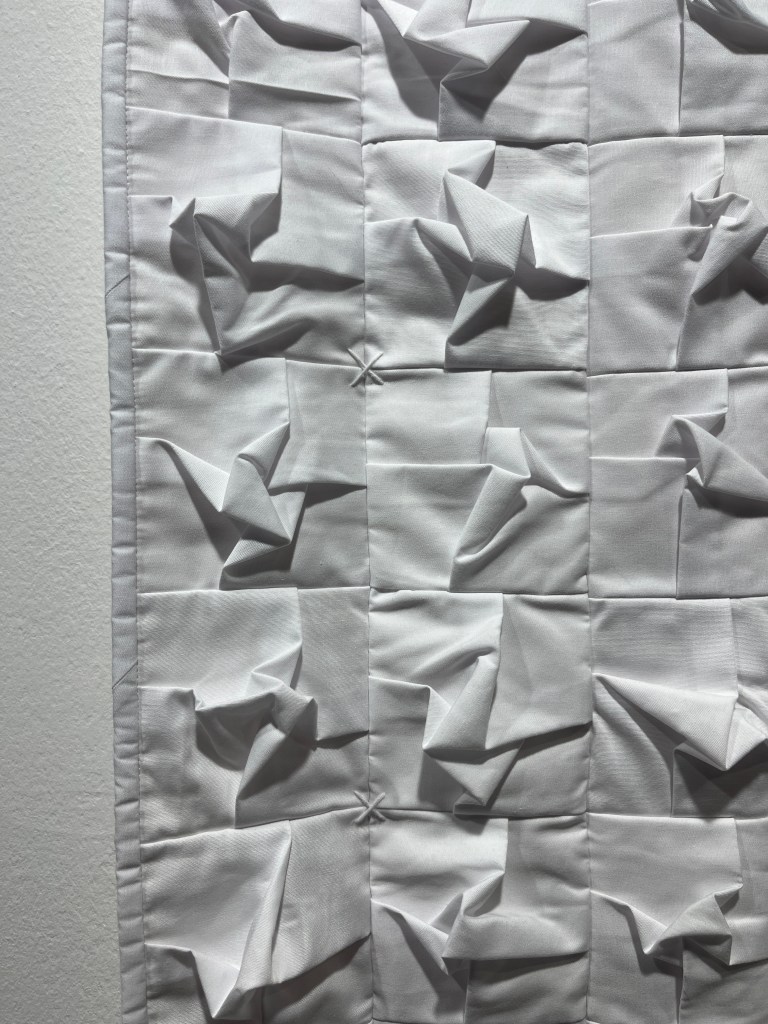
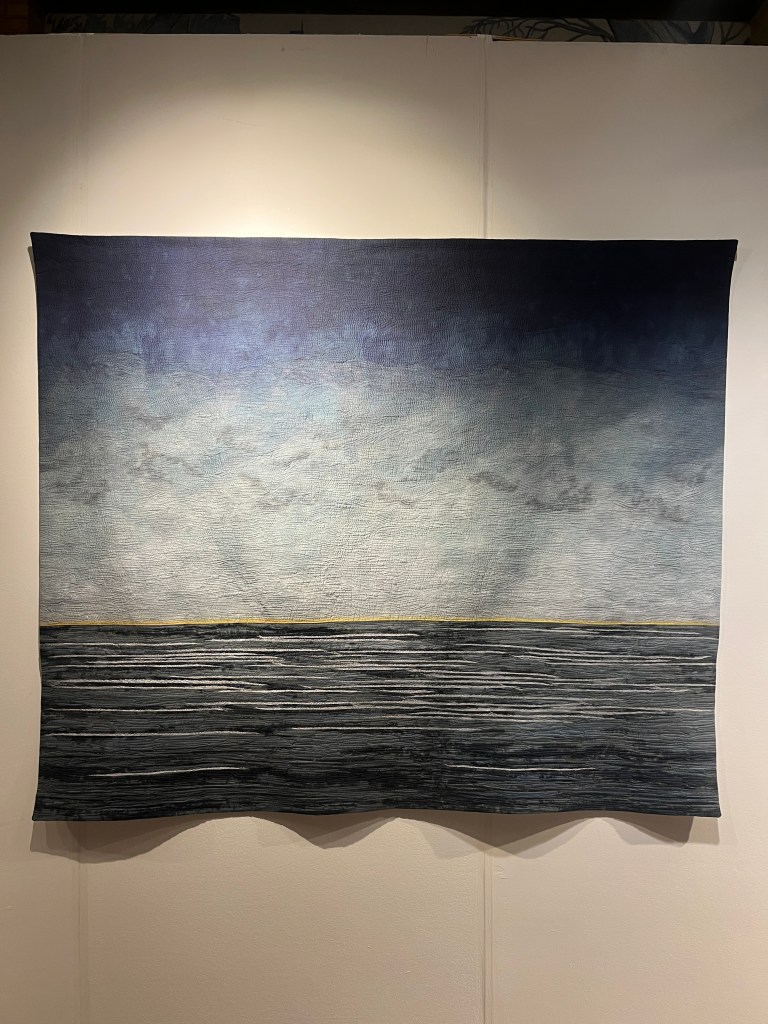
Art Category: Sarah Lynkins Entsminger, Morning Fog, machine piecing, machine quilting, painting 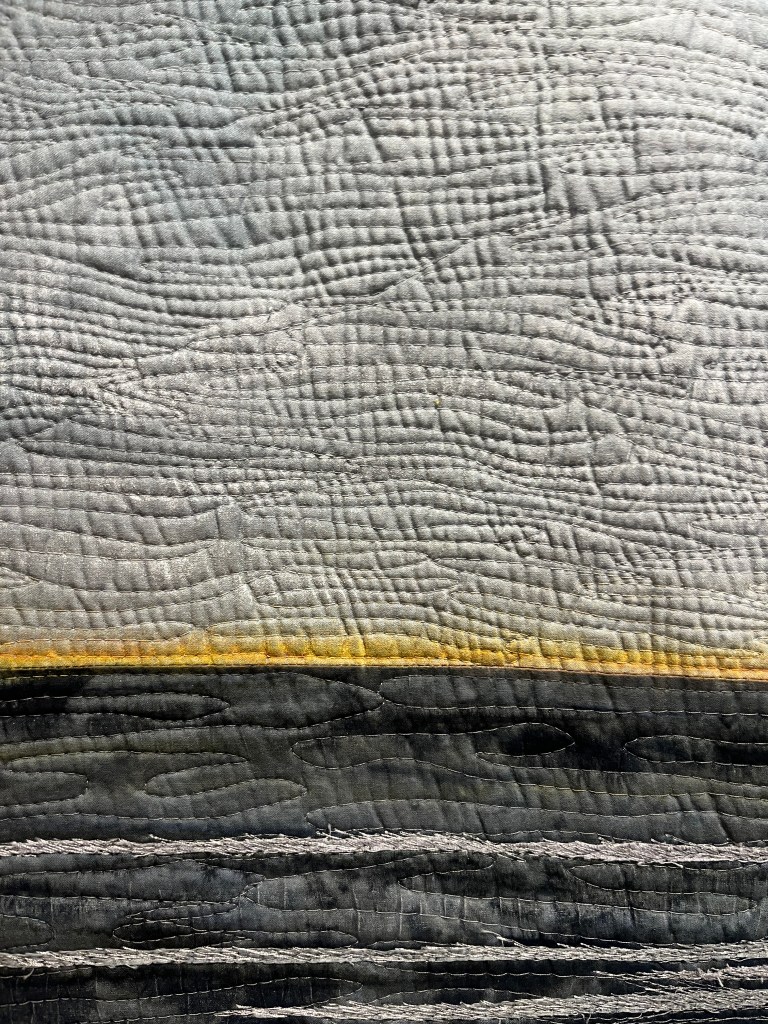
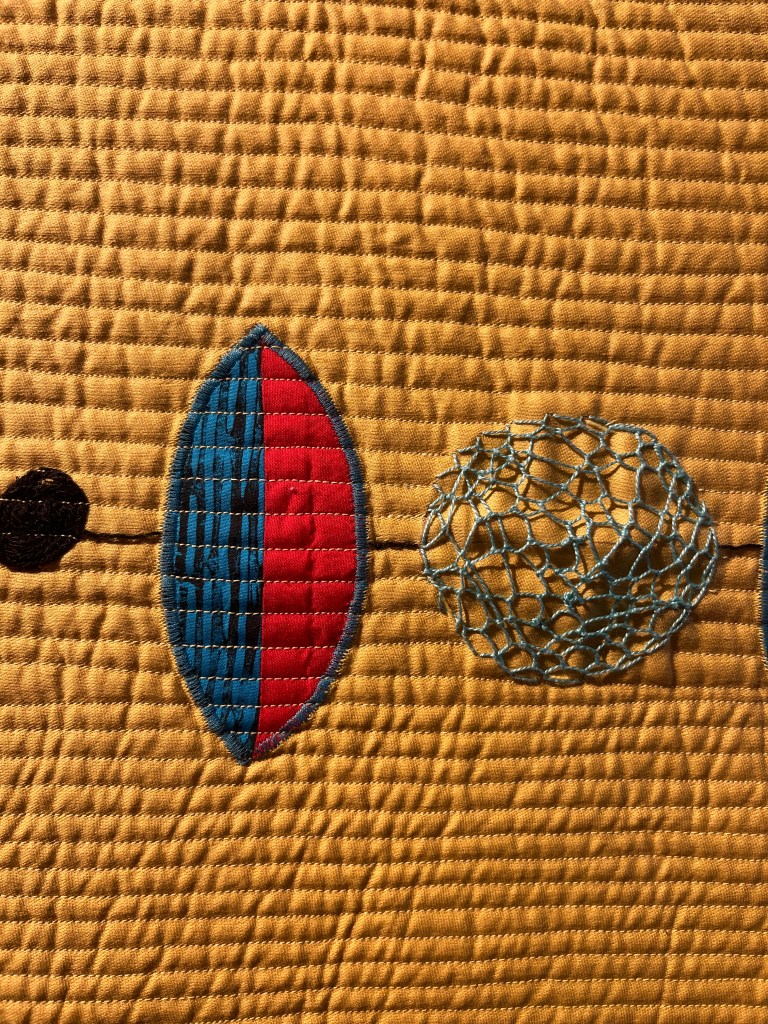
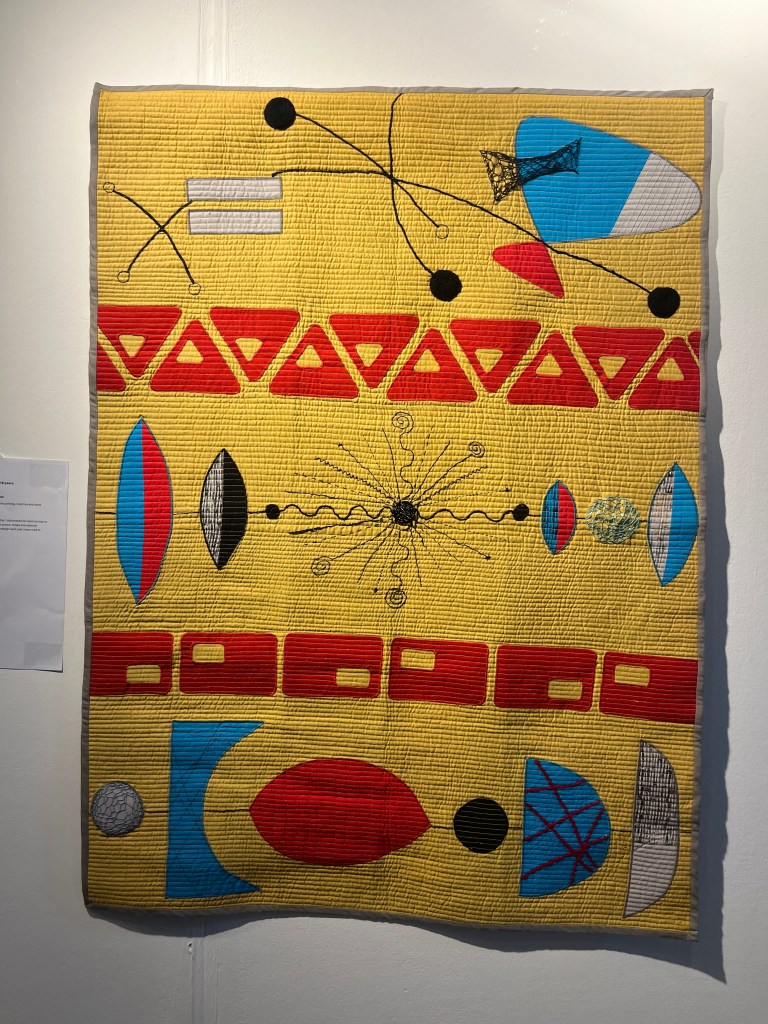
Young Quilter/Embroiderer Cat 14-18 years old: Alice S. Grout, Sandwich Technology School. applique, couching, beading, macrame, pleating, lino printing, embroidery, patchwork. 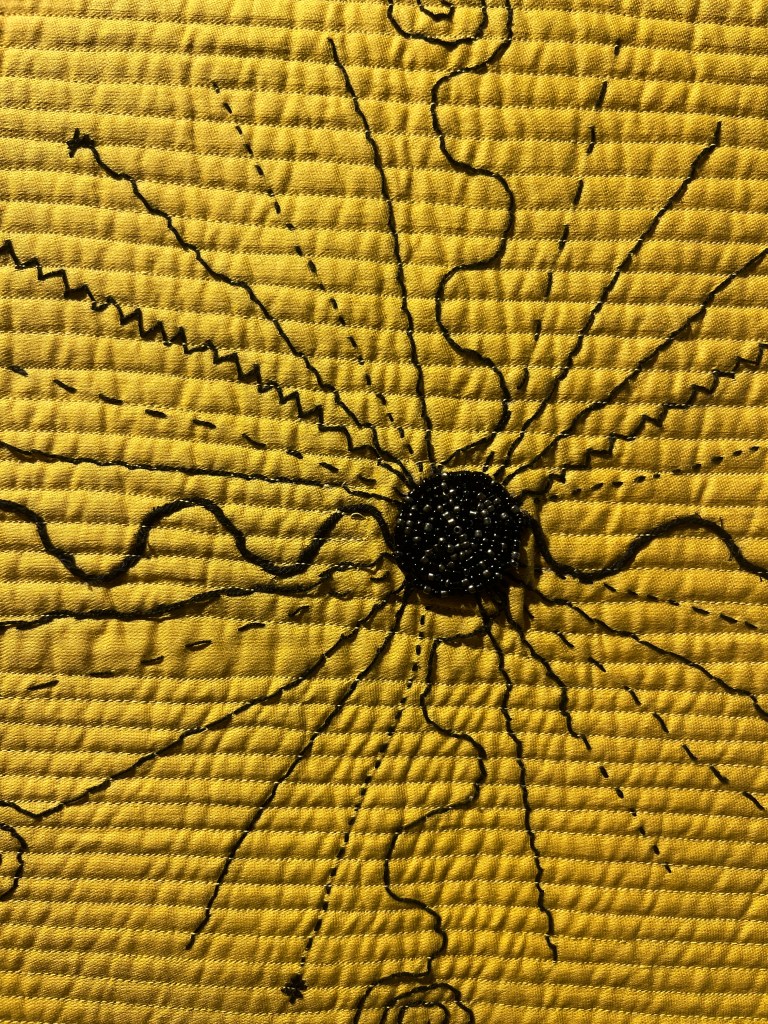
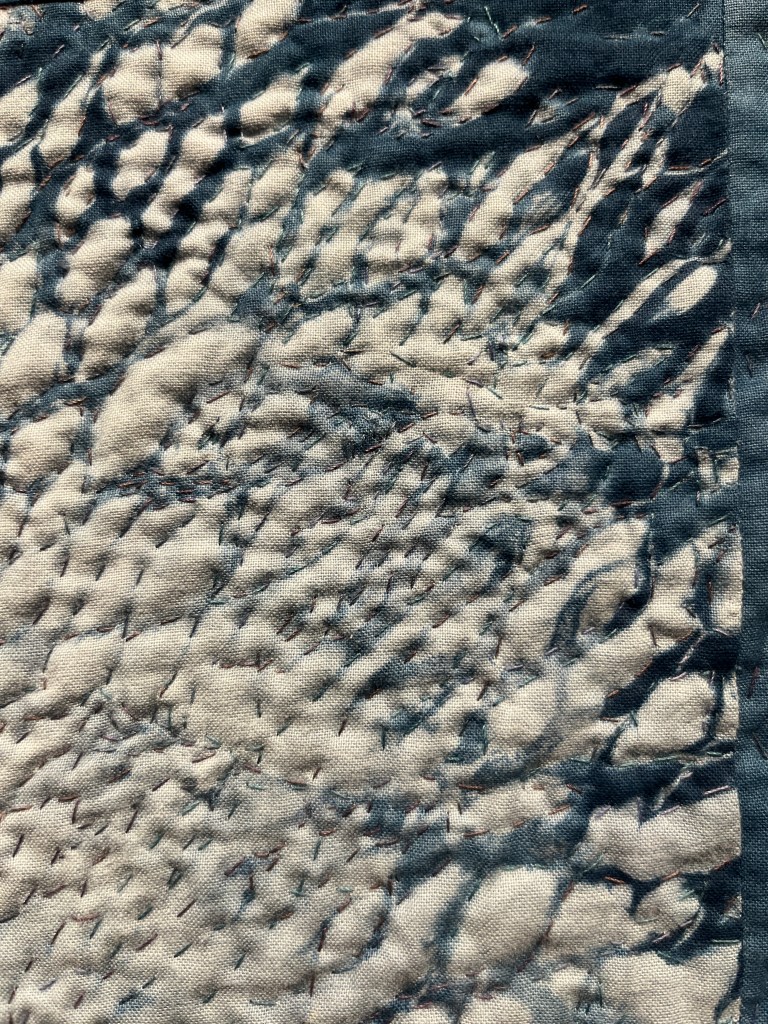
These were my favourites! I could imagine showing this to my Textile Art students and seeing if we could perhaps create a collaborative piece. See the stitches on the Shibori work? Amazing! Or the dying with rust? The students would love this!
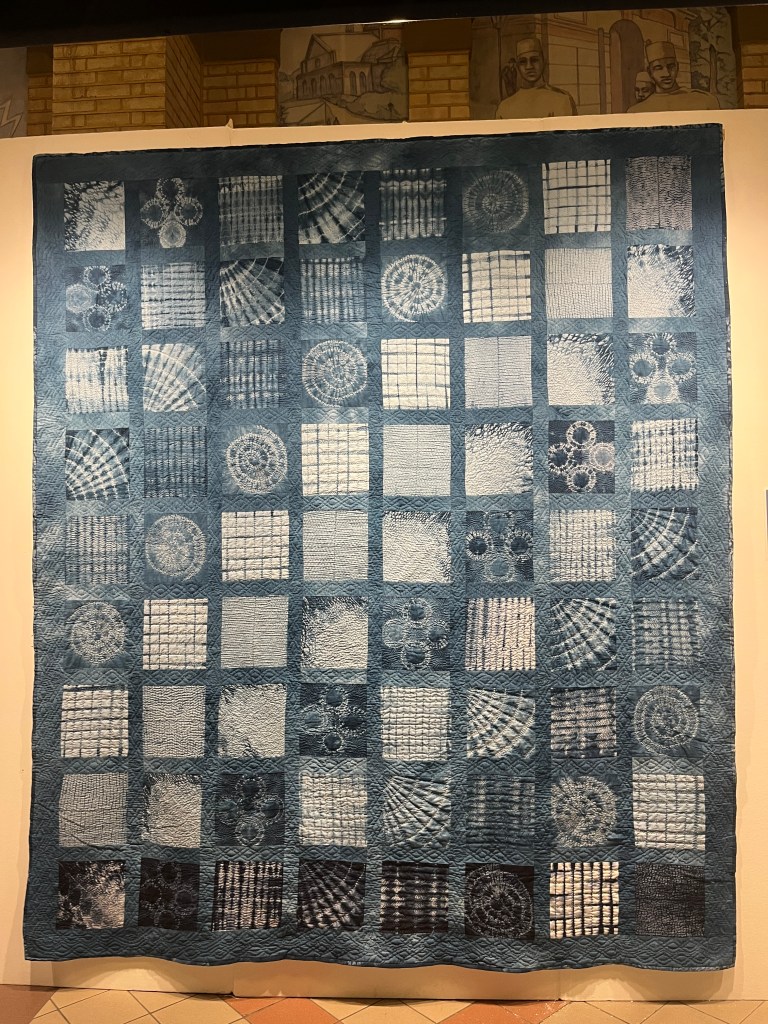
Novice Category: Therese Williams, Hand stitched Shibori, hand-dyed and hand-quilted cotton 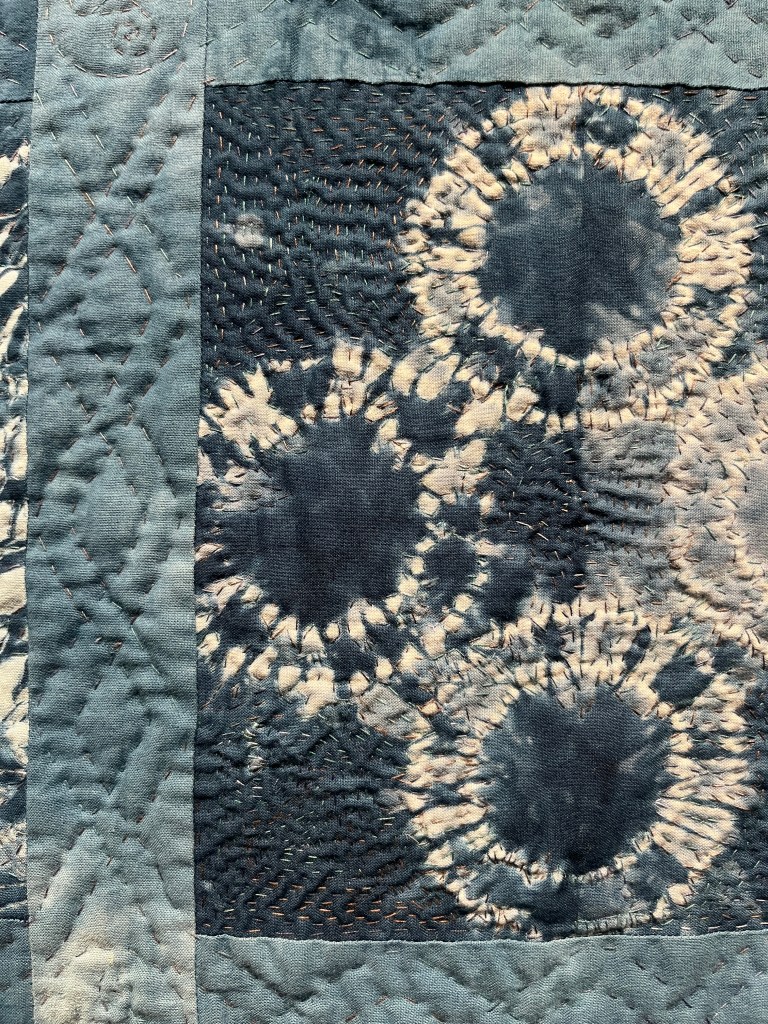
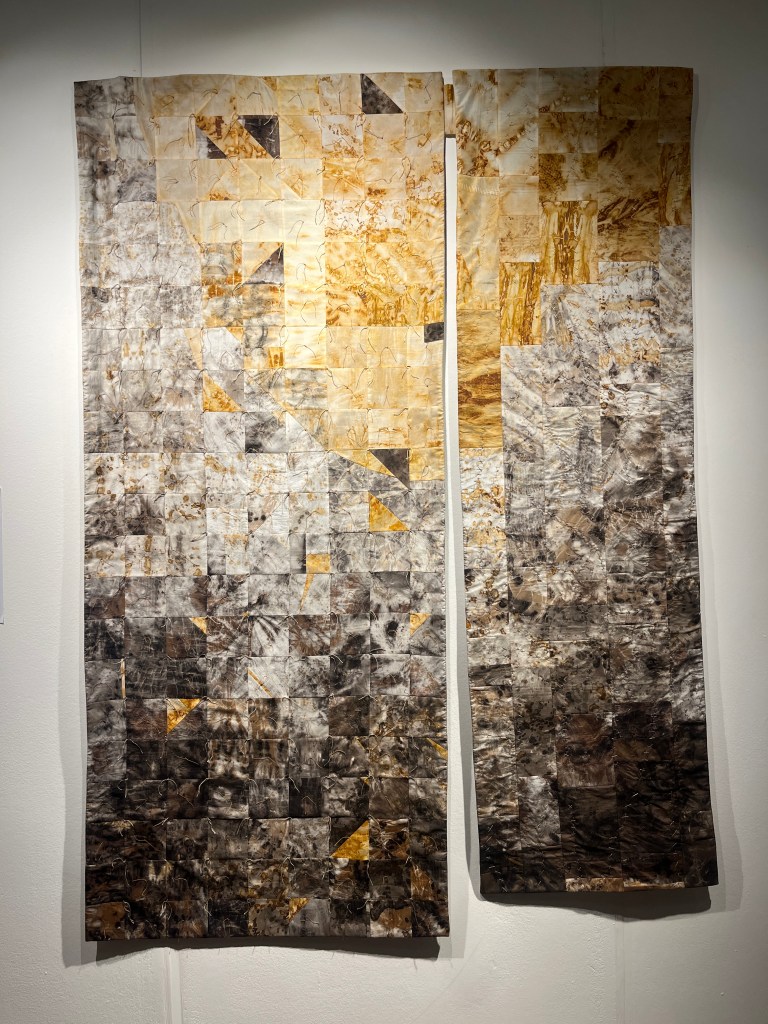
Group Category: Beartown Patchworkers and Quilters, Rust Collective, silk and cotton dyed by group members using metal, tea, vinigar, pieced and hand quilted 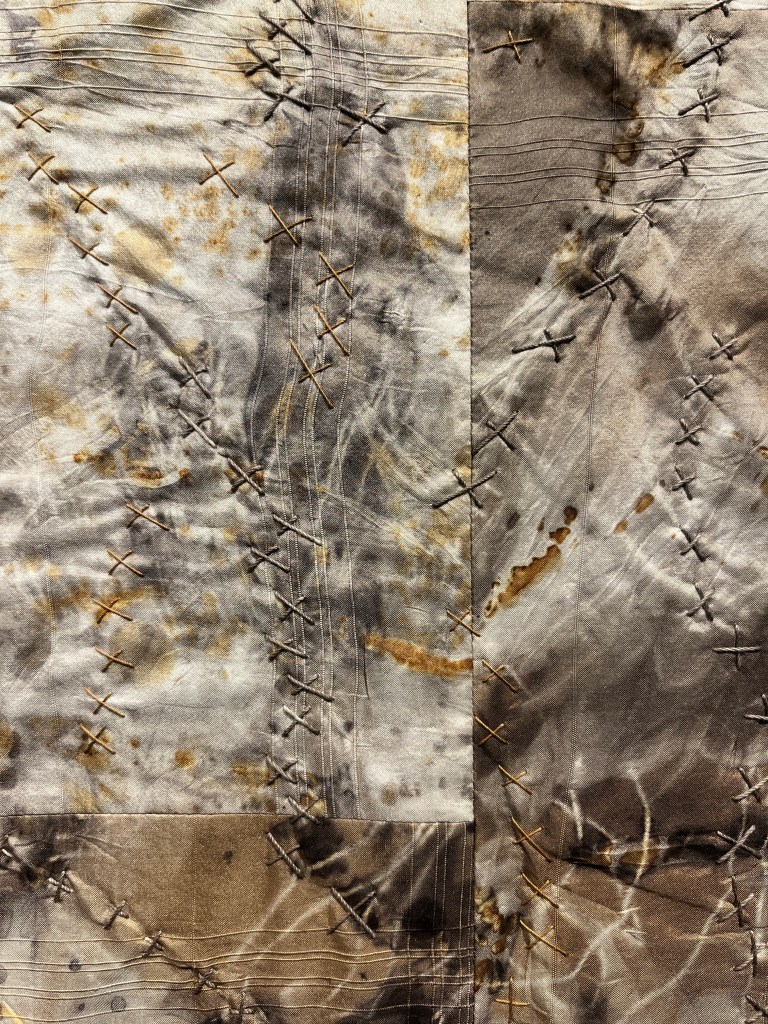
I booked the Dresden Delight workshop. I have made quilts before, but nothing as intricate looking as this and I thought this could be a technique I can use in my own work or it would at least look really cool on the back of a denim jacket. Everything you needed was provided and I was so pleased seeing the fabrics! I learned a lot during this workshop besides making the Dresden Delight; especially how to do Inside-Out Appliqué (were you sew your piece right sides to a backing and then turn it out before pressing and attaching it) and chain sewing (were instead of cutting your thread each time after sewing a piece, you just keep going, feeding the next piece through).
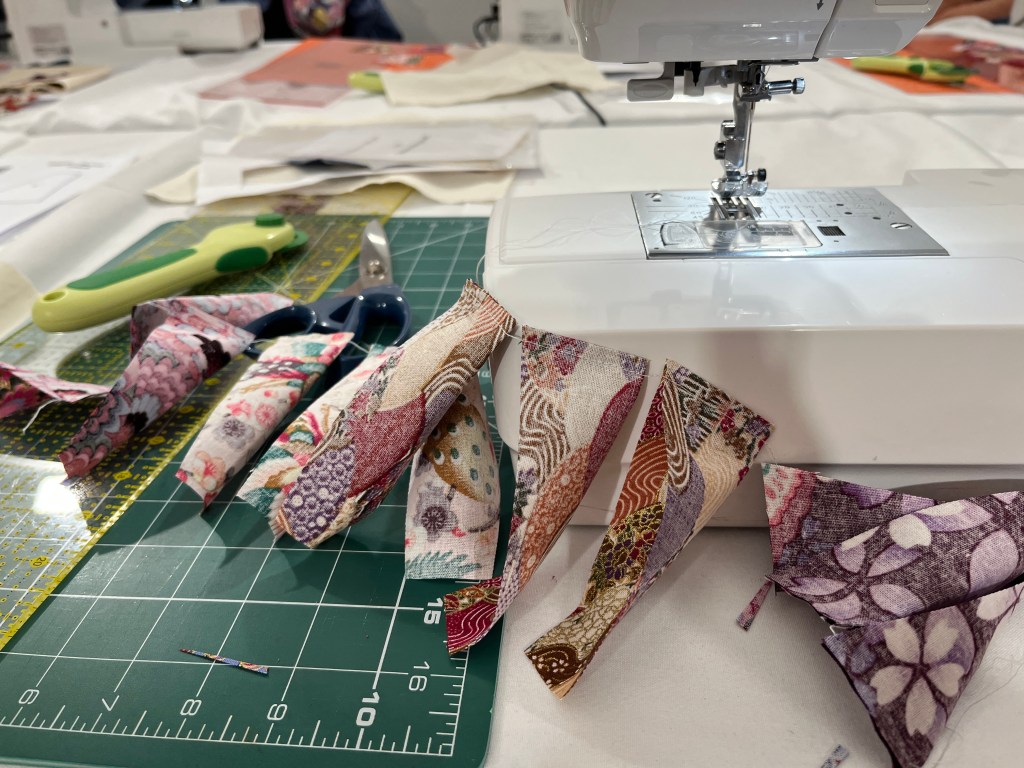
chain sewing 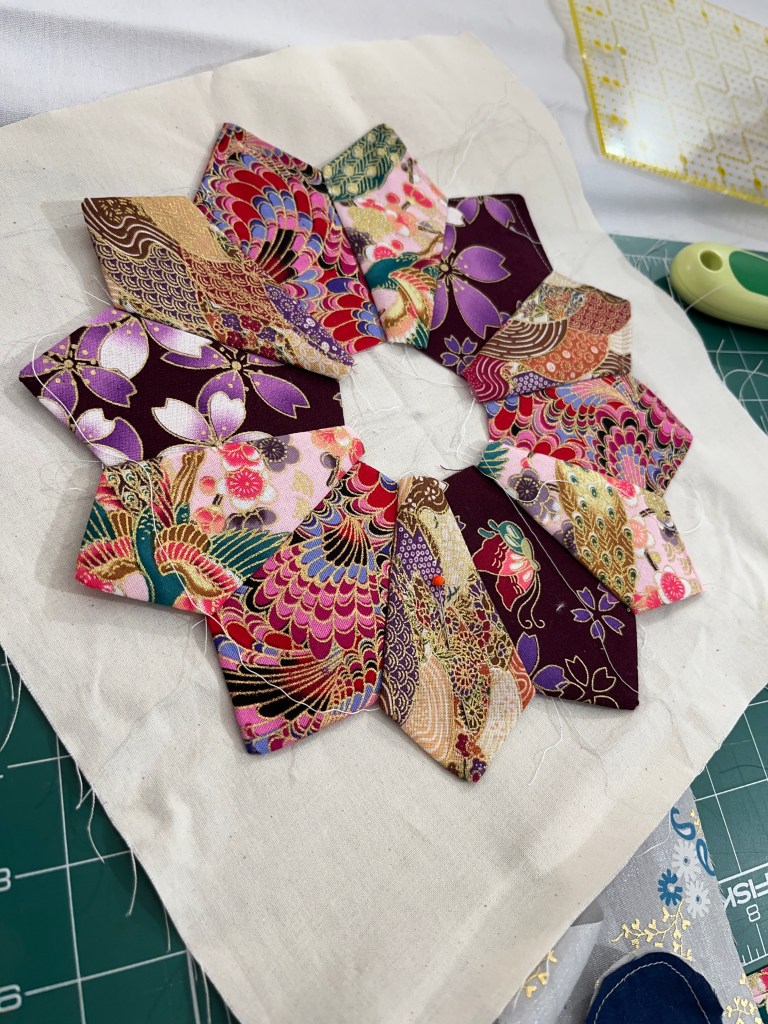
nearly done 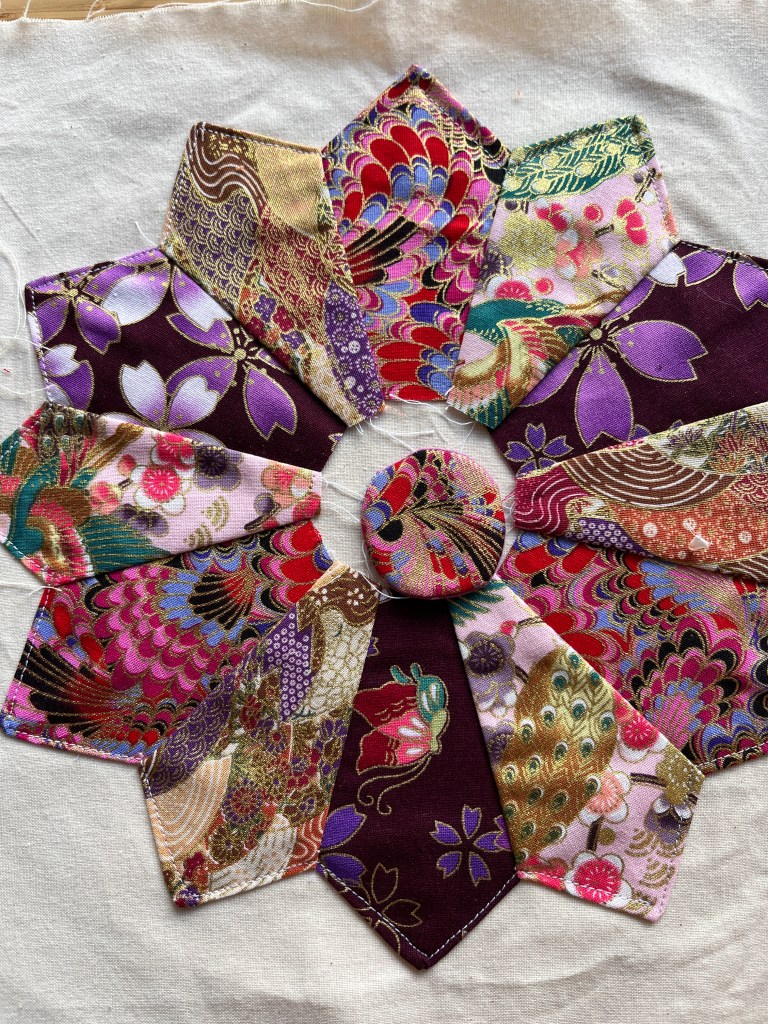
too small!!! 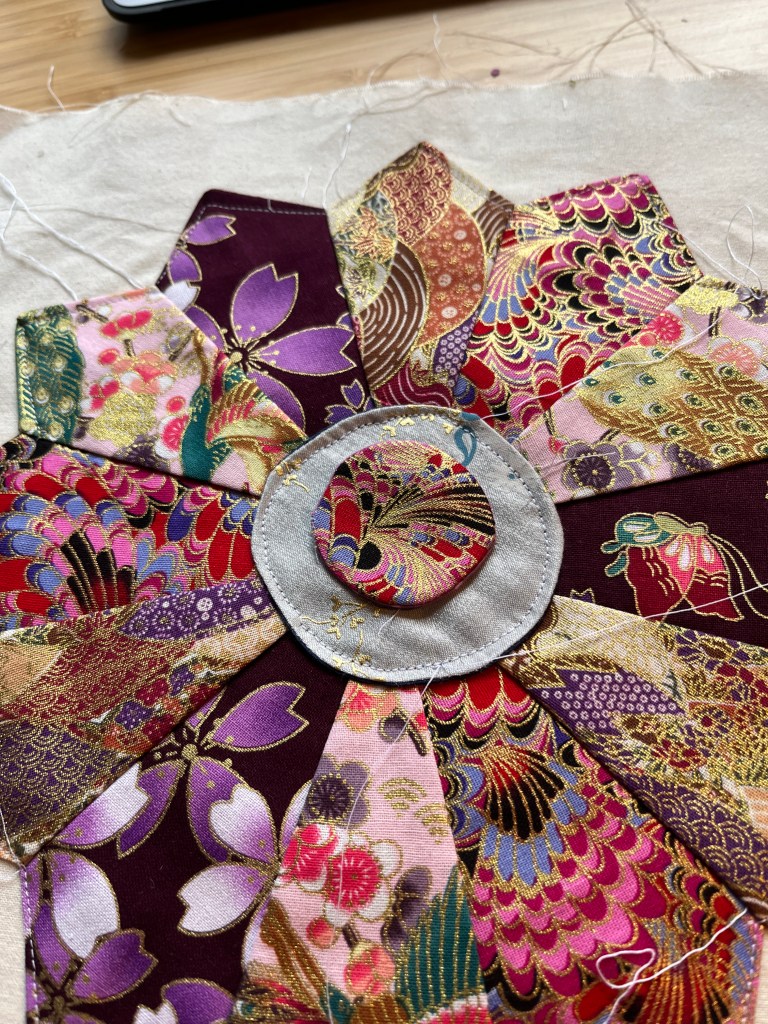
hate it even more! 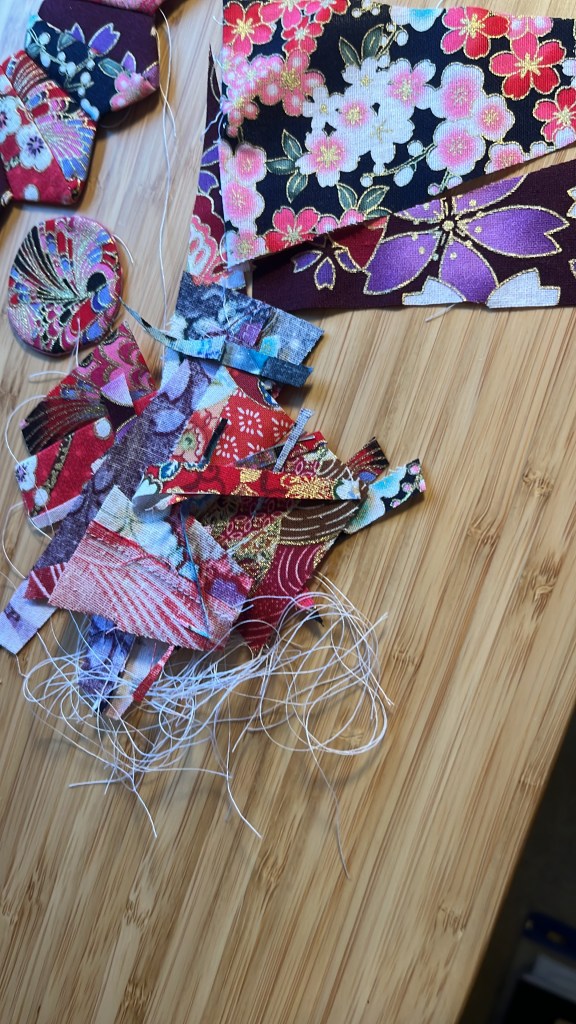
my scraps I was able to complete all the petals and made a start attaching the rosette to the backing fabric before the end of the workshop, I worked as fast as I could! Unfortunately, I made my centre piece too small. When I got home I had a piece for grey fabric left and made a centre piece with it, but I hate the look of it, the colour is wrong and so is its size. I don’t have large enough fabric pieces left, so I’ll have to piece some bits together, perhaps I can arrange them in a radial manner and that’ll go well with the rosette.
I asked the lady who ran the workshop if I could have all the scraps and she told me to come back later so she’s have more. I came home with two bags full of different scraps!

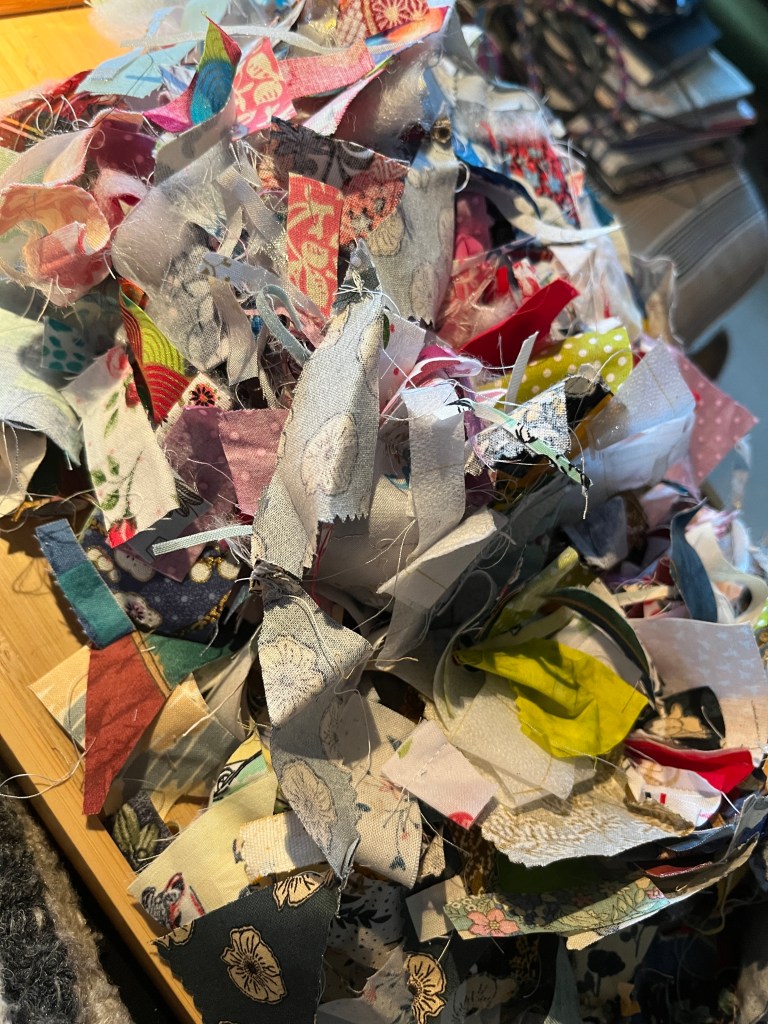
There were a lot of different workshops on offer. They had a mini exhibition at the entrance to show what you could create. I’m already excited for next year!
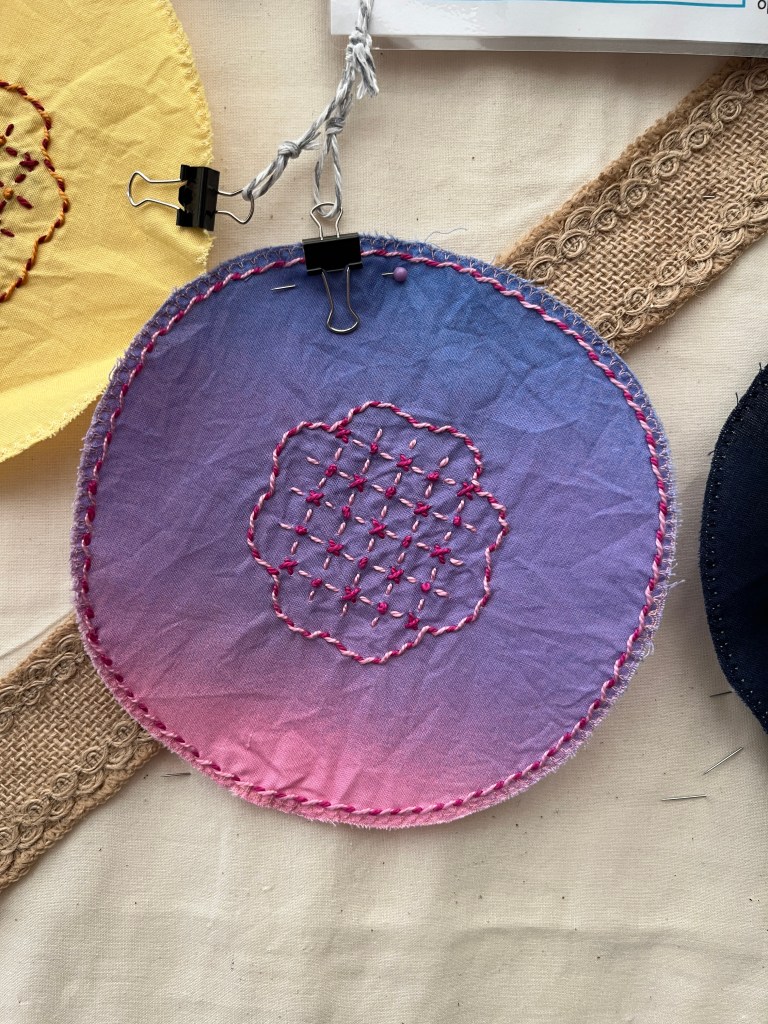
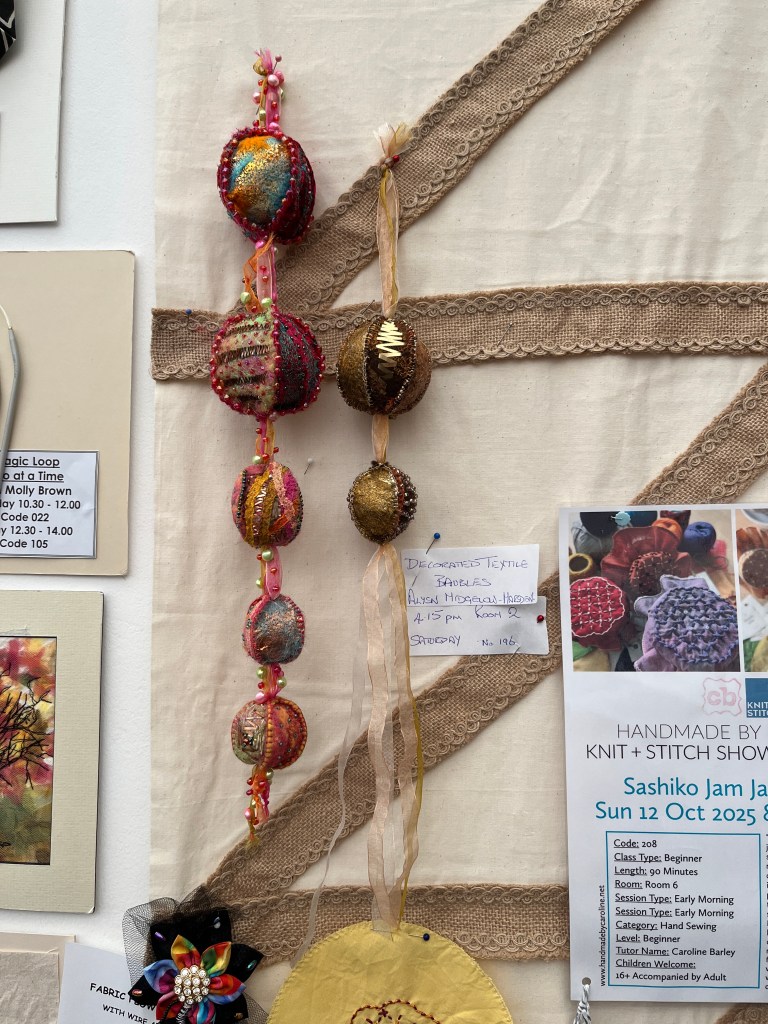
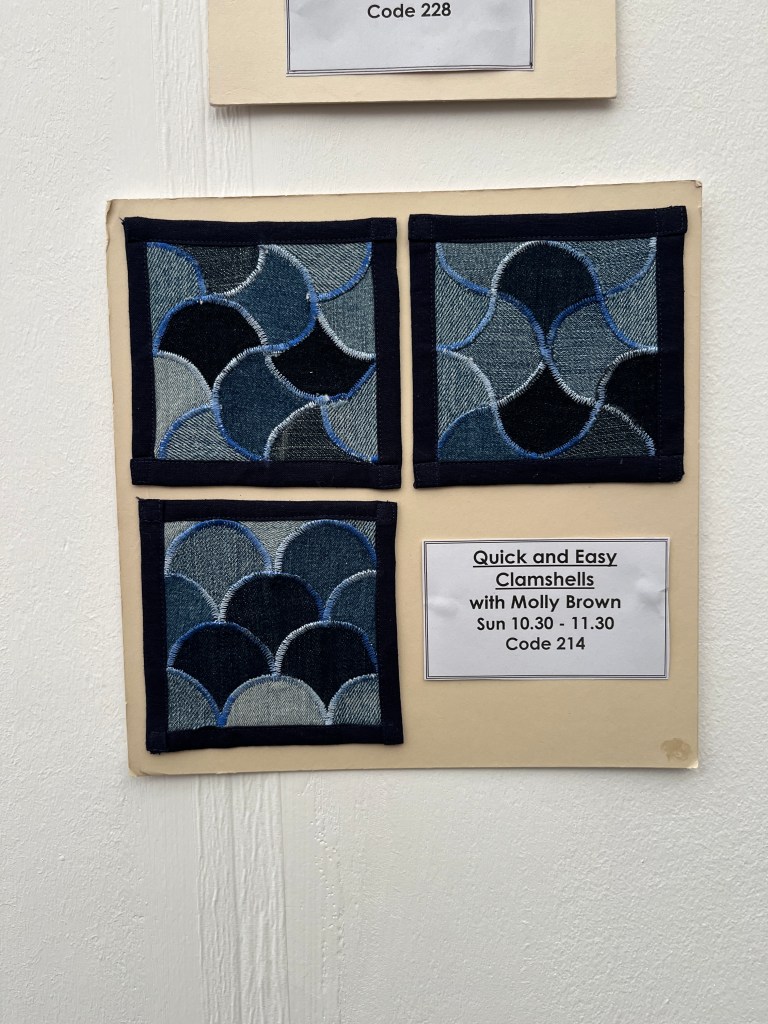
After my workshop I hit the vendors. It was a bit overwhelming there was so much on offer and it was pretty busy as well. A lot of vendors had excellent pieces on show from incredible quilts, to garments and works in progress such as the Shibori in image 3.
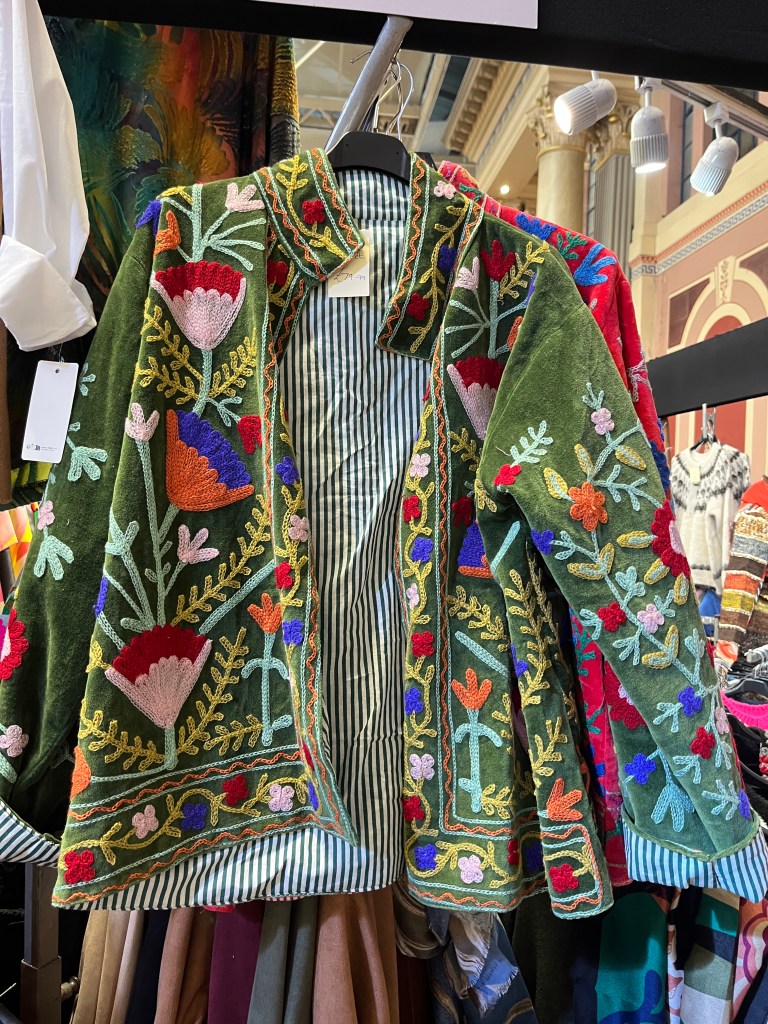
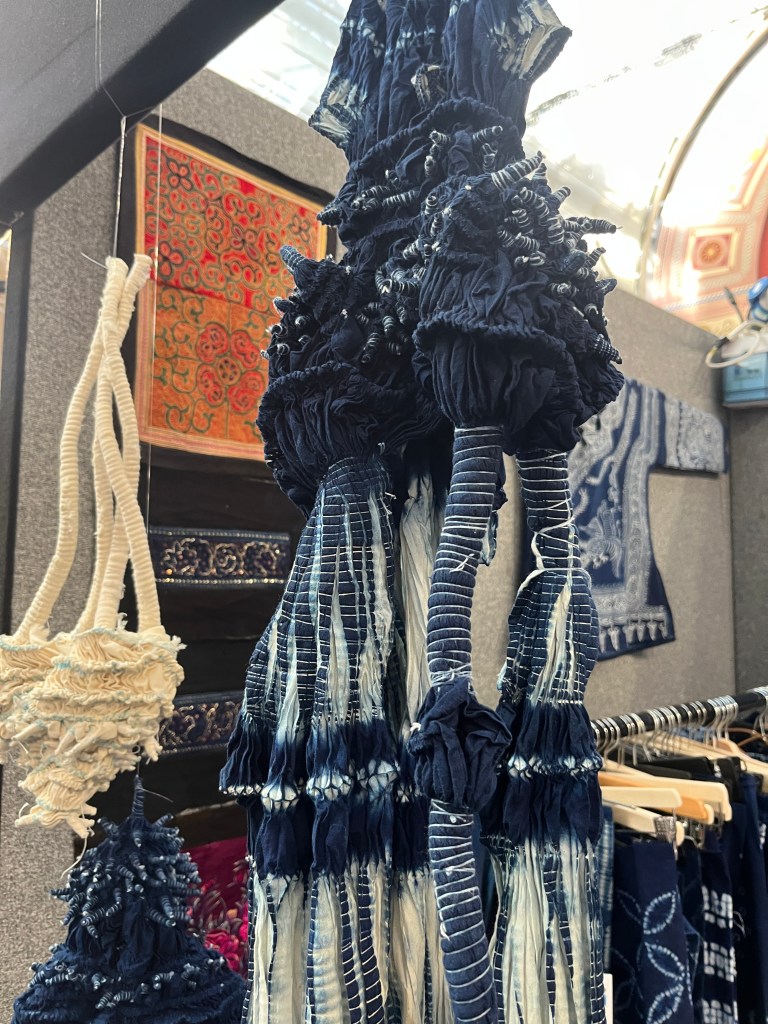
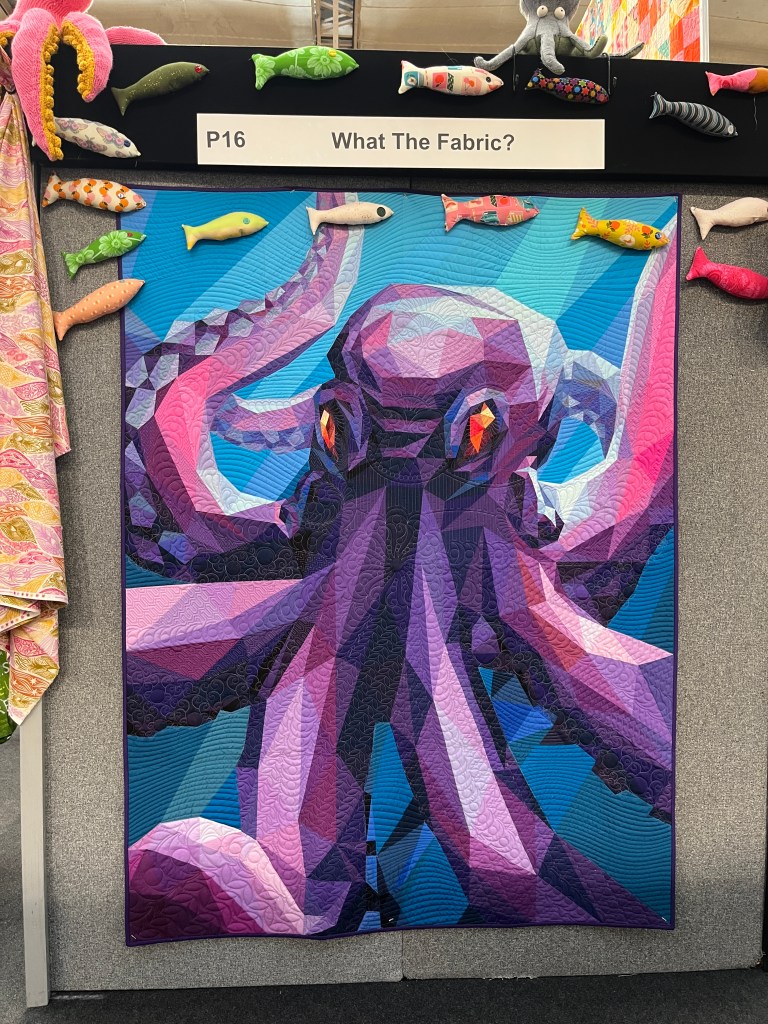
From there I meandered to the exhibition spaces. There was an incredible range of techniques and styles on display. Here are a few of my favourites.
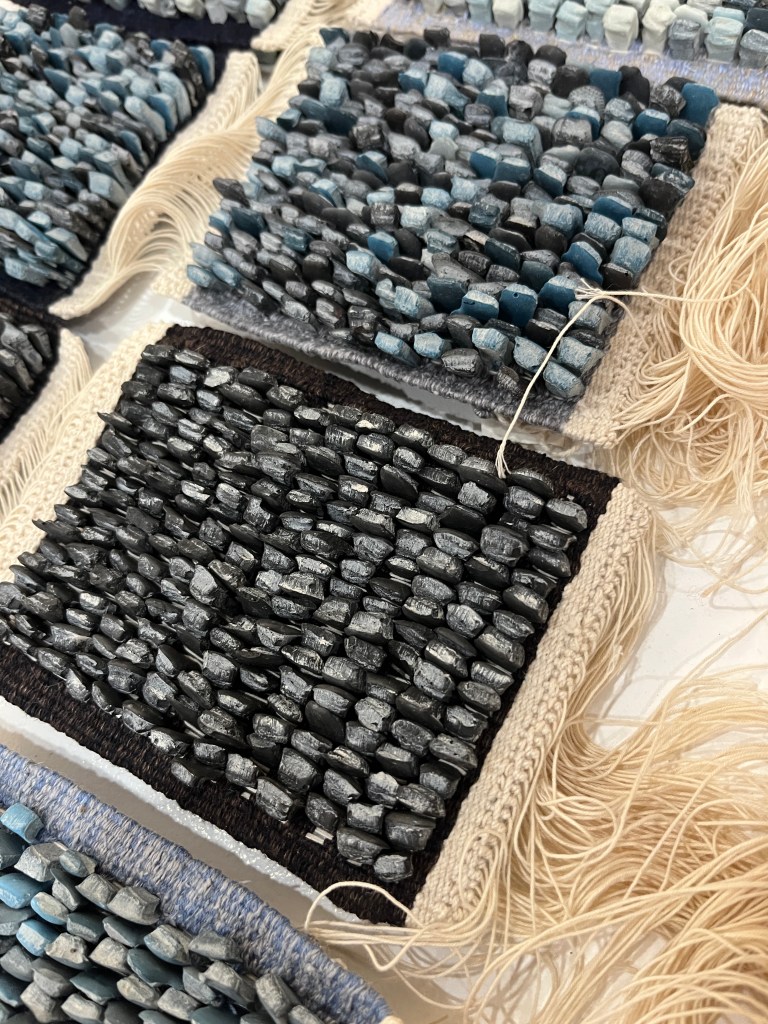
Jane Walkey, Guard Book Colour Study II-VI, 2021, Cast Jesmonite & Tapestry Weave 
Pauline Burbidge, Honesty Skyline, 2015, Cyanotype, markel stick, fabric rubbing, hand-quilting 
Pauline Burbidge, Reeds 10, 2007, fabric painting, hand-quilting, cotton. 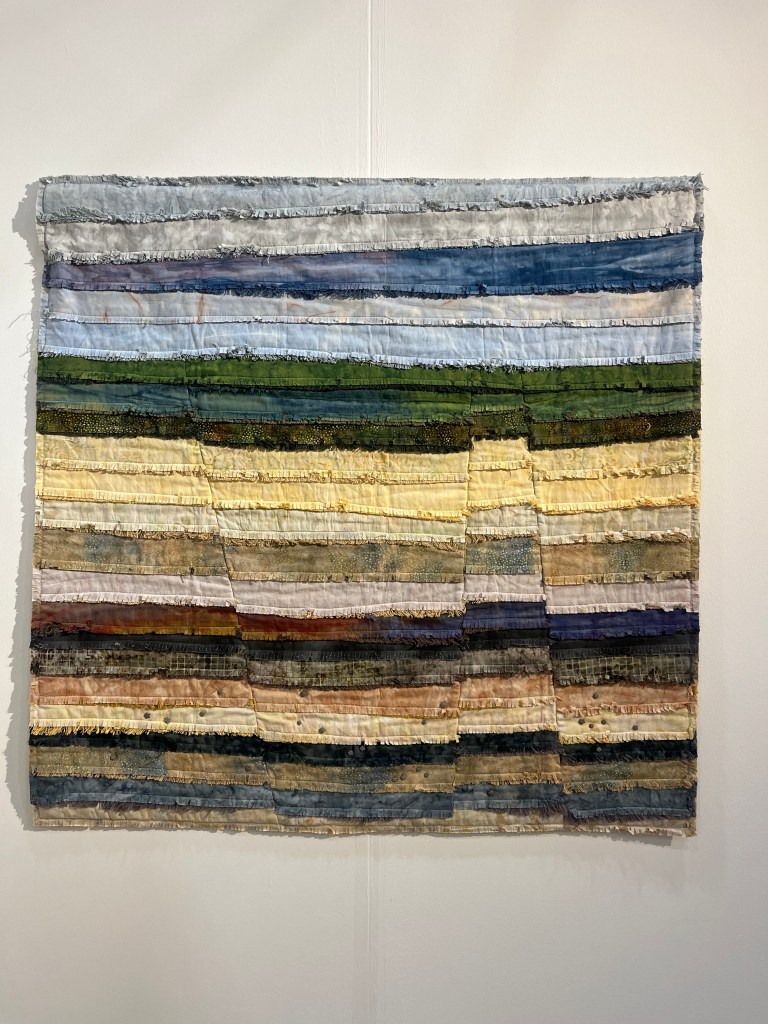
Judi Mendelssohn, It’s All His Fault!, 2004, cotton, warm & natural wadding 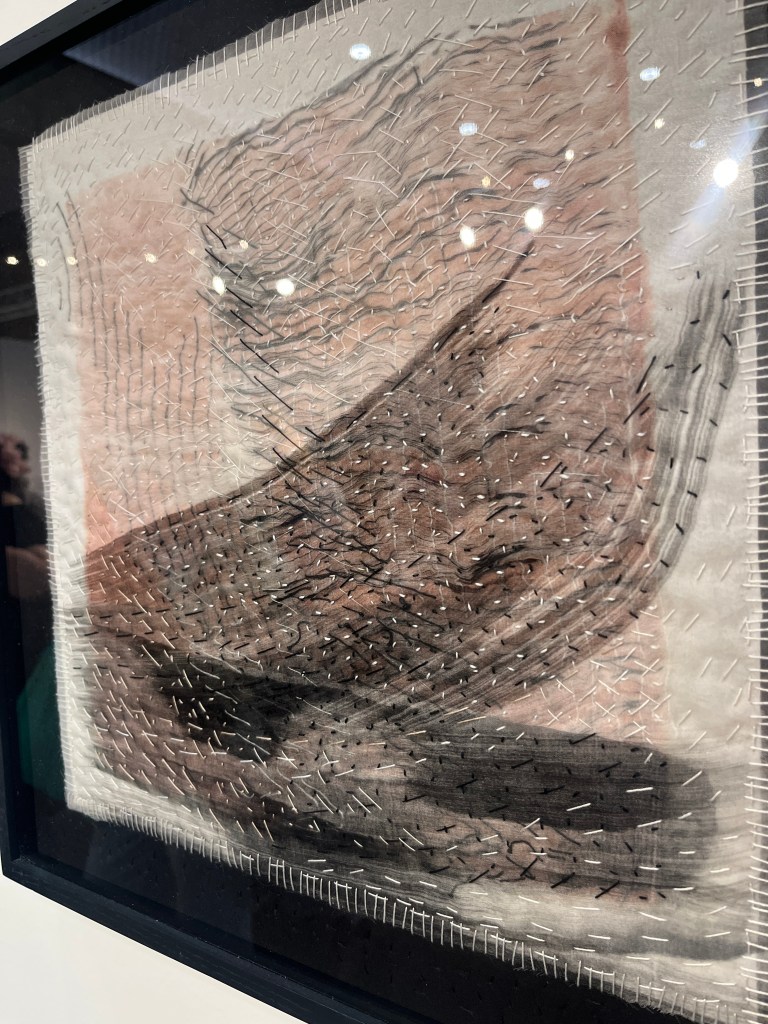
Pauline Burbidge, Causeway Two, 2010, fabric painting, hand-quilting 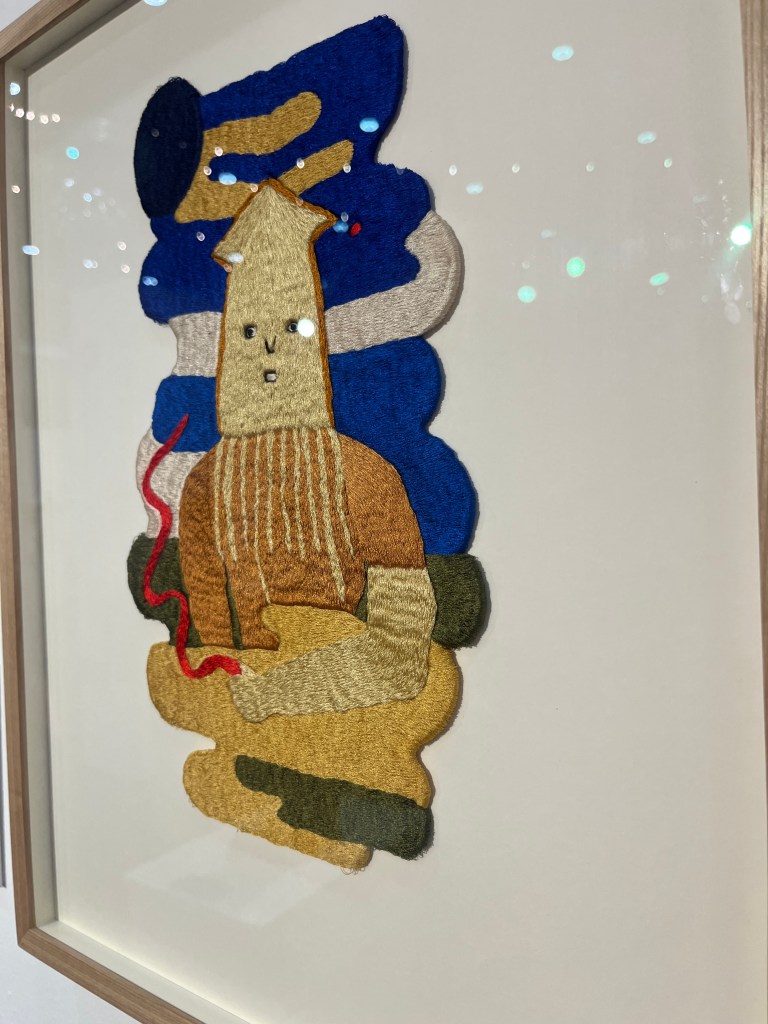
Woo Jin Joo, The Squid Man, 2024, Viscose thread embroidery 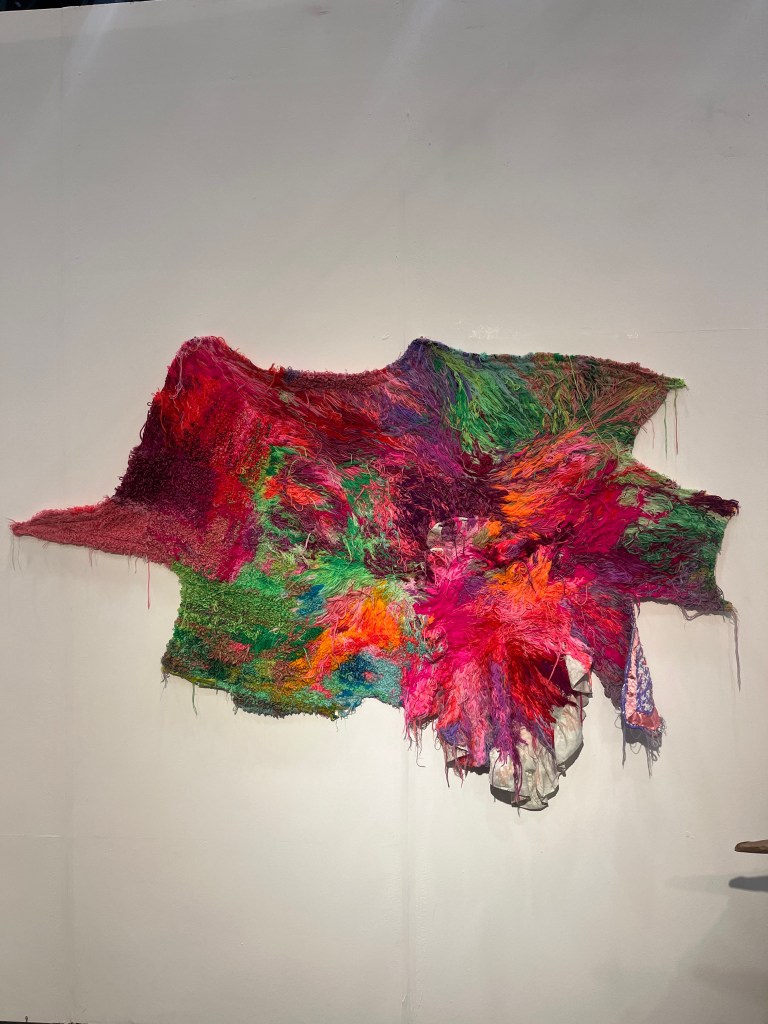
Carmen Mardonez, https://www.carmenmardonez.com/ 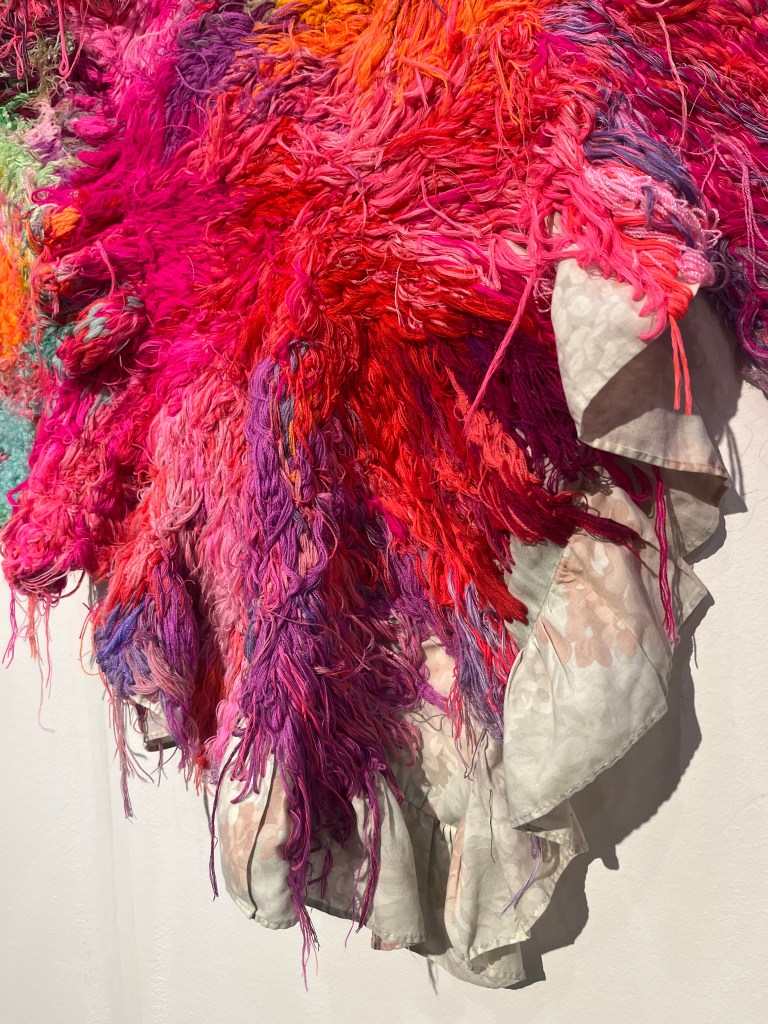
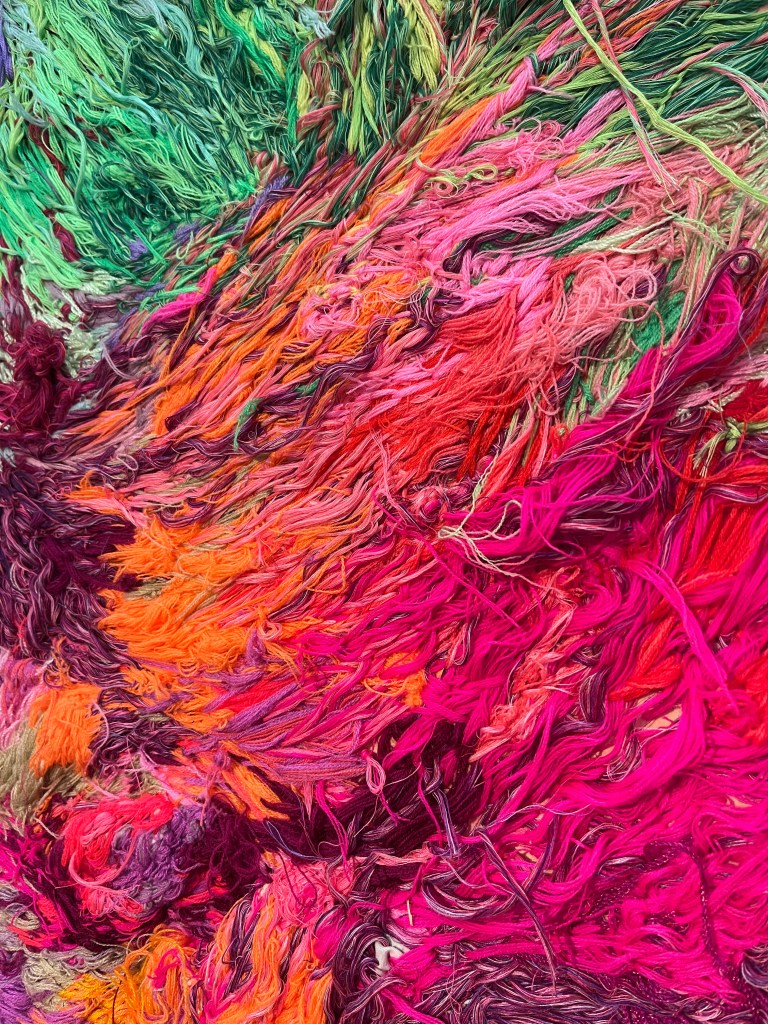
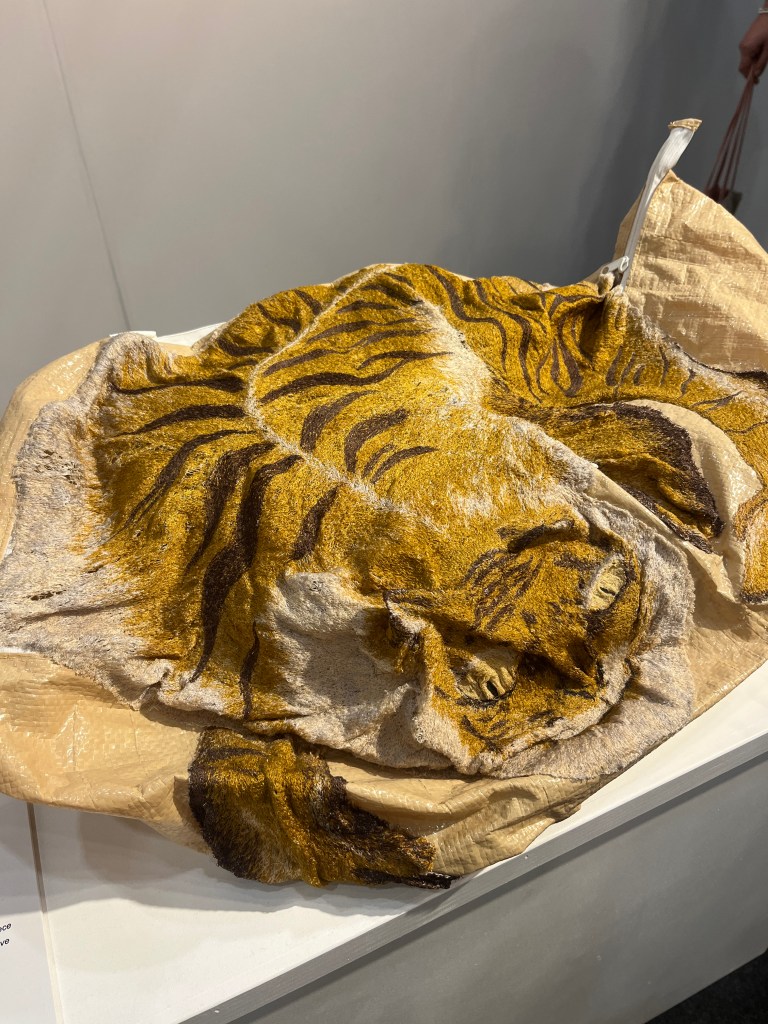
Woo Jin Joo, When a Tiger Dies It Leaves Behind Its Skin, When a Man Dies He Leaves Behind His Name, 2021, IKEA bag, viscose thread embroidery There was so much, I was not able to visit each and once I had made my way through the gallery spaces I realised there was a whole other hall with vendors and exhibitions! By this time I was exhausted though, perhaps I should’ve taken a rest and have a cuppa tea to recharge but I was rather overstimulated. So, I headed home, inspired, satisfied and with lots of goodies for next projects and learning new things!
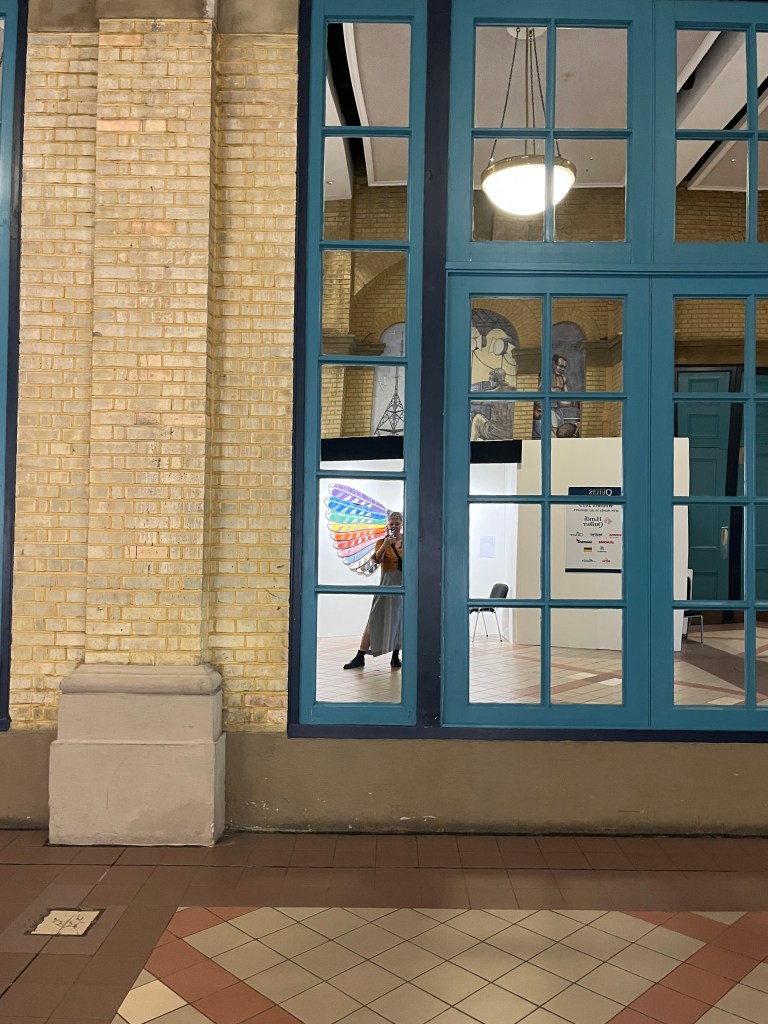
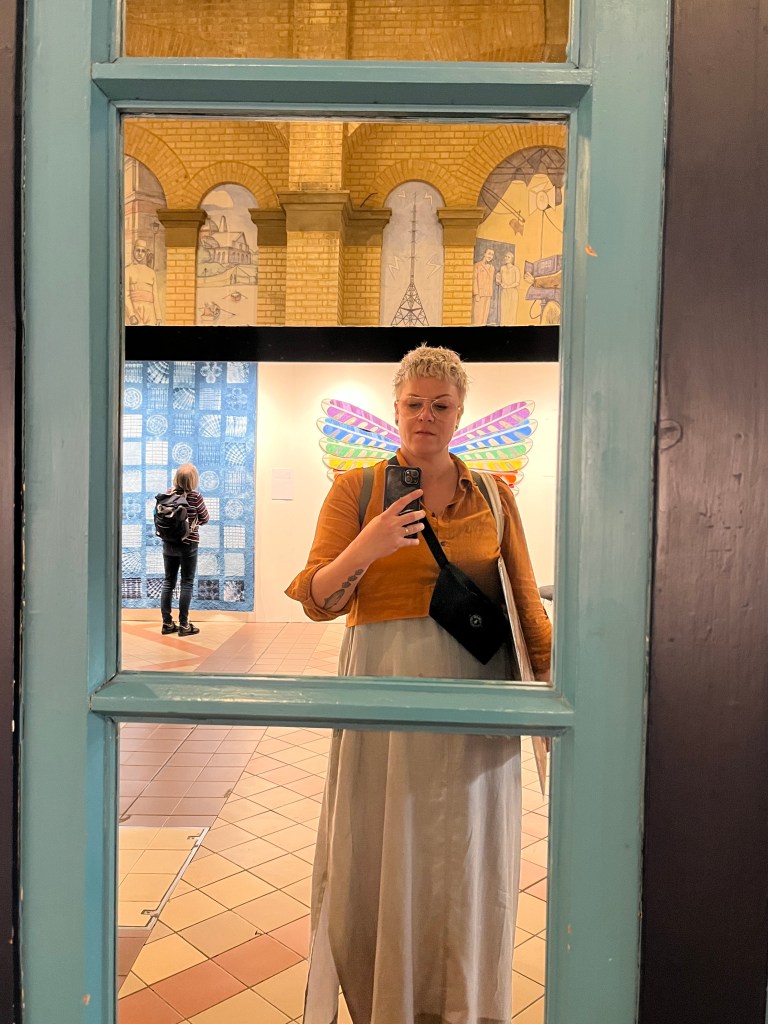
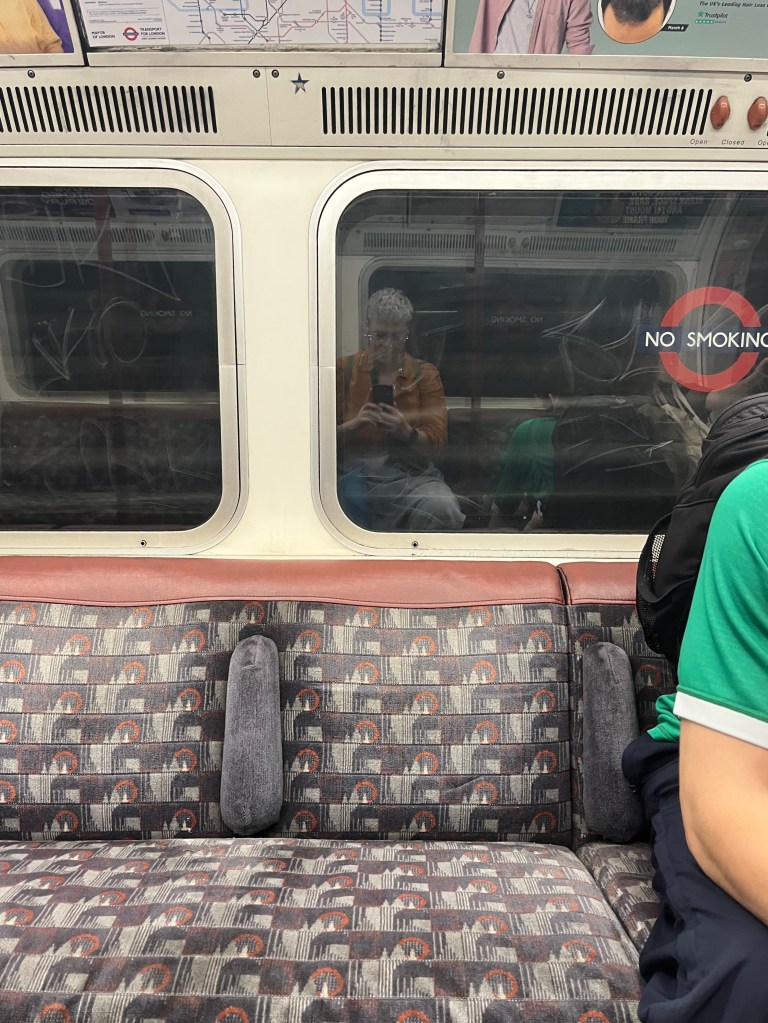
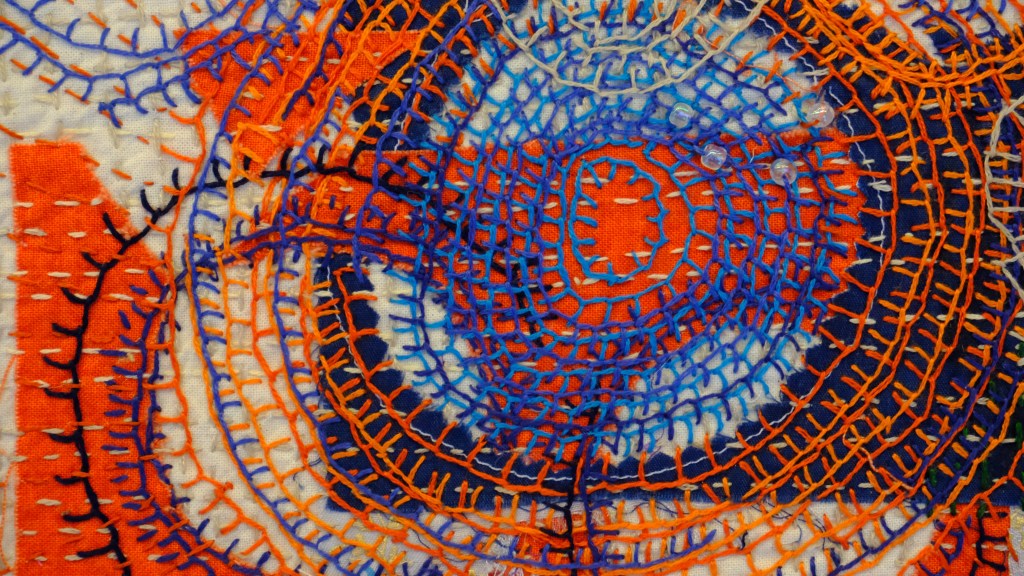
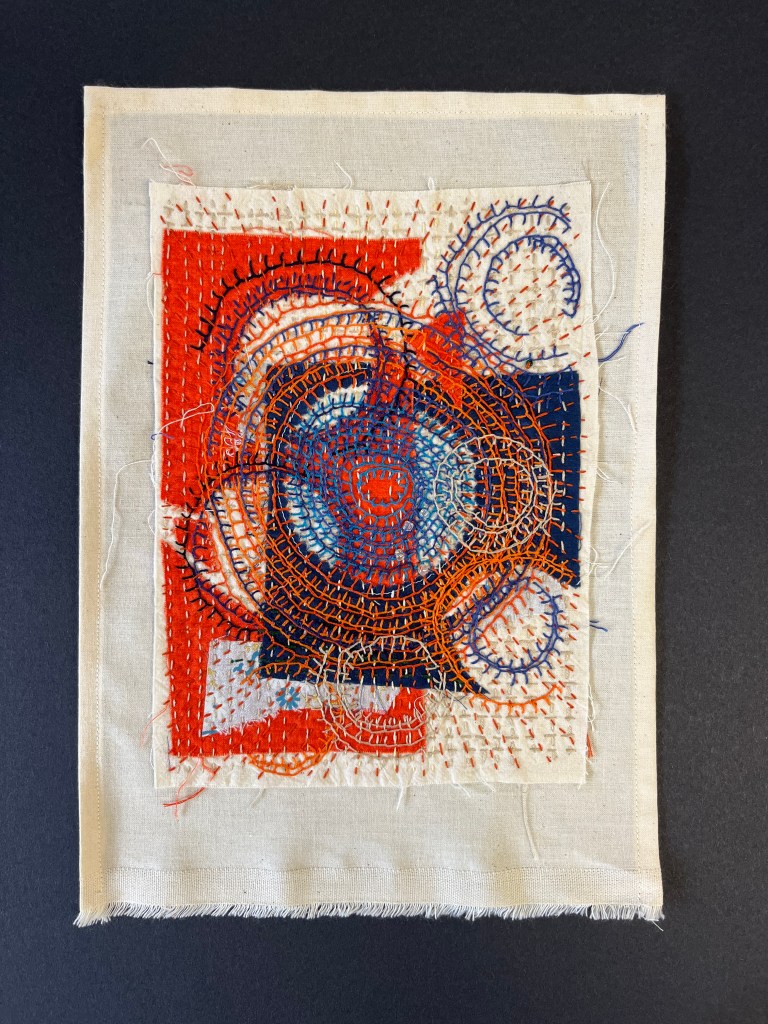
On my way home I continued my slow stitching and admiring my farbic scrap haul I added more bits and more stitches. I continued adding layers of stitches, mostly running stitch and blanket stitch in a rnage of orange and blue DMC embroidery thread (most split in 2-3 strands).
When I felt I was done stitching, I whip stitched the collage only some unbleached cotton and hemmed the whole thing on the machine. I love this work so much, not just the final result but also the work itself. The meditation of each stitch, the surprise of where the threads take me, the free exploration and play. I have made many more Embroidery Collages since, bit that’s for another post.
It’s safe to say that the Knit + Stitch show has brought me so much! So much more than just a shopping excursion, it was inspirational, educational and was the beginning of a new series of works!
-
Collage 8+9: The Due Return or The Return of the Wolf Pack
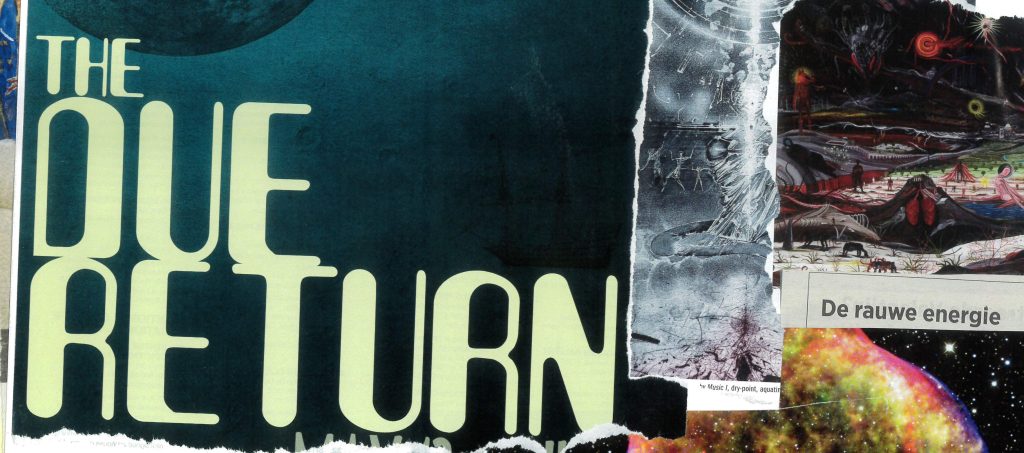
In these two collages, I put together images of what seems like alien worlds. The collection started off with the scraps of National Geographics showing images of space. Looking at them now, I think the collage diptych looks like a story board or one of those criminal investigations boards you see on tv where the detectives have collected their snippets of clues and evidence.
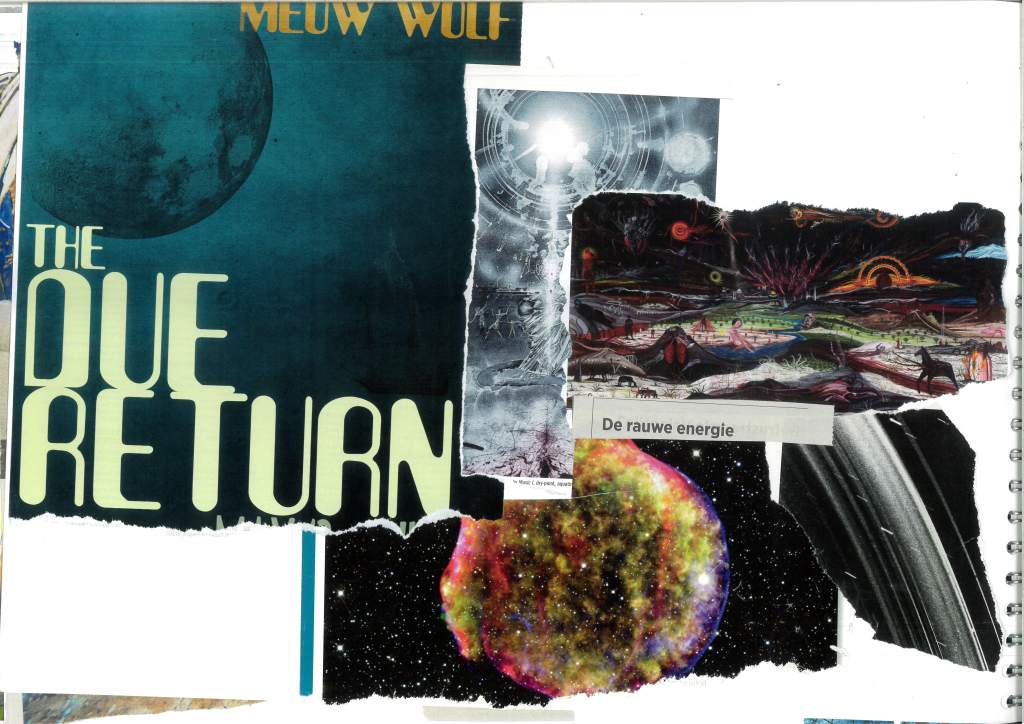
Liza Roos, The Due Return 1/2, collage of found images. 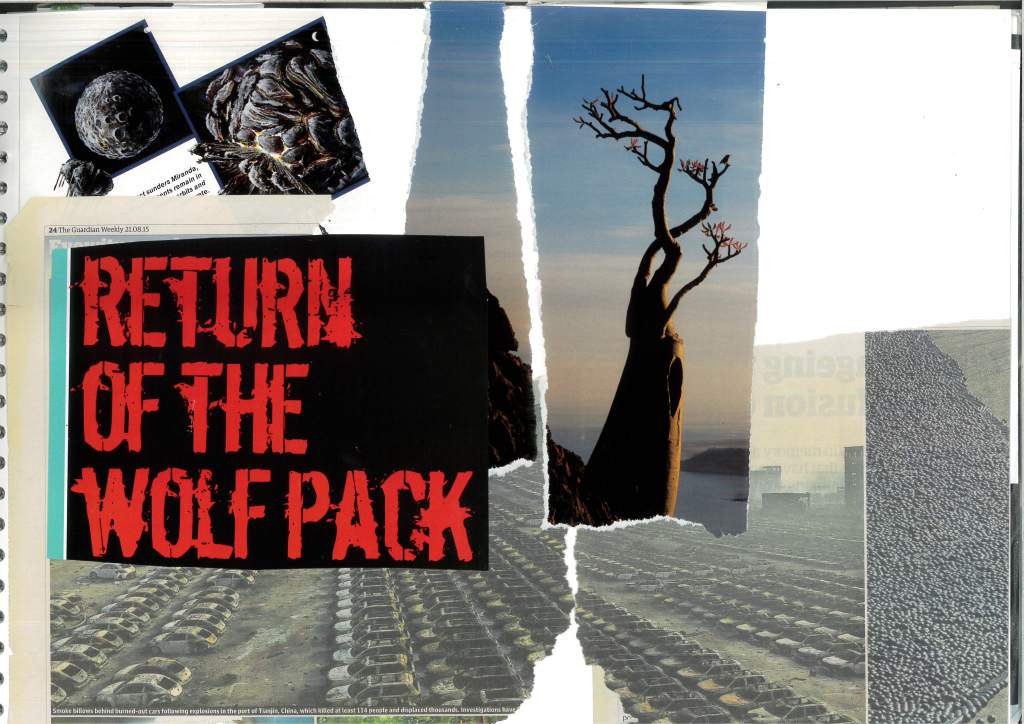
Liza Roos, The Due Return 2/2, collage of found images. So, backtracking now and finding the story after the fact (because I did little to no planning at the time as far as I can remember), what is the story here?
Liza Roos, The Due Return 1/2, collage of found images. In this collage, I used images from National Geographic and some art magazines (whose titles are lost to me now). It took me some time to find out what The Due Return was. Initially I thought the image was of a Perry Rhodan sci-fi magazine which didn’t help my search for its source. The image itself I cannot find, but I did find out what Meow Wolf is; an American art company that creates immersive installations. The Due Return was one such installation in Santa Fe in 2011 consisting of an over 70-foot-long, two-story ship divided in rooms. I wish I could have seen it!
From the original Press Release about The Due Return: “Once a seafaring vessel, [The Due Return] now bears the marks of its previous voyages, a hodgepodge of transport devices and retro-fitted technologies. The ship’s interior speaks of its rich history and its passengers. It is a history that is discoverable through a vast fictional archive presented throughout the ship. The foreign environment that the ship resides in is filled with alien flora, fauna, and fungi; glowing trees that interact with audience members, cliff dwellings sprouting mysterious fruits, and creatures that sing alien tunes. The project incorporates video, live performance and extensive interactive elements, to submerge the audience into a fully-operating fictional world.” (Visual Arts Source)

Meow Wolf, The Due Return (detail), 2011, mixed media installation https://meowwolf.com/projects/the-due-return 
Meow Wolf, The Due Return (detail), 2011, mixed media installation https://meowwolf.com/projects/the-due-return Moving on and around clockwise, there is the work Meditation by Music by Karel Demel. It took me a long time to find this image. Demel was a Czech artist, born in 1942 and passed away not long ago, in July 2024. He worked mainly in printmaking and was inspired by music and poetry, which is clear not only from the title, but from the work as well.
The next work is by Eliezer Sonnenschein (born 1967); Landscape and Jerusalem. Sonnenschein is an Israeli artist who creates works across a wide range of media and technique, such as sculptures, digital photomontages, paintings and installations. His works explore the human experience and often include political criticism (artsy). Landscape and Jerusalem shows a dark landscape with a expansive night sky full of swirling celestial bodies. Beneath them, the landscape stretches into the distance where a city sits on the horizon. Is this Jerusalem? The land is hilly and a river runs between the hills to the city. The landscape is occupied by strange figures, some humanoid, others are more horse-like. It’s a shame I wasn’t able to find a better quality image as a lot of details are now lost in a pixel blur.
The last image is of the Tycho supernova remnant from a National Geographic. I couldn’t find exactly which issue or in which context it was used. I did find a different article in Live Science Plus (May 25, 2025) that mentions the Tycho supernova remnant. It discusses that scientists suggest that supernovas act like very powerful particle colliders.
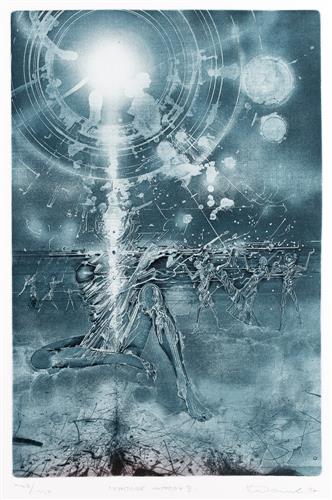
Karel Demel, Meditation by Music II, drypoint aquatint https://www.fineart.cz/artist_page.aspx?langId=2&artist=11 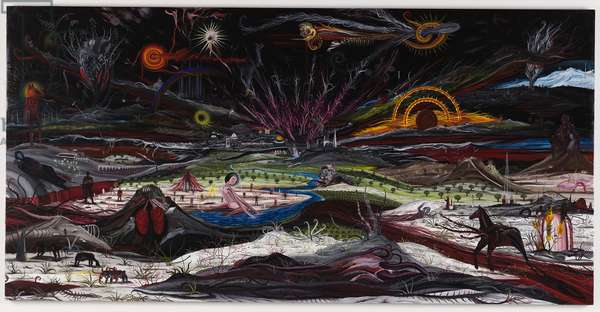
Eliezer Sonnenschein, Landscape and Jerusalem, 2007 (oil on wood), 122×224 cm. 
Tycho supernova remnant, image credit MPIA/NASA/Calar Alto Observatory https://www.livescience.com/space/astronomy/scientists-may-have-discovered-the-most-powerful-particle-collider-in-the-universe The second collage is only a few images. I imagine I was very pleased to find another piece with the word “return”, the source of which is lost to me now. I can also not find the source of the images above it. However, I can find information on Miranda, one of Uranus’ satellite moons. Reading Astronomy.com‘s article about the moon, I can assume that these two images depict one of the ideas of how the moon was formed to look so unusual.

Liza Roos, The Due Return 2/2, collage of found images. In the images below you can see the strange collage like surface of Miranda. These photos were taken by Voyager 2 in 1986. Voyager 2 was launched in 1977 and it’s the only spacecraft that has visited all four giant planets (Jupiter, Saturn, Uranus, Neptune) on it’s “Grand Tour”. In 2018 it entered interstellar space and is still sending back date! How cool is that?
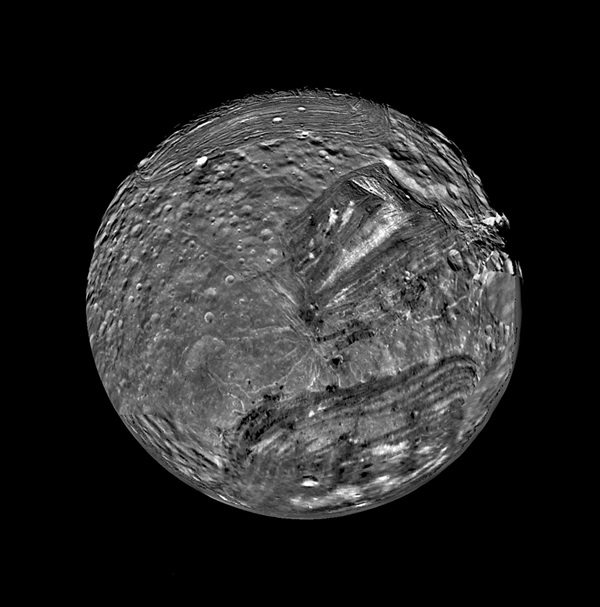
https://www.astronomy.com/science/weird-object-uranus-moon-miranda/ 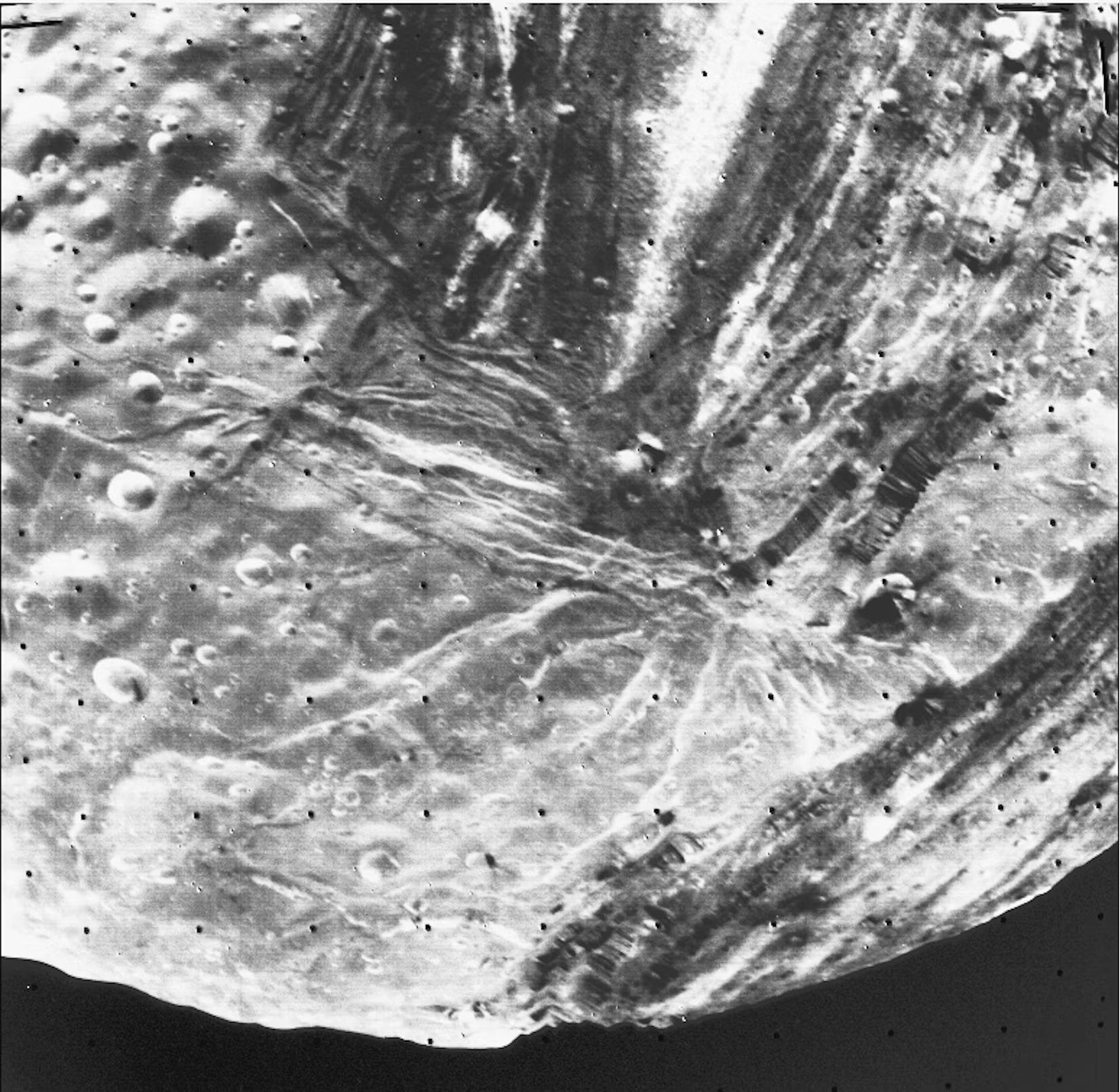
https://www.inverse.com/science/miranda-discovery-uranus-anniversary 
https://www.inverse.com/science/miranda-discovery-uranus-anniversary Anyway, one of the theories of how Miranda got such a wonderfully textured and almost painterly surface is that it was scattered repeatedly by collisions before reforming 4 billion years ago. Some of the canyons must have been created by tectonic movement, very unusual for such a small celestial body which likely won’t have much inner heat… The article states: ” Experts say that nearby Uranus “must have” tidally heated the little moon, and that the plastic material “somehow” found a way to ooze up to fashion the carnival of disparate features” (Astronomy.com). I love all the quotation marks.
Moving on to the large newspaper image behind the “Return of the Wolf Pack” image from The Guardian Weekly 21.08.2015. The caption reads: “Smoke billows behind burned-out cars following explosions in the port of Tianjin, China, which killed at least 114 people and displaced thousands. Investigations have…” The rest is torn away. On 12 September The Guardian reported the final death toll to be 173. In a SIESO Medal paper states that it was “one of the world’s largest artificial, non- nuclear explosions”. Looking at images and videos of the disaster is grim and terrifying. After investigation it turned out that much more hazardous material than authorised, including 700 tonnes of highly toxic sodium cyanide and the warehouses were too close to houses (BBC).

China explosions: a visual guide to what happened in Tianjin https://www.theguardian.com/world/ng-interactive/2015/aug/13/tianjin-explosion-china-a-visual-guide-to-the-damage
Desert Rose, Socotra
Photograph by Mark W. Moffett for National Geographic https://www.nationalgeographic.com/photo-of-the-day/photo/desert-rose-socotra-moffett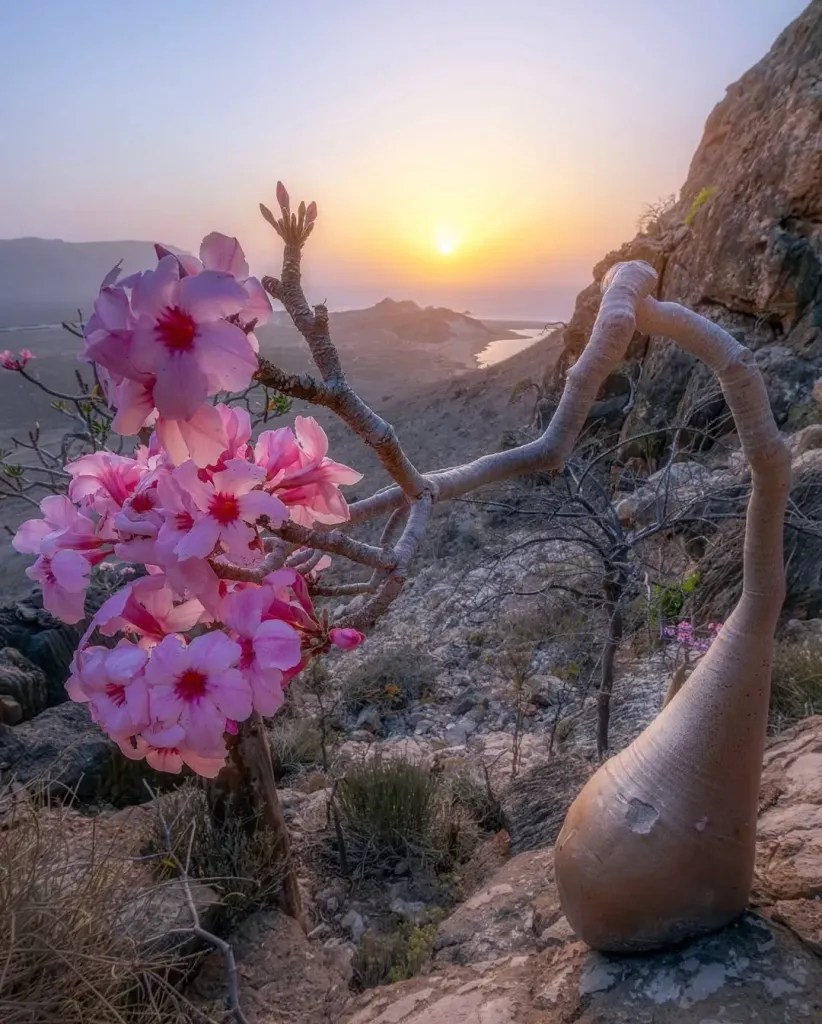
https://hellosocotra.com/10-extraordinary-facts-about-socotra-island/?srsltid=AfmBOopls0nYd-p5kYogWx5YlXcWsiCNYZwgI1lscEKnoDCWs3f75gJY The final image is of the The Socotra Desert Rose, which is a endemic succulent tree (a water-storing plant that is naturally found only in a specific region). This photograph, taken by Mark W. Moffett, was “photo of the day” in the National Geographic’s issue of June 2012. Some facts about this tree is that it’s not related to roses, it stores water in its trunk and it flowers.
Alien worlds, real and imagined, explosions and trees surviving arid climate. Perhaps we don’t need to look beyond reality for beauty and the extraordinary or perhaps we need to escape manmade troubles. I don’t know.
-
Collage 6+7/72: At the end of the world
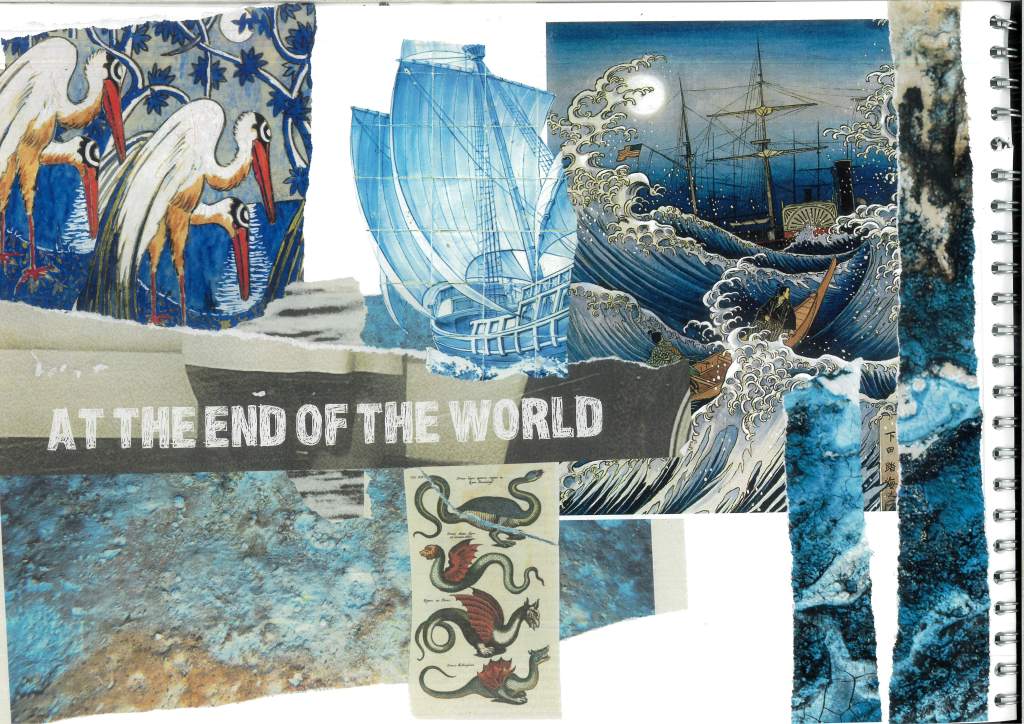
The images for these collages all came from National Geographic’s, one from an old art book, plus “at the end of the world” from an art newspaper. I selected the images initially for their colour and then this story appeared about sea voyages and the fantastical “discoveries” that were made and the dragons and monsters that lurked on distant areas of the map marked with “here be dragons”.
The painting which is reminiscent of Hokusai’s The Great Wave is by Kinuko Y. Craft and depicts Yoshida Shoin rowing to Commodore Matthew Perry’s black ship in an attempt to stow away (wiki). I took the image from a National Geographic from 1984 (you can find a digital copy of it here).

Liza Roos, At the End of the World 1/2, collage of found images. The light blue ship is from an advert for Tap Air and the birds from a French textile design. I like how the ship sails away from the stormy scene Kinuko creates, and towards the birds who look on in disbelief or perhaps shock.
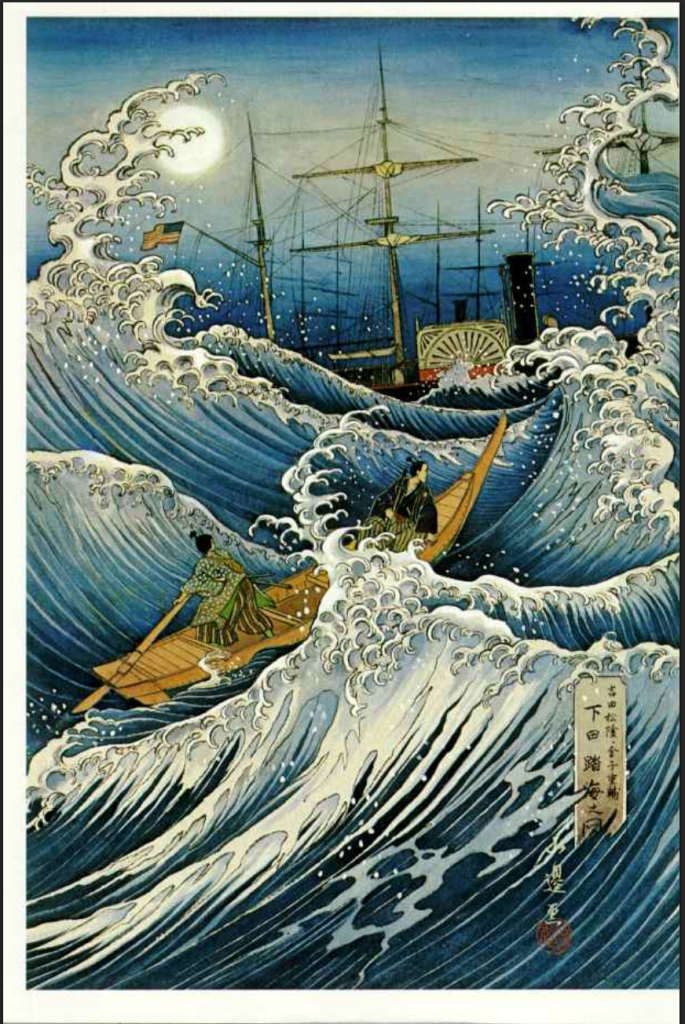
Kinuko Y. Craft https://www.kinukoycraft.com/ 
Tap Air Portugal Airlines, 1988 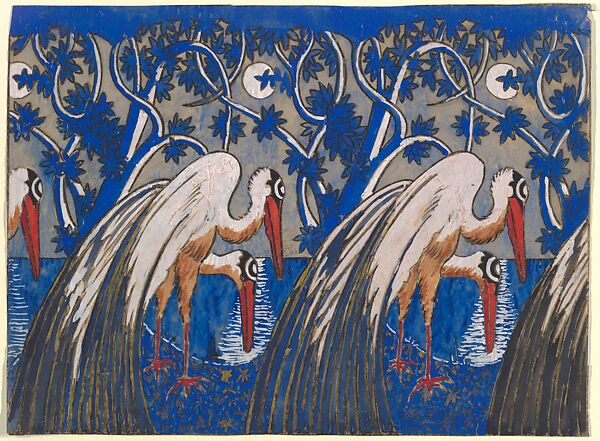
Repetitive Pattern of a Moonlit Landscape Containing Two Storks and a Tree by a River, Anonymous, ca. 1910-29 https://www.metmuseum.org/art/collection/search/423973 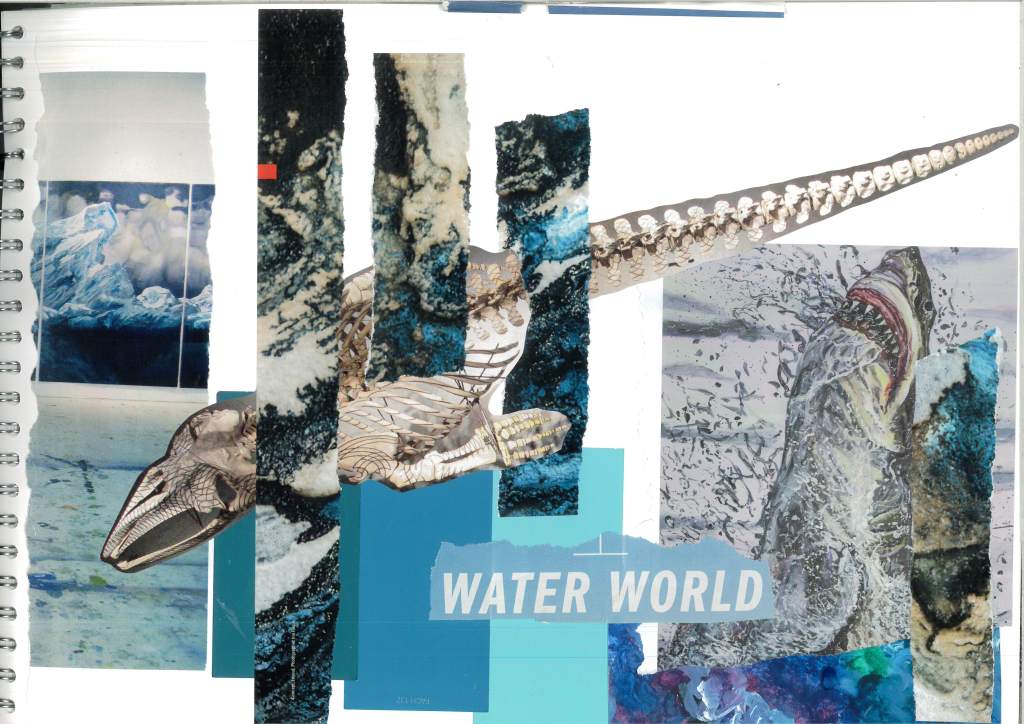
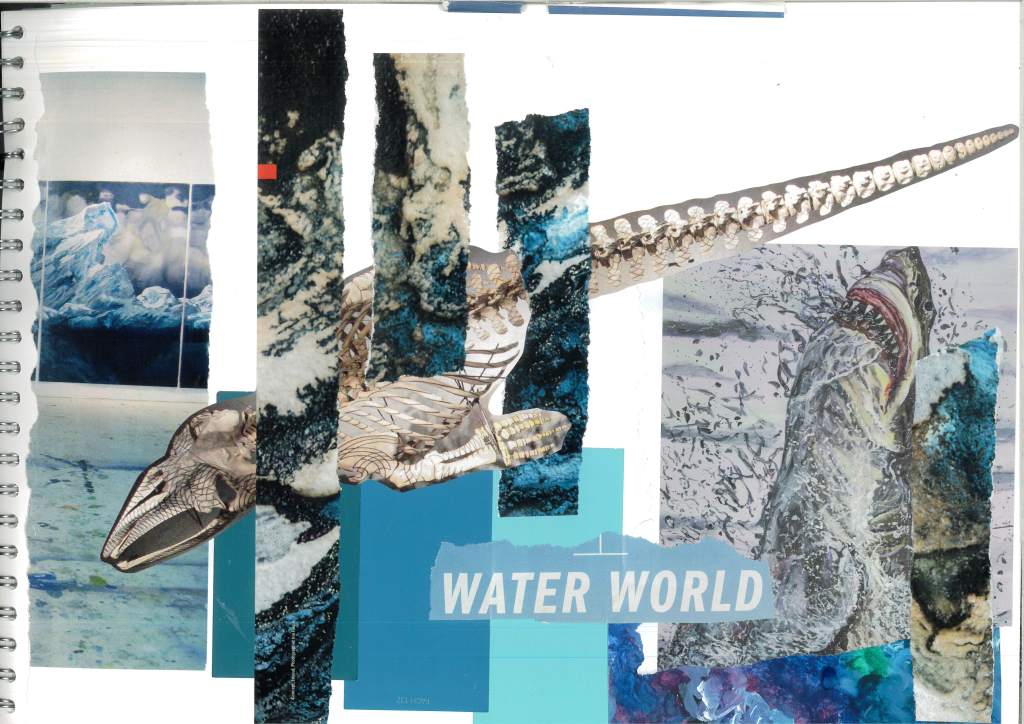
Liza Roos, At the End of the World 2/2, collage of found images. The second collage is all from National Geographic’s and shows some painted scraps, icy scenes and more dragons. It reminds me of a an episode of the Infinite Monkey Cage podcast “Oceans: What Remains to Be Discovered?” I listened to recently. They discussed the various strange creatures of the deep seas. Perhaps not dragons, but definitely strange and some yet to be discovered.
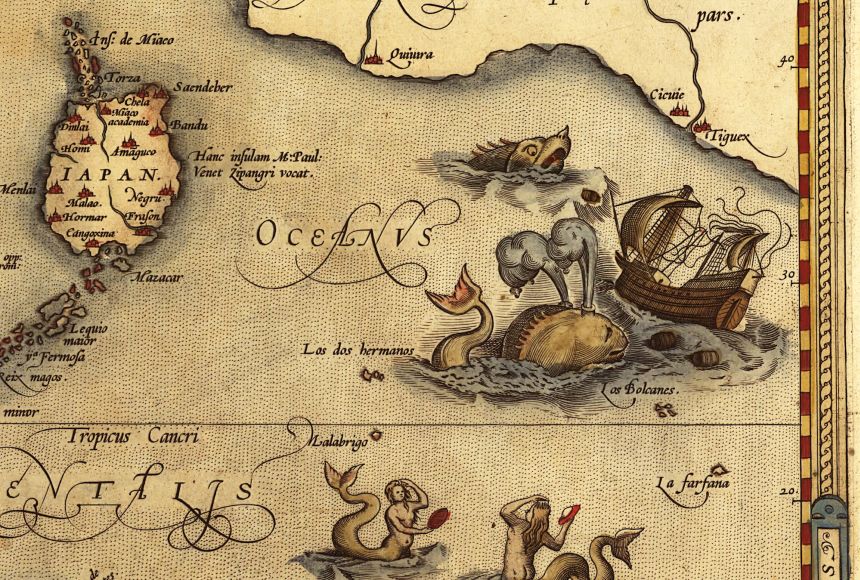
Here be Dragons
https://education.nationalgeographic.org/resource/here-be-dragons/5th-grade/ -
Teaching Textiles: Sashiko Collages
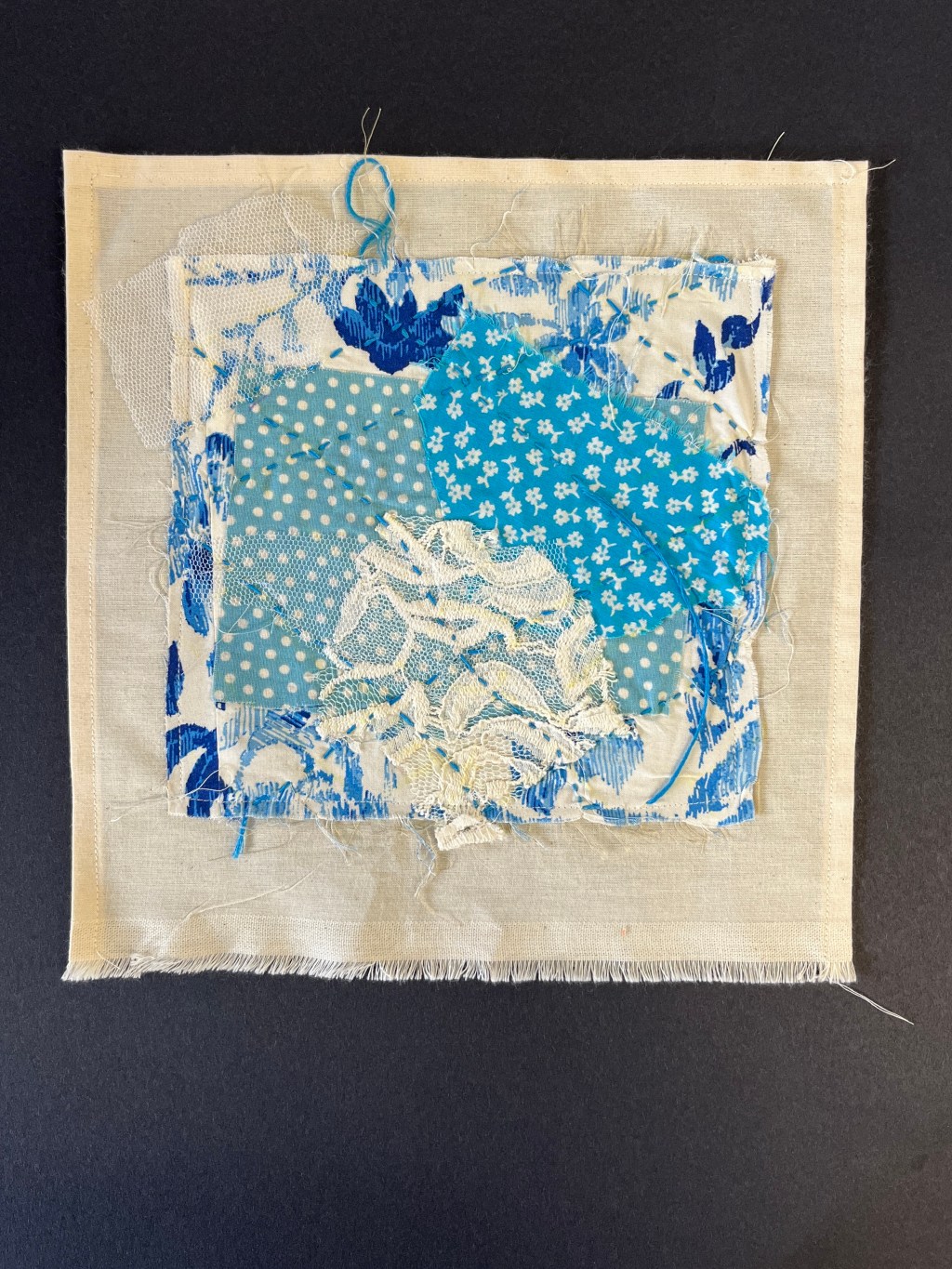
As an introduction to embroidery, the Textile Art students explored Sashiko stitches and fabric collage. They investigated the original purpose and the different patterns of Sashiko and the work of Akiko Ike, who is a renowned textile artist, teacher, and gallery owner from Niigata, Japan.
Ike creates large stitched fabric artworks by collaging found vintage fabric pieces together using running or Sashiko stitches which she calls “chiku-chiku”, an onomatopoeic word Ike uses to describe the way her broad needle travels through the cloth. Ike draws inspiration from the sea and and the playfulness of children.

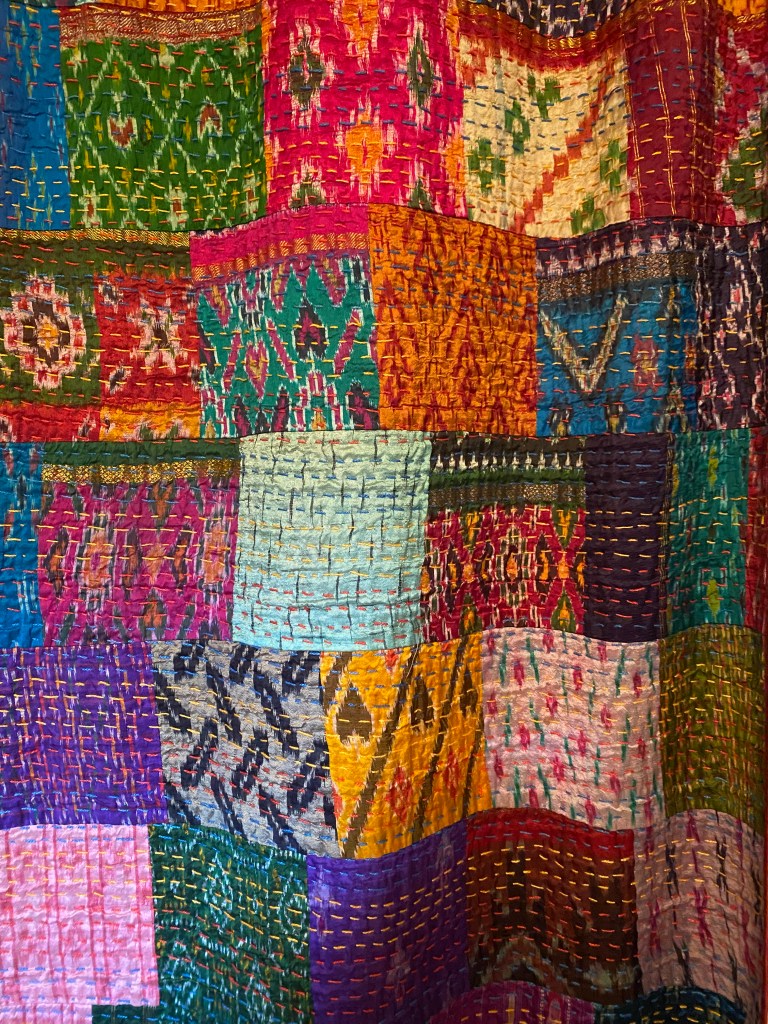
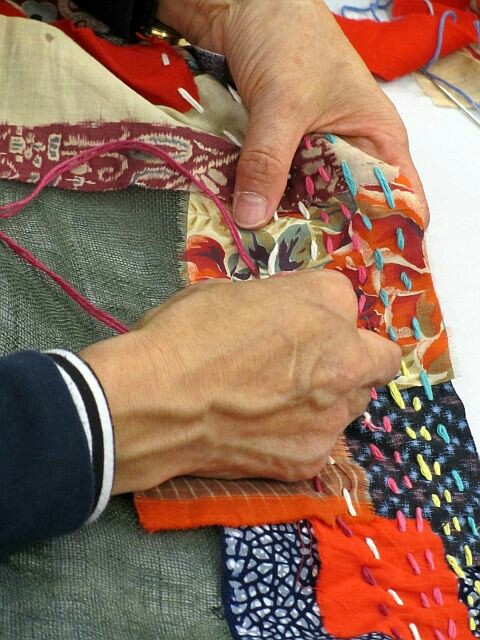
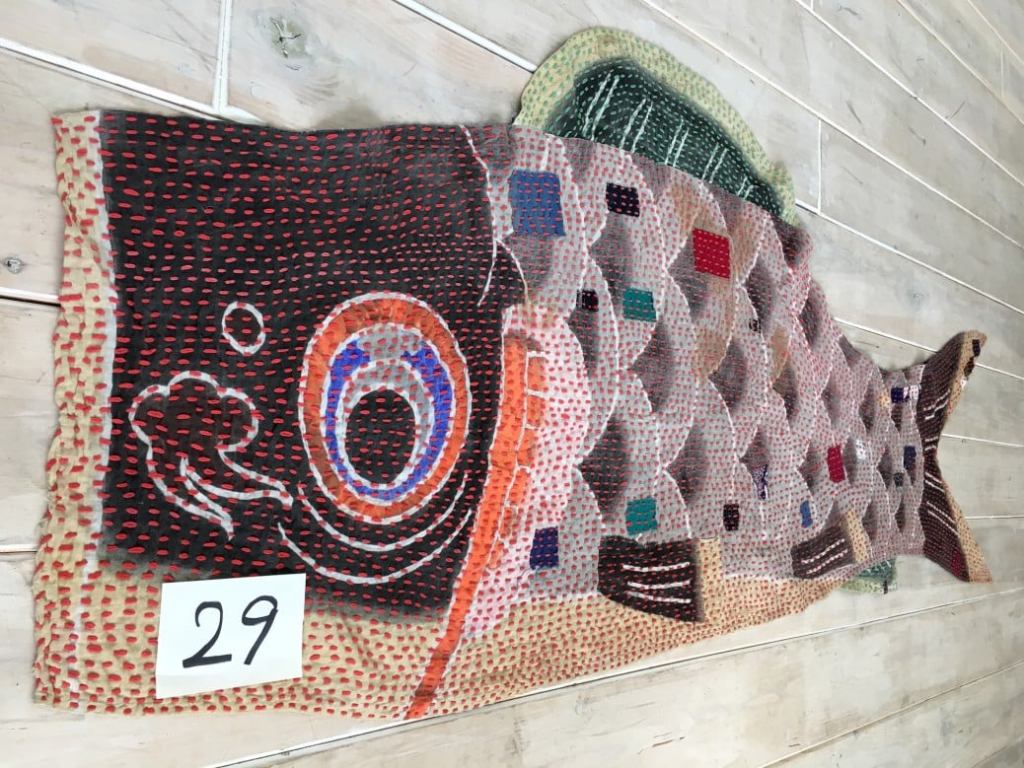
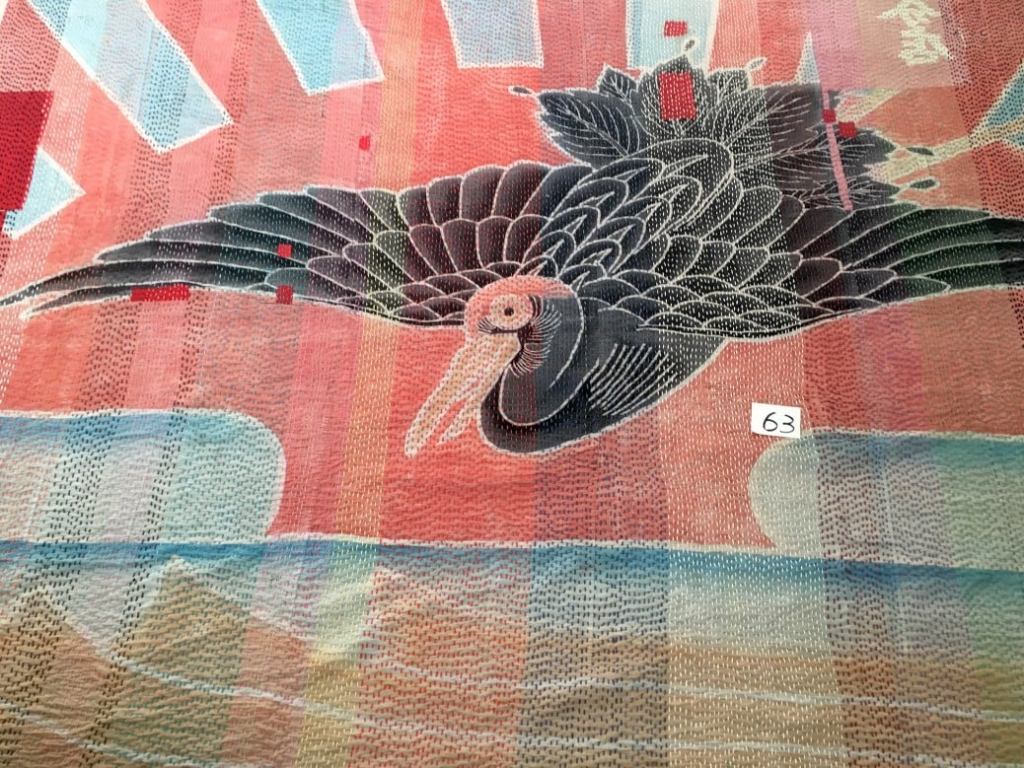
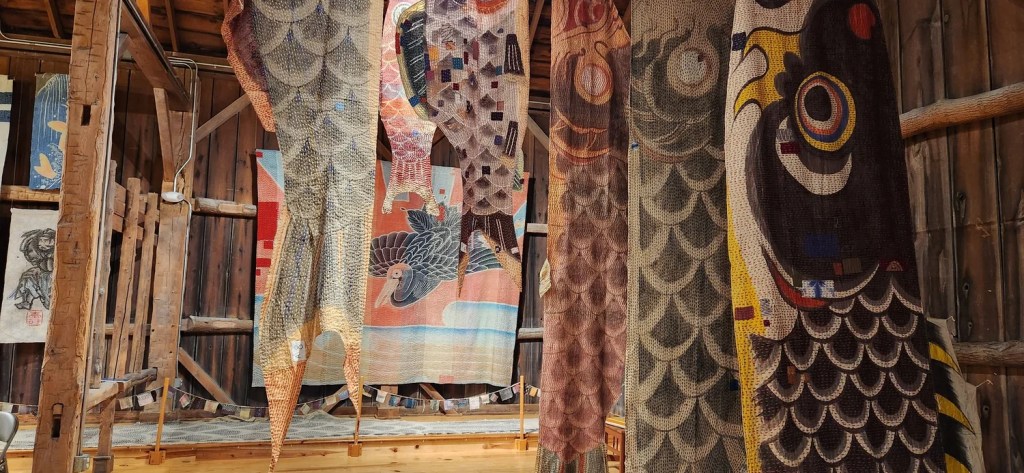
After their investigation, the students searched through my collection of scrap fabric to find a few pieces they liked. They used glue sticks to paste them together and then choose a Sashiko pattern to transfer and stitch the pieces together.
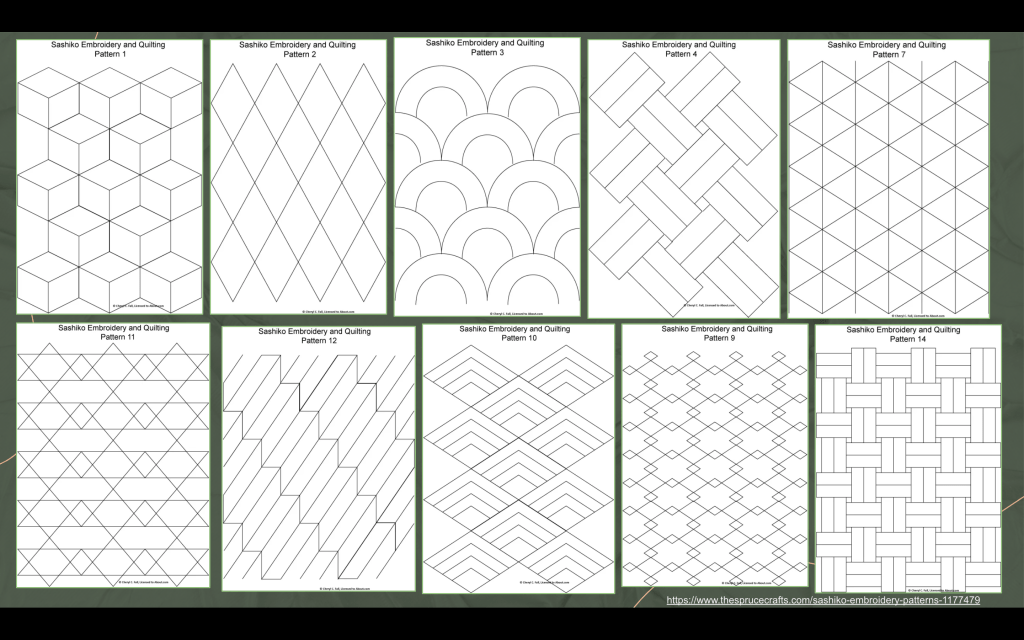
https://www.thesprucecrafts.com/sashiko-embroidery-patterns-1177479 We discussed composition, colour and pattern before they created their fabric collages. Then we looked at how to create even stitches, how to make a french knot at the end of their thread and how to bind the thread off.
Although I love embroidery and find great comfort in the regularity of Sashiko stitching, I worried the students would find it boring or would loose interest quickly. However, they loved it! Both boys and girls enjoyed the process and found great focus while stitching. They mentioned it was calming and relaxing. I will definitely keep this project in the curriculum!
Here is their work, I’m so proud of them!
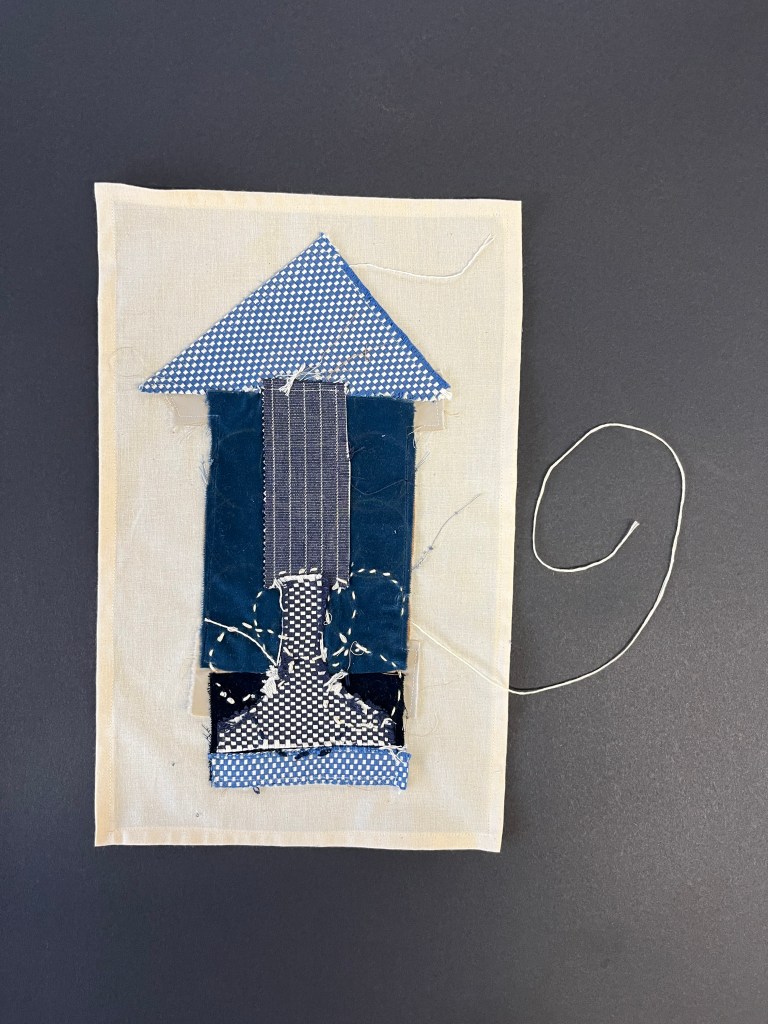
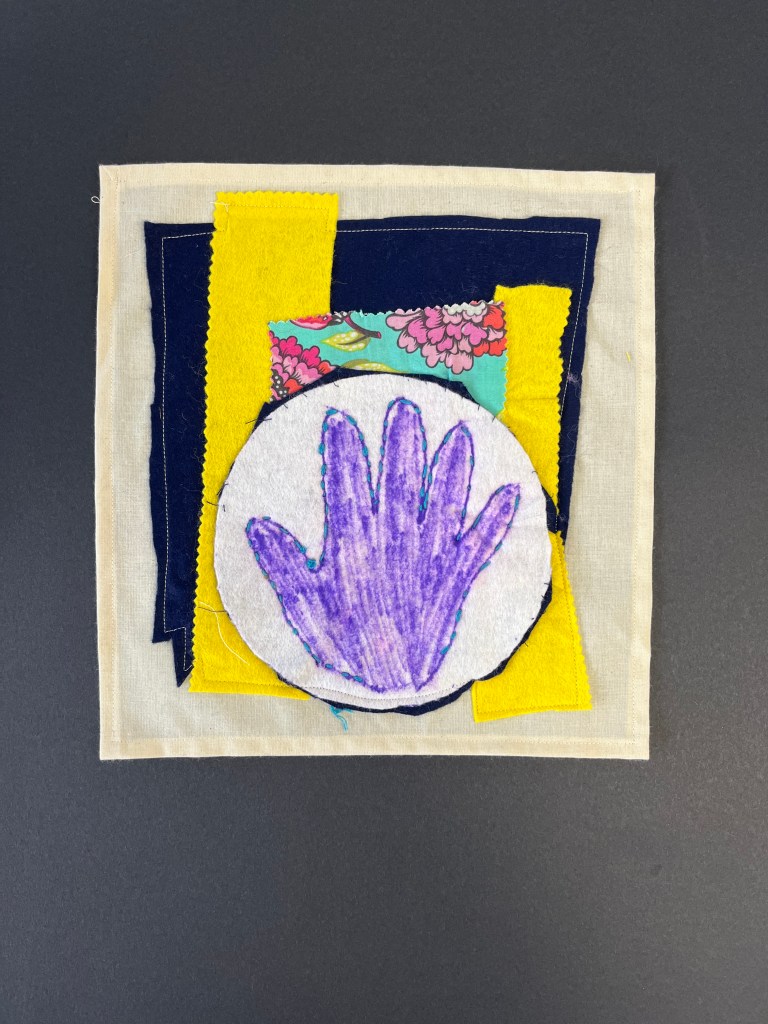
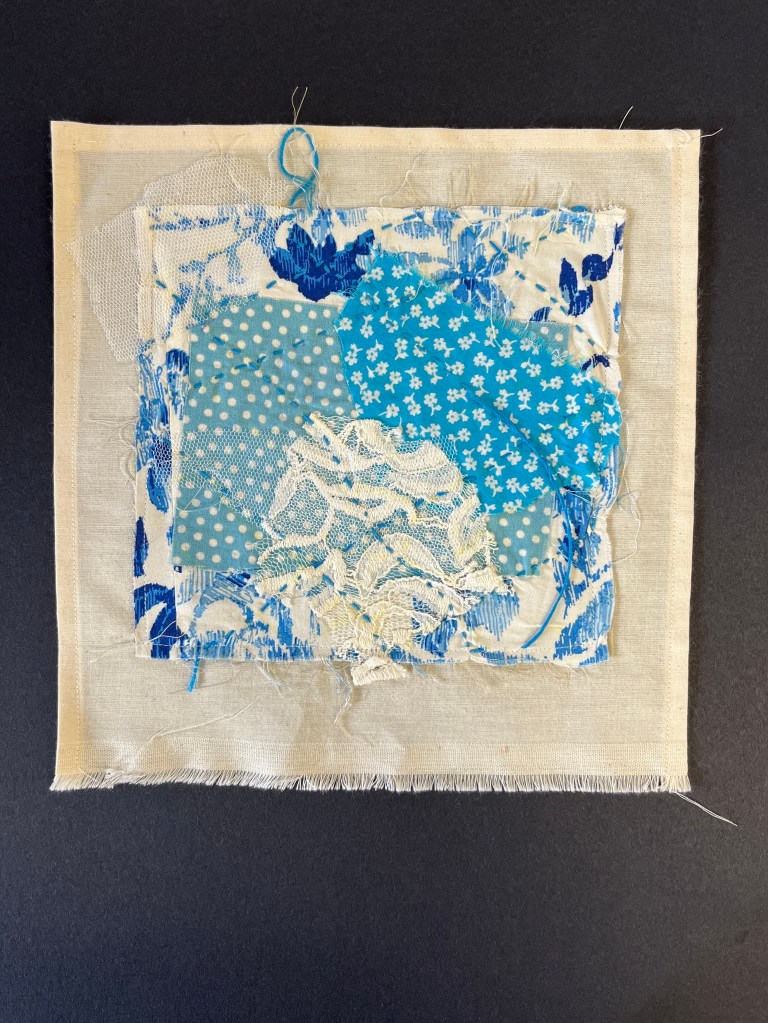
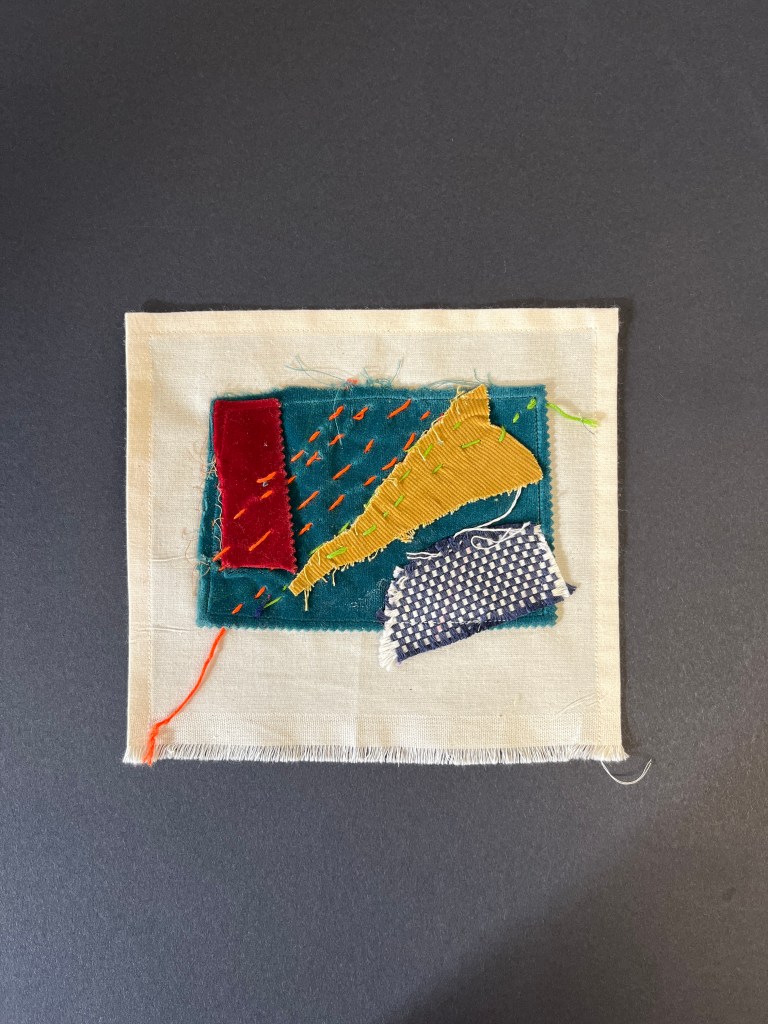
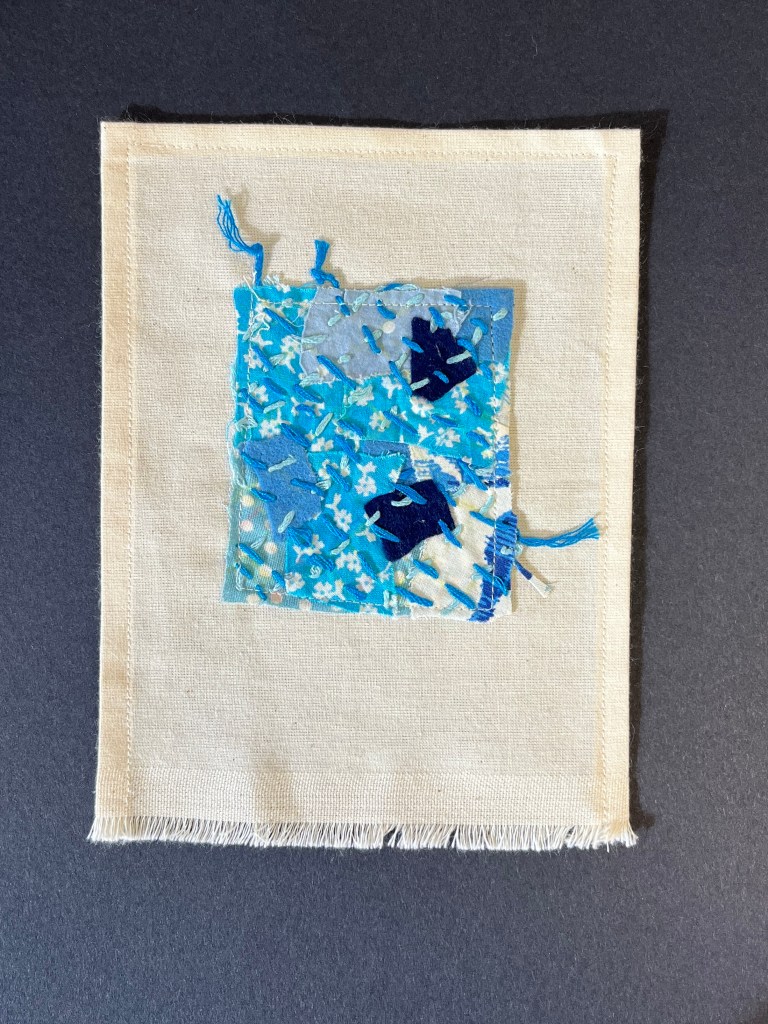
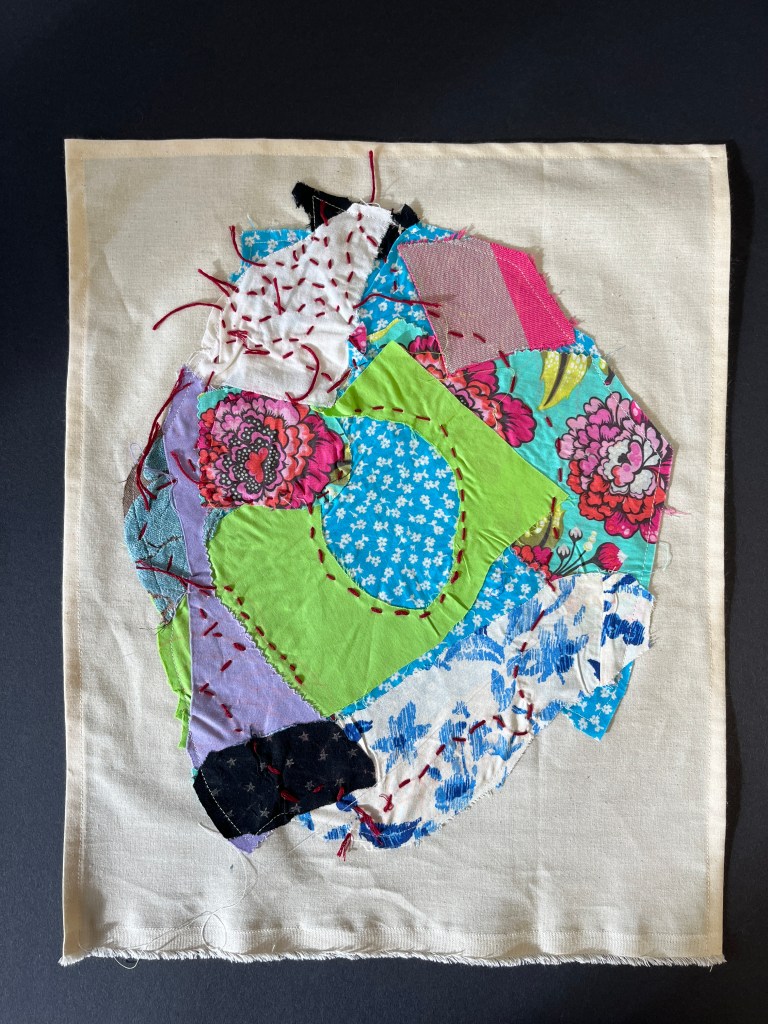
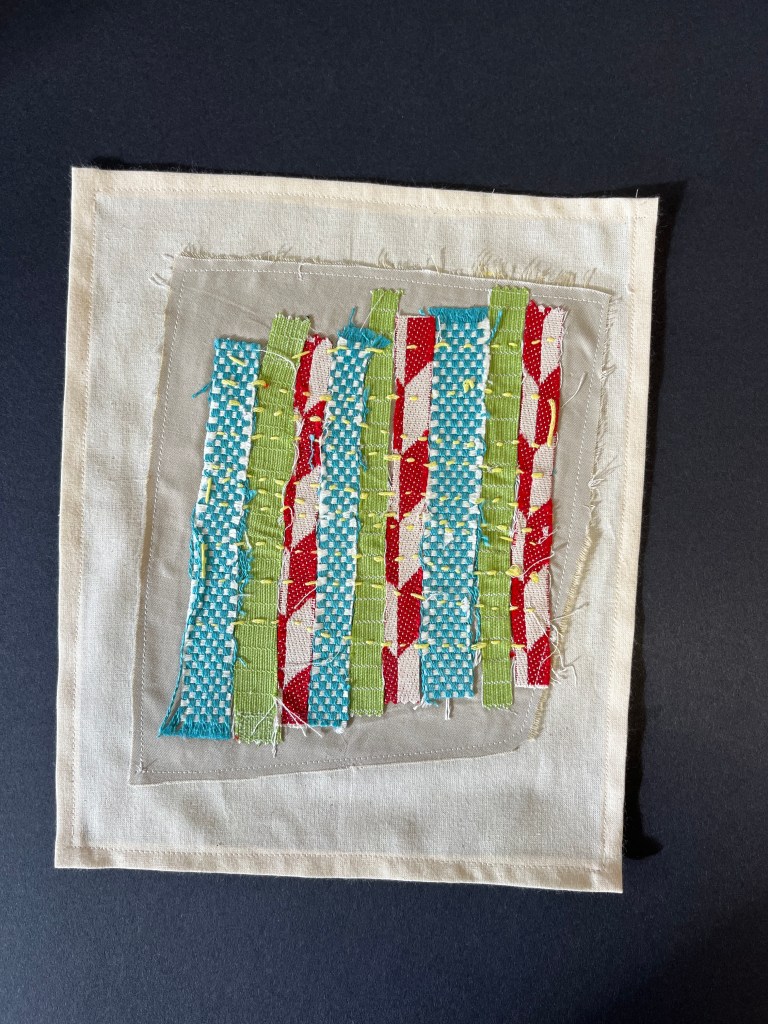
To finish the works of and prepare them for presentation, I sewed them to some unbleached cotton which I then seamed. I then attached the pieces to a stick with some white thread and hung it.
-
Multiple Exposures with the Zeiss Ikon Nettar
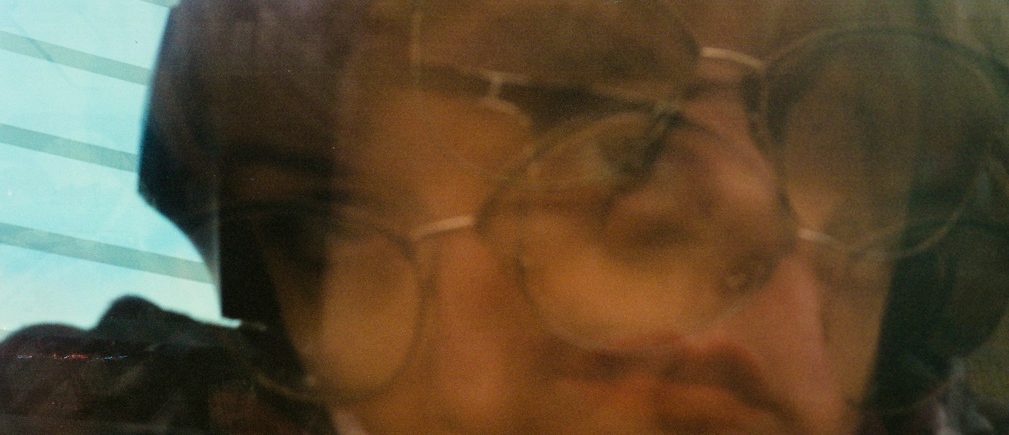
I have had this post drafted for almost two years (!!!) and only now decided to finish it. I found this Zeiss Ikon Nattar camera at a bröcki (aka a thrift store in Swiss) in Bern. It seemed in good condition. No tears in the accordion and the back fitted snugly. So I took it for a spin!
Zeiss Ikon Nettar
The Zeiss Ikon Nettar is a medium format manual focus camera with an accordion lens which folds out of the camera body for 120 roll film. The first Nattar was released in 1934 by the German company Zeiss Ikon (camera-wiki). I think the one I got is the Nettar II 517/16 which was first released in 1951 and produced until 1957 (camera-wiki).

https://kamerastore.com/products/zeiss-ikon-nettar-517-16?srsltid=AfmBOoowpSEMjHcfp4xWZmhTFBDrtP5wWDEfTPC5VNhrw2ba1210oDQ- I love the look and feel of this camera. It’s simple design makes it easy to operate, you turn the dial on the lens to set the aperture and the focus which is measured in meters. Also on the lens is setting the shutter which is then released with the button on top of the camera. After taking a photo you advance the roll by turning the dial, also on top of the camera. All very easy!
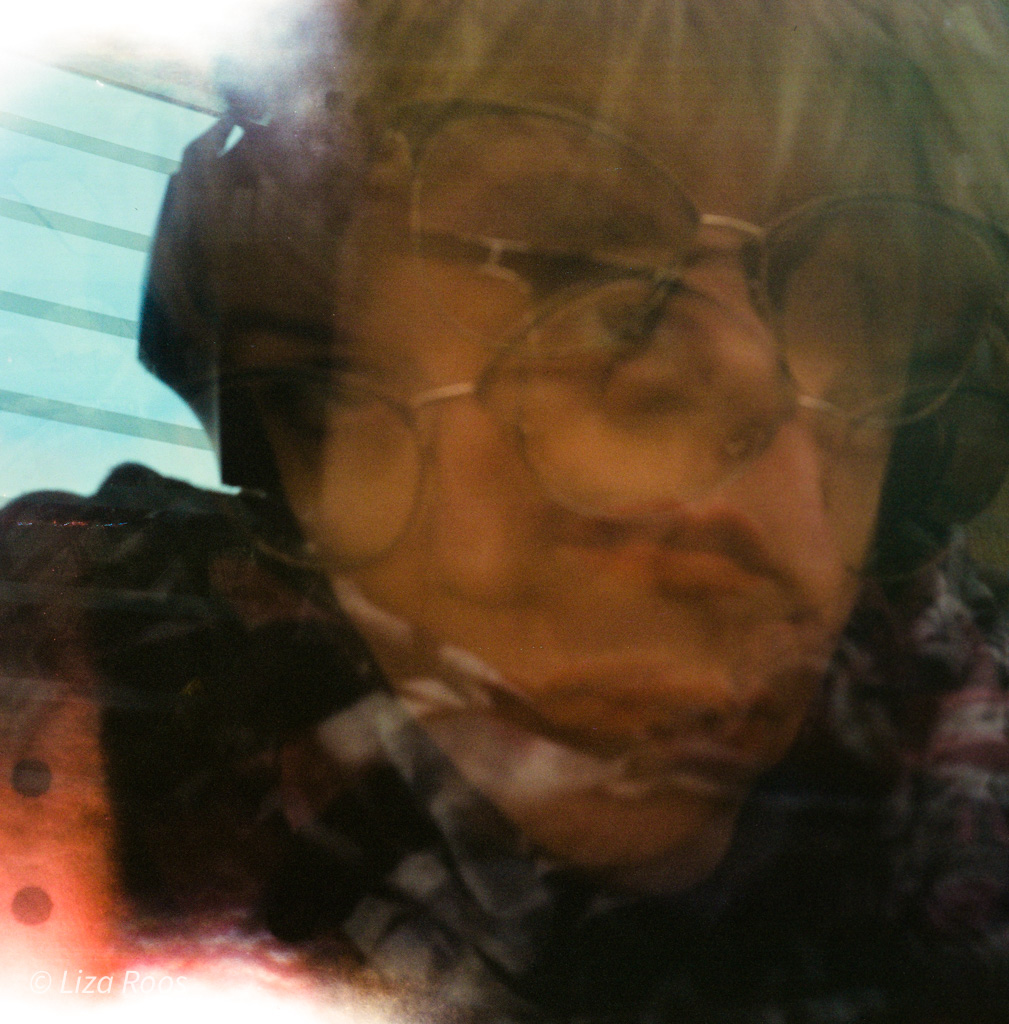
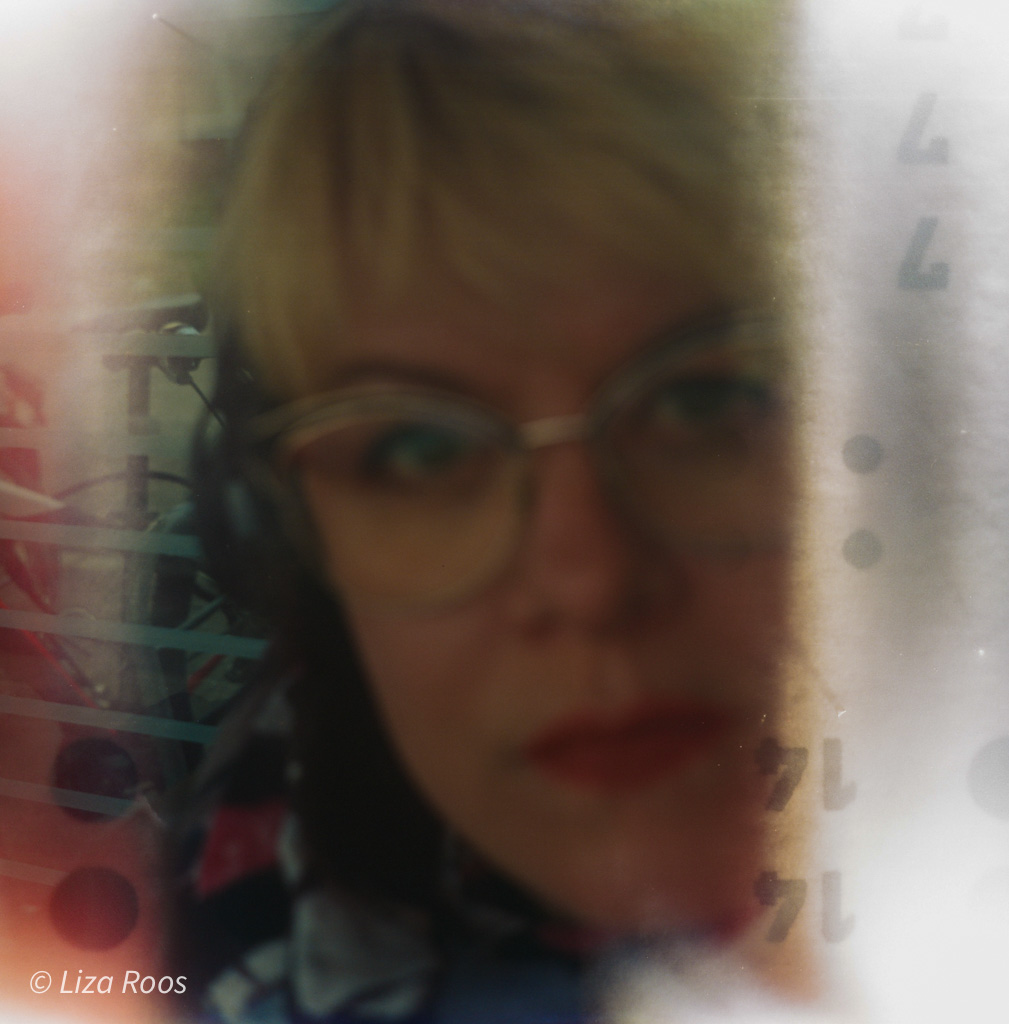
The Nattar I have doesn’t have double exposure prevention and I have not been able to get myself into enough of a habit to remember whether or not I have advanced my roll… and so after a few shots I realised it was hopeless, so I decided to intentionally play with double exposures.
Below, my experiments and below that the two photos where I did remember whether or not I had advanced the roll! You can see that in the three portraits there was some light leaking in and some of the film wrapper made it into the photos. Unfortunately, I can’t remember which film I used. I suspect it was Kodak…


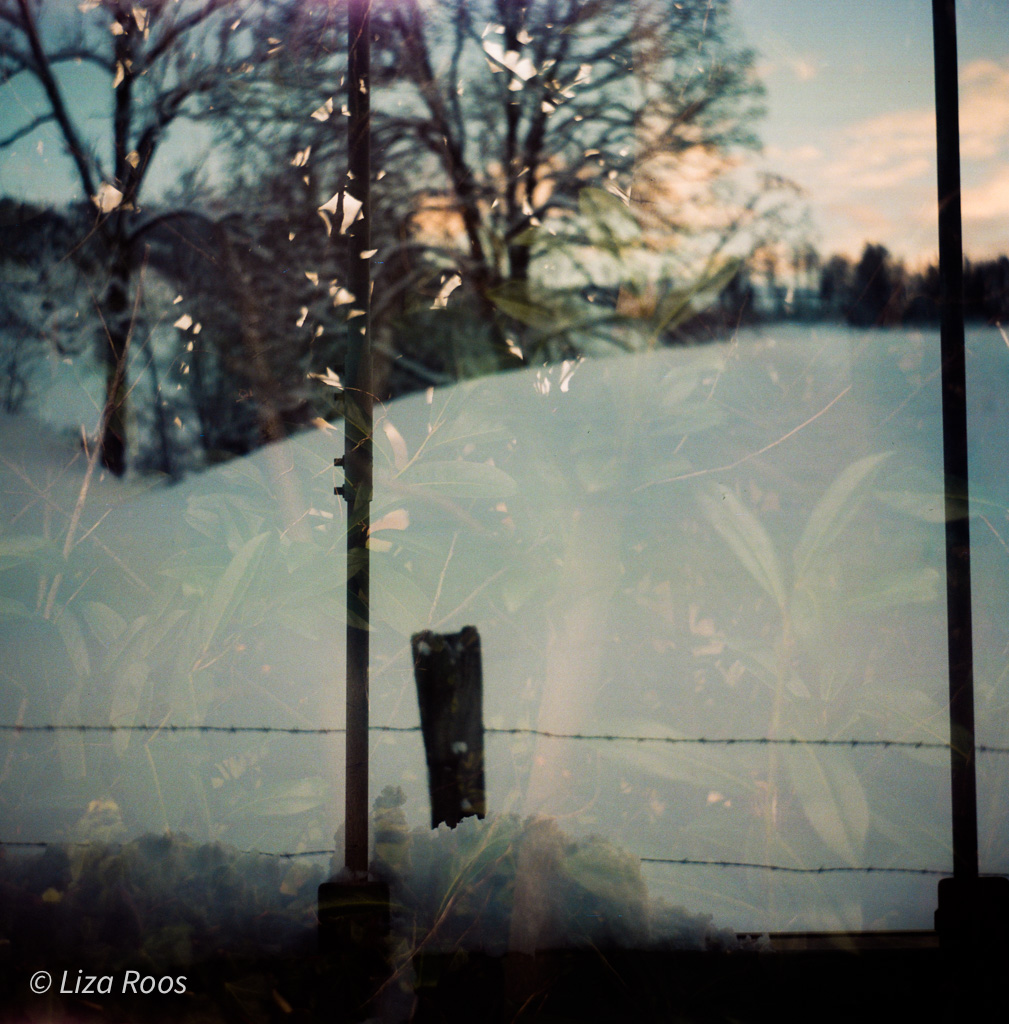
bonus: remembering.
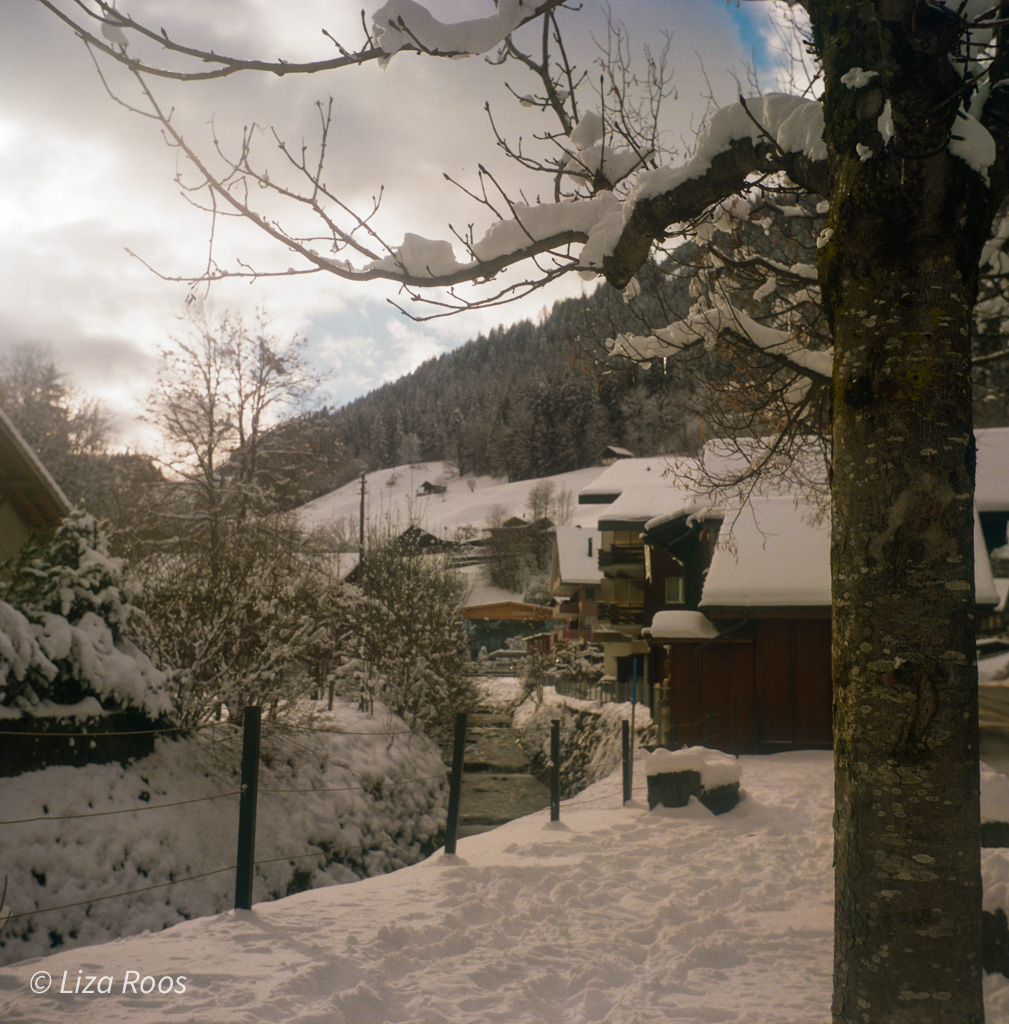

-
Collage 4+5/72: The Birds

Two collages, mostly about birds taking you away. A love affair perhaps.
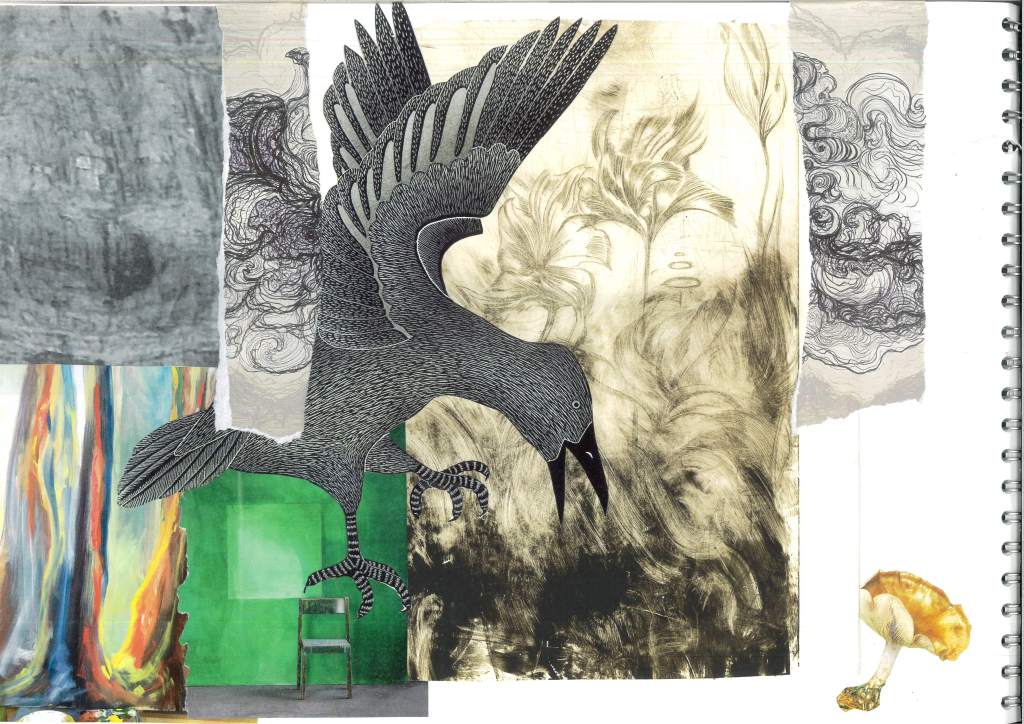
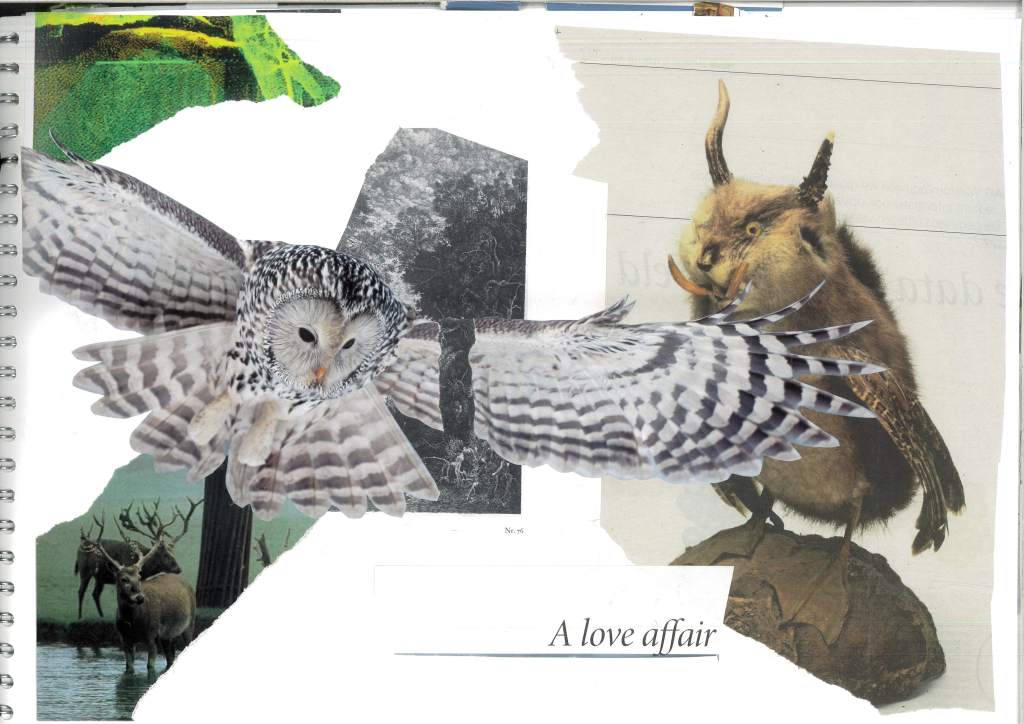
The image of the bird is from an old calendar with Inuit art. This particular image is Raven’s Dance by Kananginak Pootoogook. The green image and the grey squiggle drawing are from an art supply shop catalog and I have not been able to find out who created the work. There is another mushroom from a vintage poster. Behind these is a dry point etch I made together with a photo of an oil painting of abstract trees I made a few years back. I tried to make it look like the bird is coming in to take you away from your safe space, pluck you out of your chair and carry you off for an adventure.
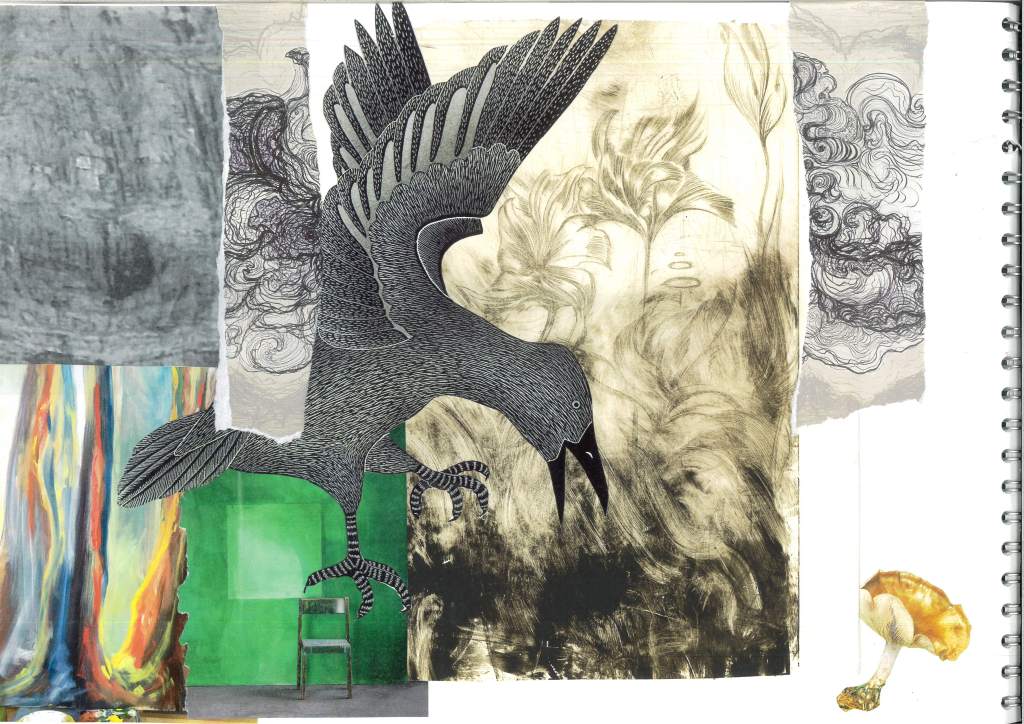
Liza Roos, The Birds 1/2, collage of found images. Kananginak Pootoogook
Kananginak Pootoogook (1 January 1935 – 23 November 2010) was an Inuk sculptor and printmaker who lived in Cape Dorset, Nunavut, in Canada. He died as a result of complications related to surgery for lung cancer. (wiki)
His works have such detail character, just look at this owl below!

Kananginak Pootoogook, Raven’s Dance, 1995. https://www.artnet.fr/artistes/kananginak-pootoogook/ravens-dance-pxynRLR6xg7vKF4uGZiygw2 
Kananginak Pootoogook, Caribu https://feheleyfinearts.com/artists/kananginak-pootoogook/ 
Kananginak Pootoogook https://feheleyfinearts.com/artists/kananginak-pootoogook/ 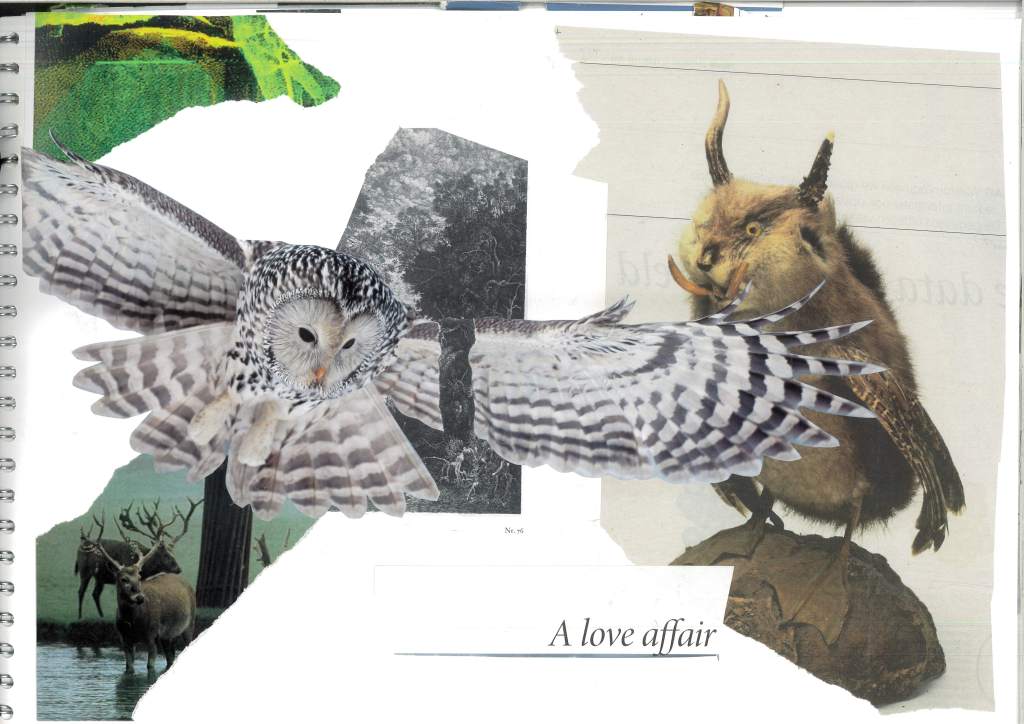
Liza Roos, The Birds 2/2, collage of found images. On the other side are a group of images cut from old National Geographic magazines. I’m not sure what I meant with “A love affair” at the time. Perhaps a love affair with nature? Or a dreaming of living in nature?
-
Shine Bright
I’ve been sewing for a long time now. In school, I learned how to cross stitch, spin and knit, to sew, and to batik. I transformed my dad’s old jeans into bell bottoms on my mum’s very old sewing machine which was so heavy, I could barely lift it! In art school, I sewed costumes for my experimental films, but sewing was just a means to an end.
Then for years I forgot about sewing. I turned to other media for expression painting, photography and print making. Each relatively short lived (although a few years ago I found my old camera again and have been hooked ever since), as I became somewhat proficient in each new fad, I lost interest.
Then, after moving from Shanghai to Bern, I suddenly felt the urge to sew. So, I dusted off my sewing machine from my uni days, bought some fabric and made a skirt. It’s was mostly well made, but I definitely chose the wrong fabric. Since then, the skirt has been cannibalised, but I’ve been sewing my own wardrobe since.
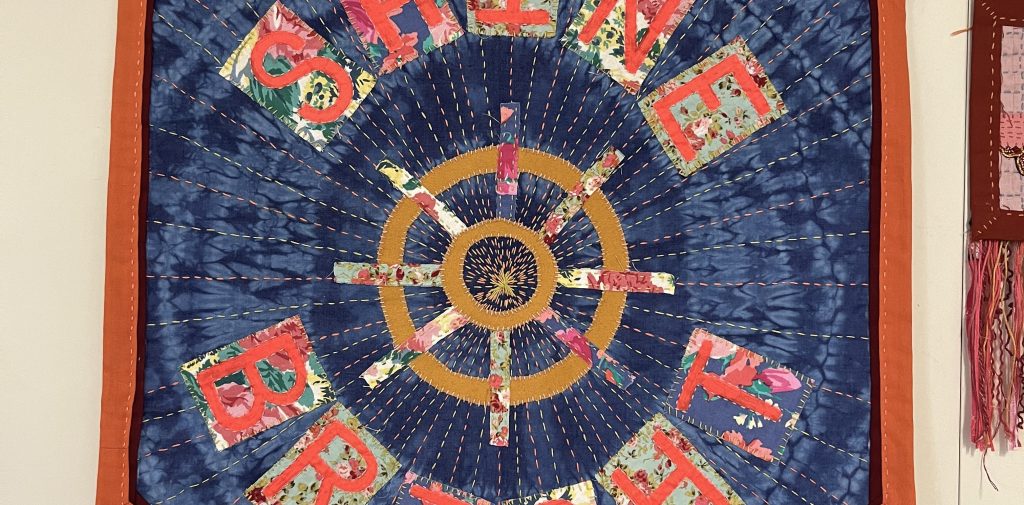
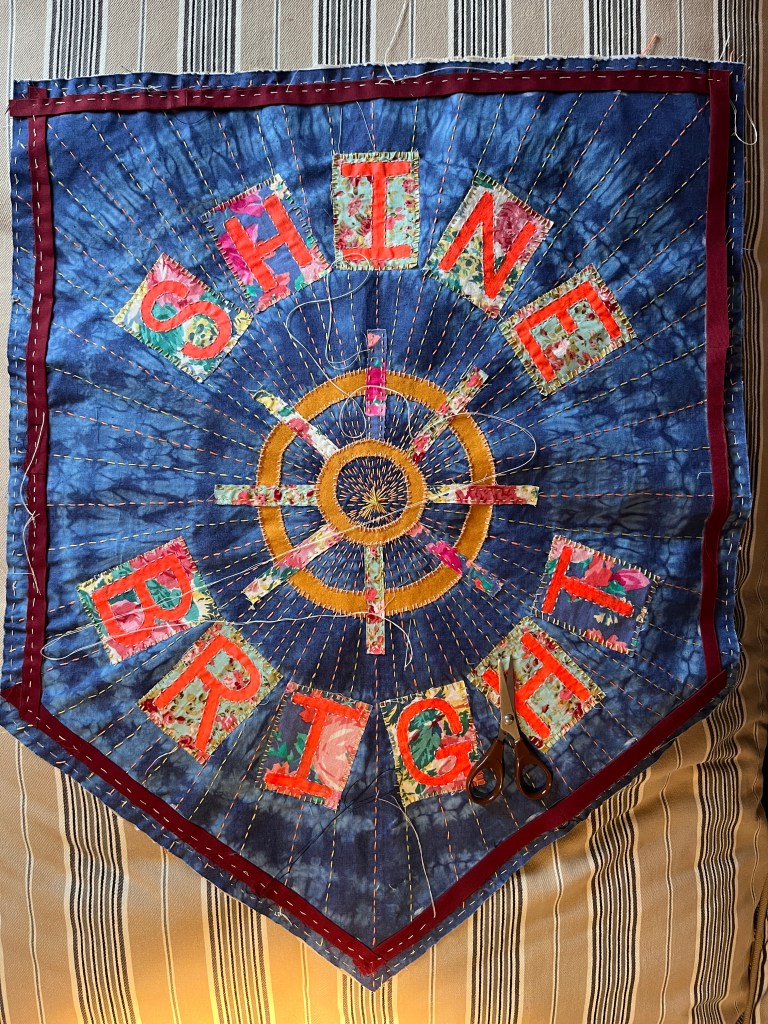
Fast forward seven or so years, I’m now exploring other techniques, such as embroidery, felting, resist dying and teaching a semester long Textile Art course to grade 7 and 8. (I’ll make a post about the course I’ve designed at some point.) For now, I want to show one of the examples I’ve created for the course. At the end of the semester students can choose their final project using the techniques they’ve learned, I created a fabric banner as an example final project.
Step 1: Tie-dye
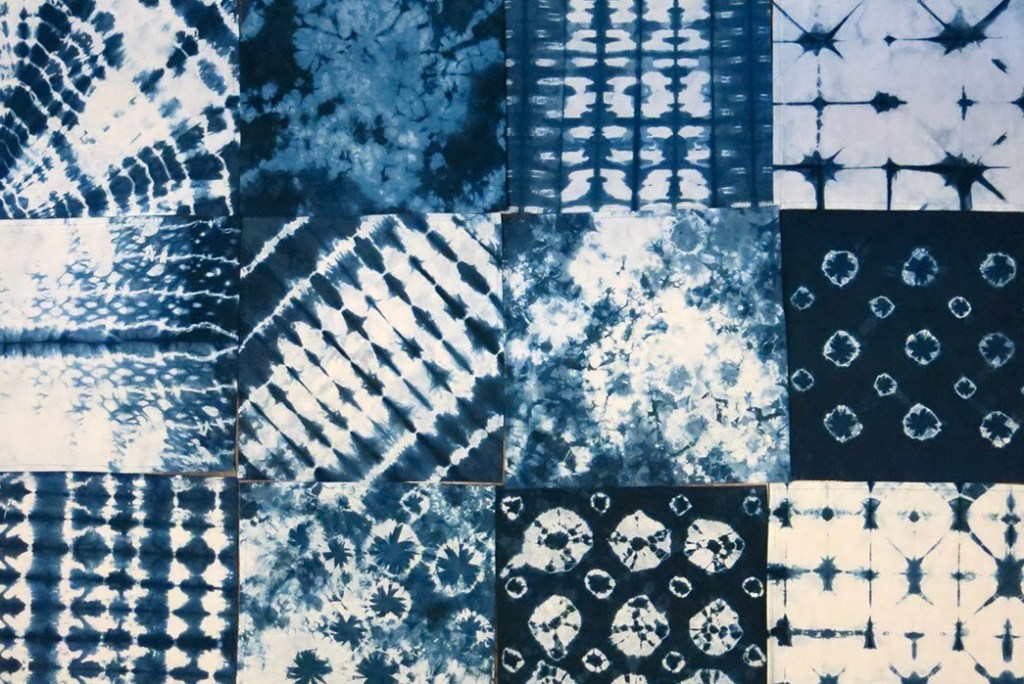
I found some white cotton in my fabric stash and some Rid indigo fabric dye. I tried different ways of tying the fabric following the instructions on the Rit website. Instead of using rope, I used yarn and I forgot to wet the fabric. I couldn’t tie the yarn tight enough and not wetting the fabric prevented deeper absorption of the dye. The piece that did work relatively well was the one I sewed. I used loose running stitches which I then pulled taught creating concentric circles. I looked at Japanese Shibori techniques for inspiration.
https://www.heddels.com/2018/07/shibori-indigo-tie-dye-via-ancient-japan/ Step 2: Interfacing and Sashiko stitches
Once the fabric was dry, I added interfacing to the back. I wouldn’t necessarily do this if the piece is smaller. I drew radiating lines with tailor’s chalk and added orange and yellow Sashiko (see also: Boro stitches or running stitches).


Sashiko vs Boro vs running stitch
What is the difference between Sashiko, Boro and running stitches?
Sashiko is a form of decorative needle work which uses running stitches to create patterns on fabric.Boro is the mending process which uses Sashiko stitches to create the final stitched and layered textile. Boro means “tattered”, “ragged” or “patched together” in Japanese and its purpose is to mend or repurpose worn out fabrics, extending the life of the fabric and preventing waste.
Boro relies on Sashiko as its stitching method. You can do Sashiko without doing Boro, but you can’t do Boro without Sashiko.

Traditional boro kimono
https://www.zenstitching.ca/blog/what-is-the-difference-between-sashiko-and-boro-stitches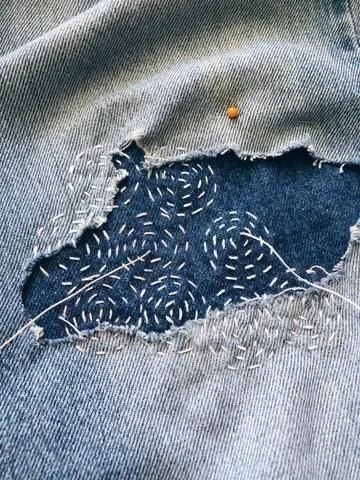
Boro mended jeans https://www.redressdesignaward.com/rda24-mag/mending-tradition 
Detail of a mid-19th century kimono decorated using sashiko, with white cotton threads on an indigo-dyed plain weave background https://en.wikipedia.org/wiki/Sashiko Step 3: Painting patches and whip stitches
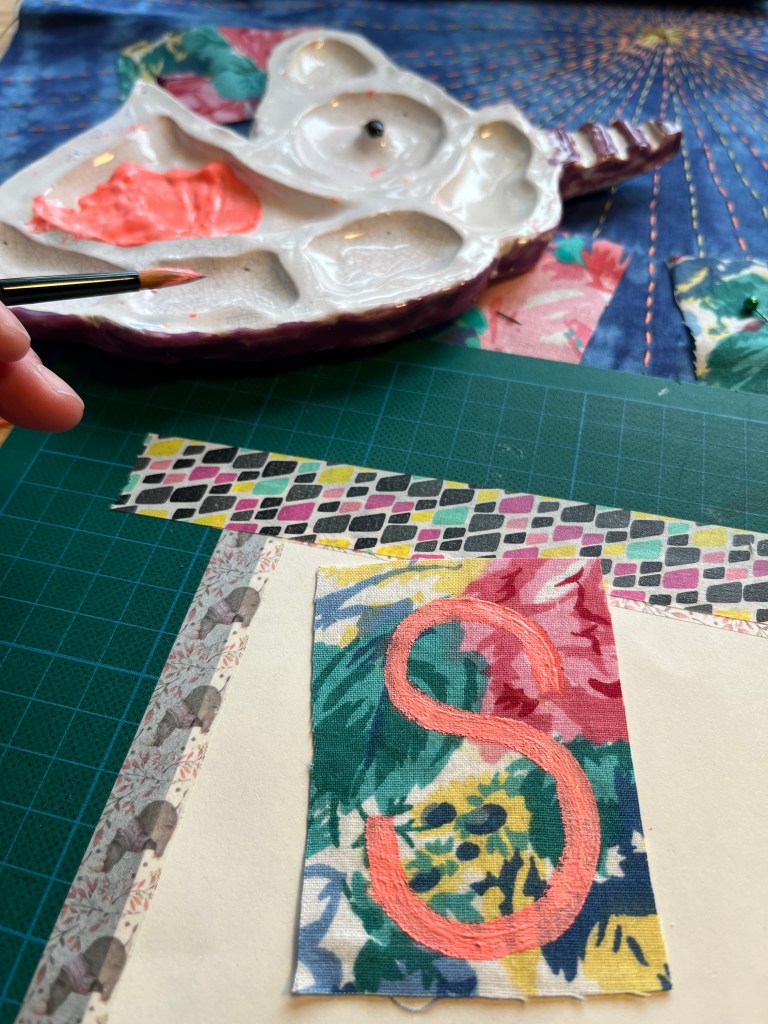
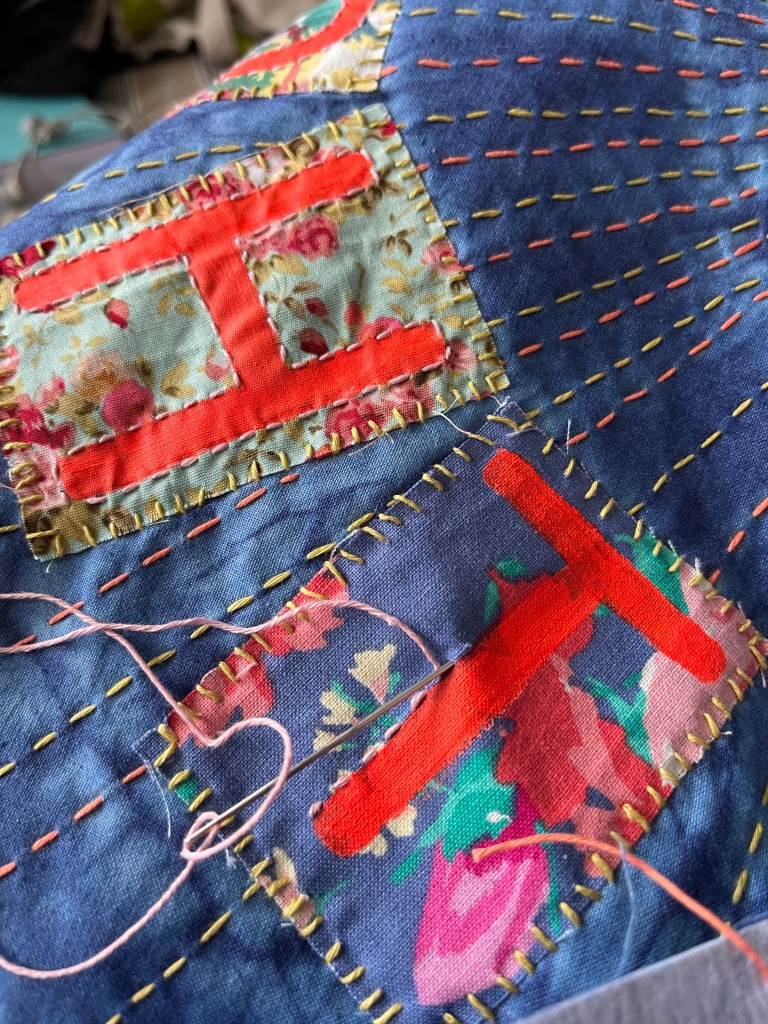
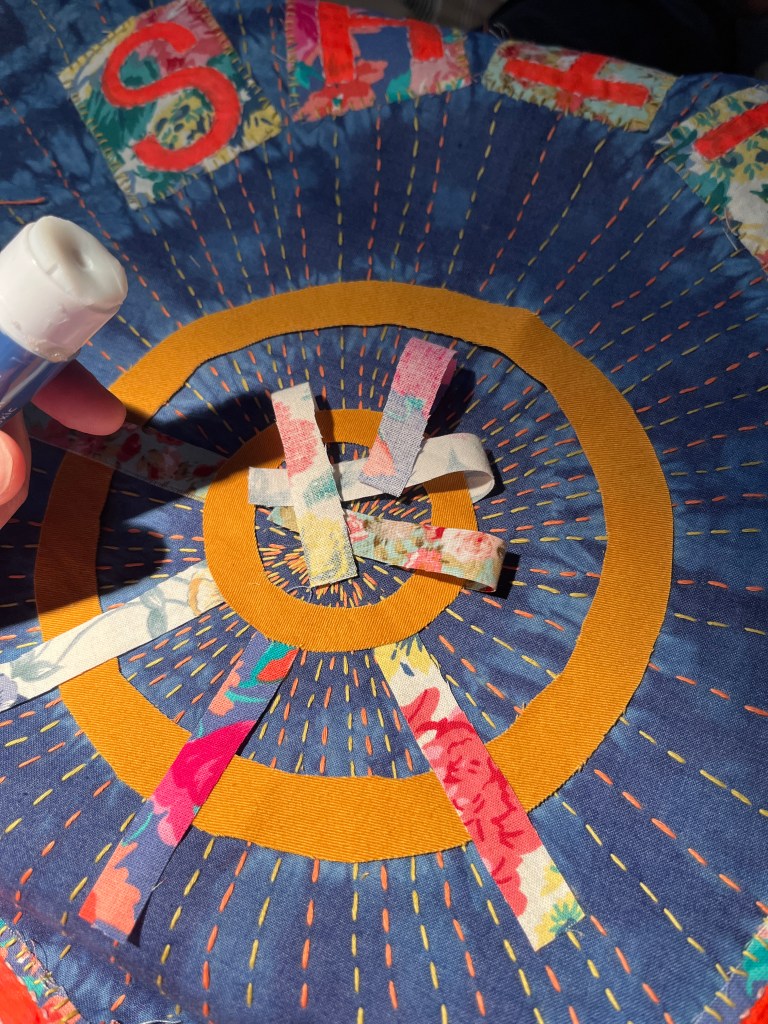
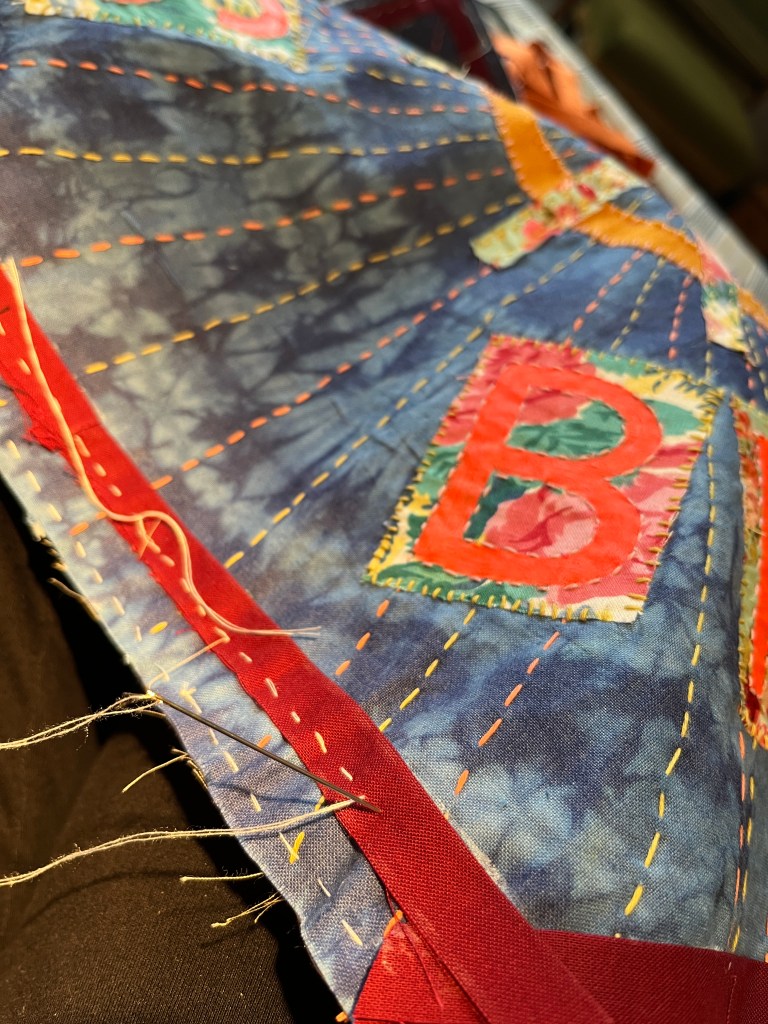
I cut patches and painted letters on them with orange fabric paint. Then I used glue stick to place the patches and then used a whip stitch to secure them. I also added running stitches to outline the letters. I used the same technique to add an abstract sun design in the middle of the banner.
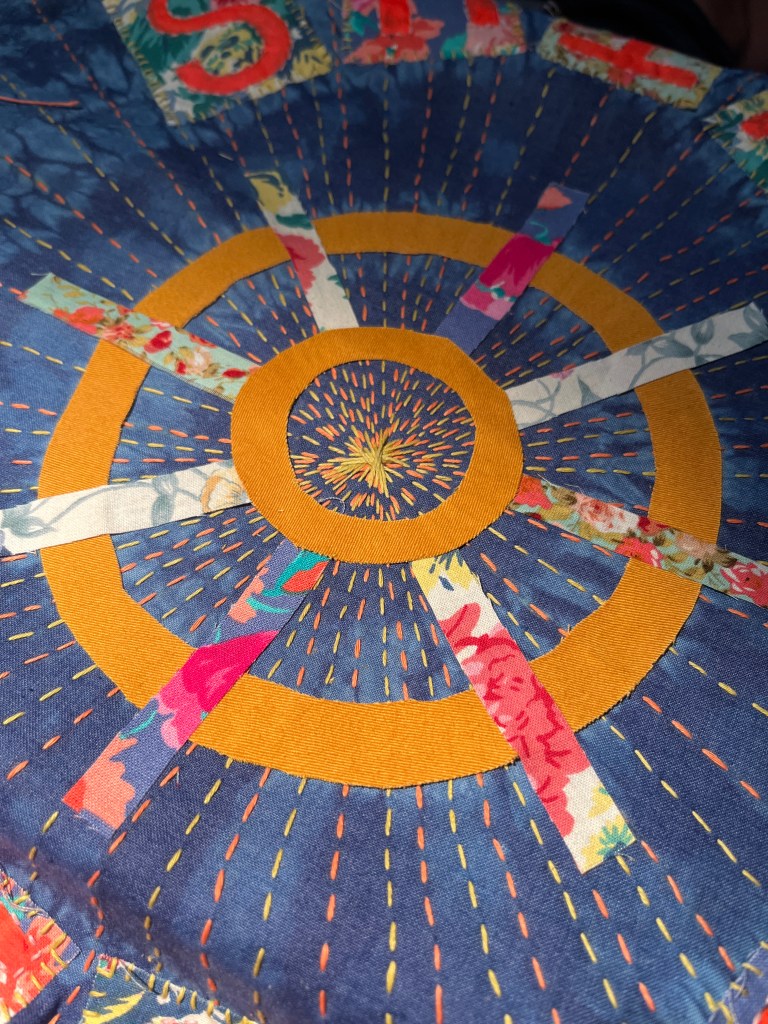
Step 4: Backing, basting boarders and more Sashiko stitches
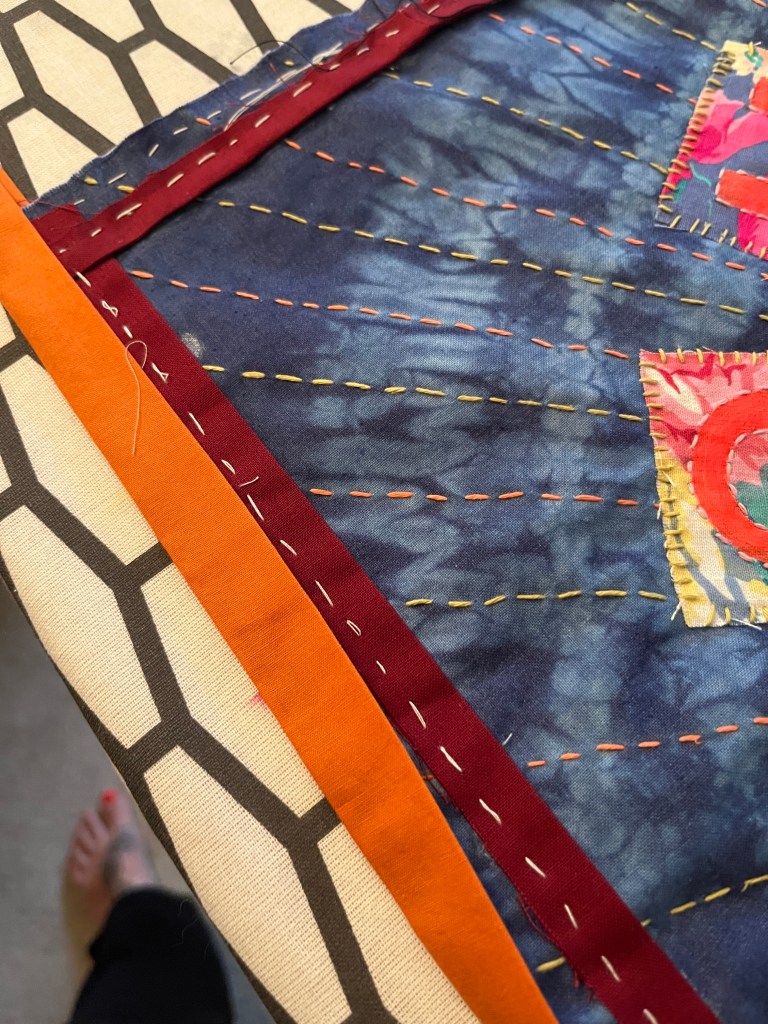
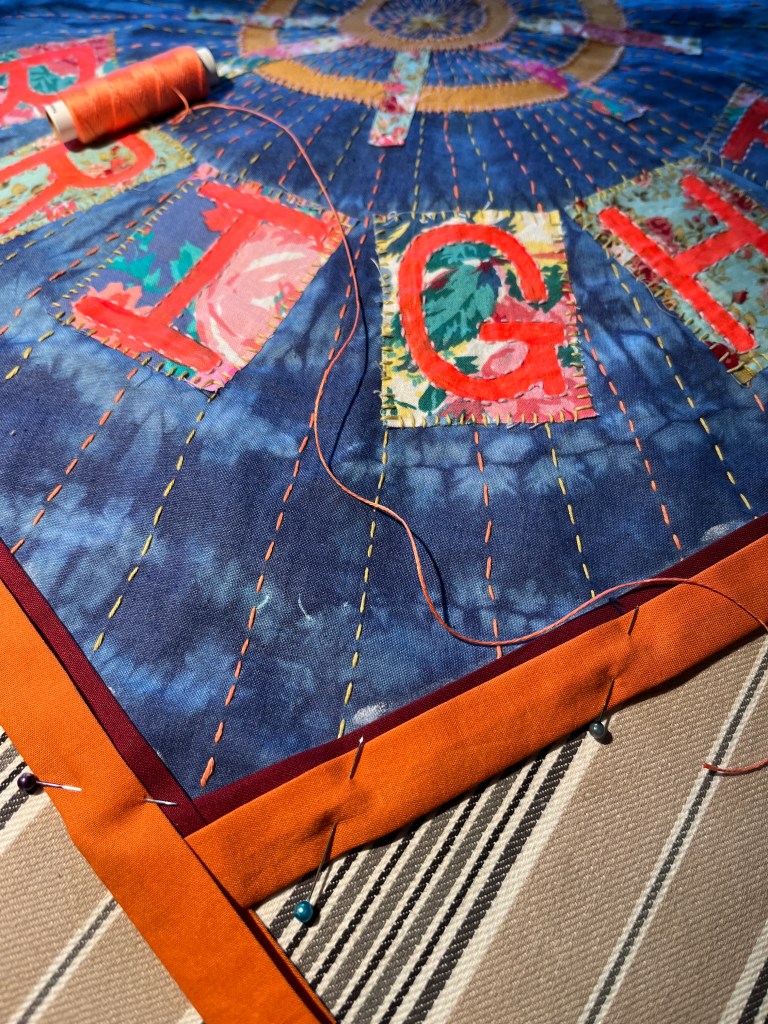
I cut grey fabric for the backing and basted the two layers together. I cut strips of orange and dark red fabric on the grain for the binding and sewed both down with a row of running stitches.
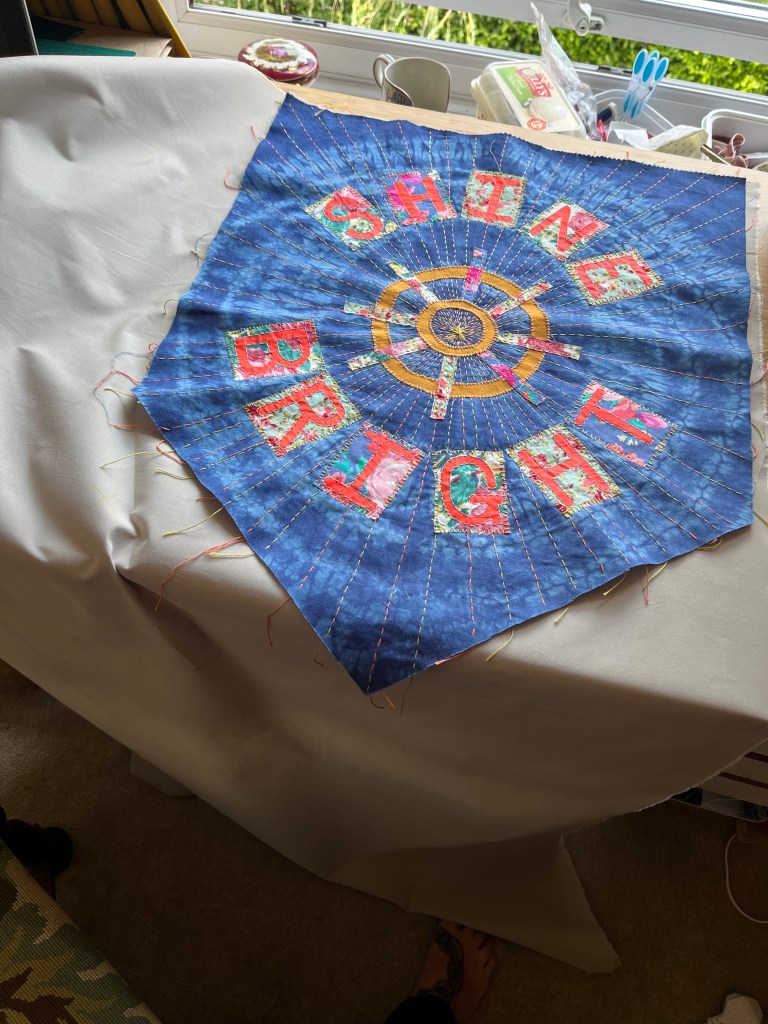
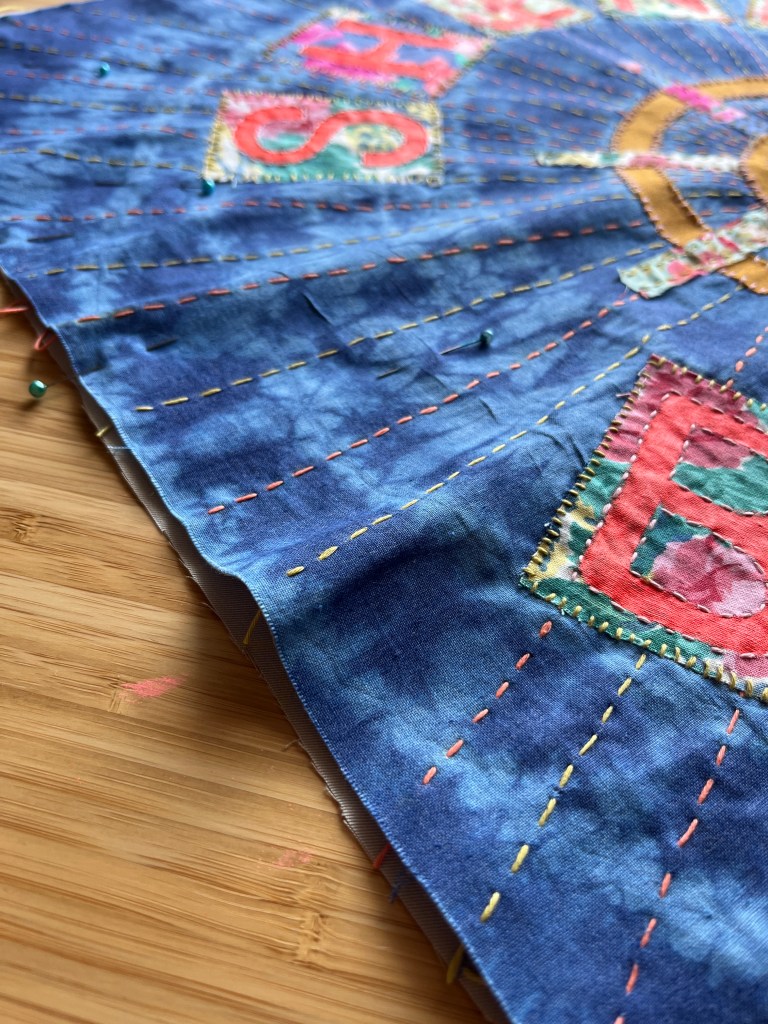
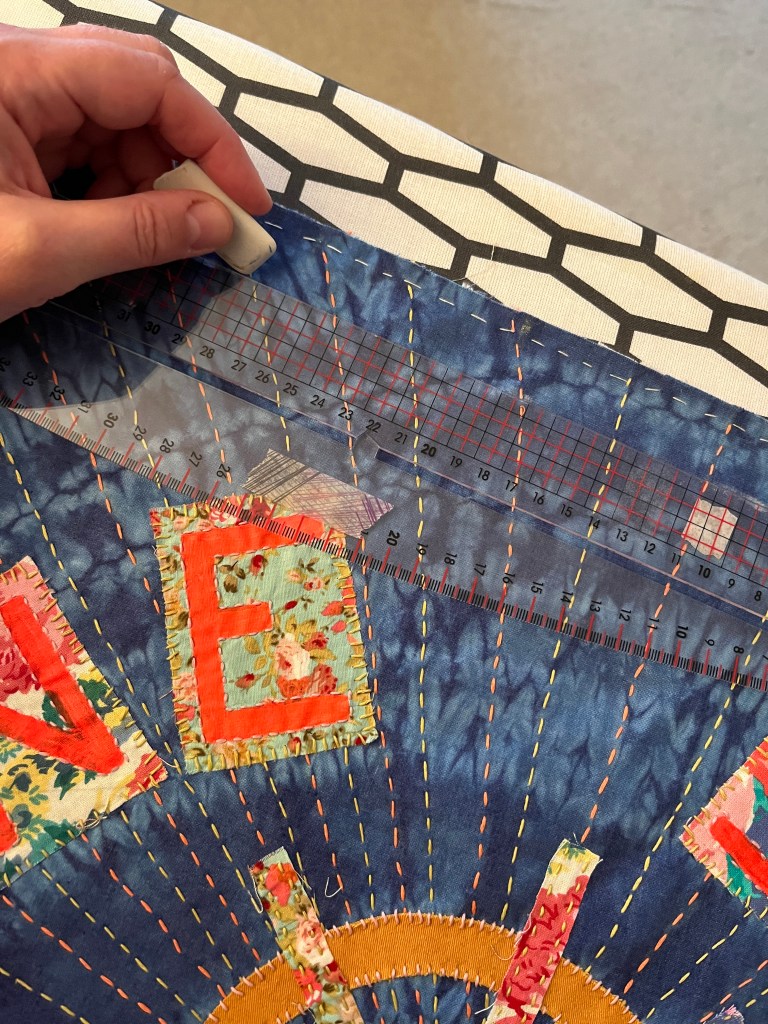
Step 5: Loops
Finally, I used scrap bits of the dyed fabric to make the loops which I bound with strips of dark red binding and sewed these to the back of the banner.
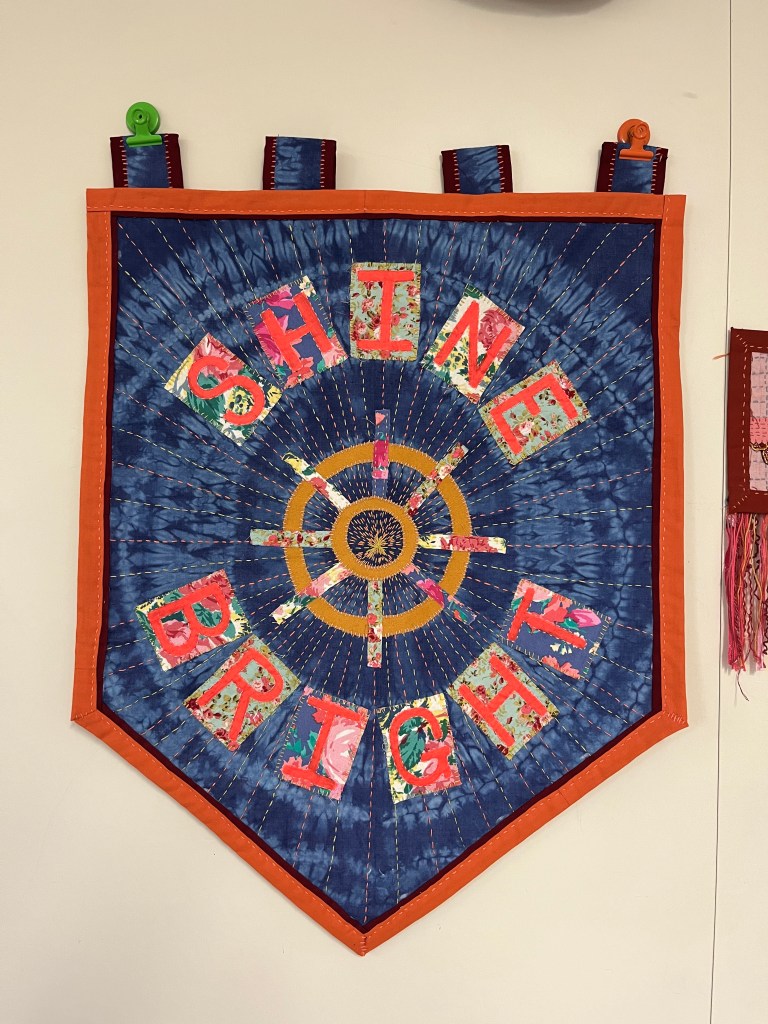
I’m very pleased with the final result! Next time I might use less busy patches to make the letters stand out more, or I might cut the letters out. Anyway, I think I did pretty well for a first all hand sewn banner!
-
Collage 02+03/72: In a Dark Wood
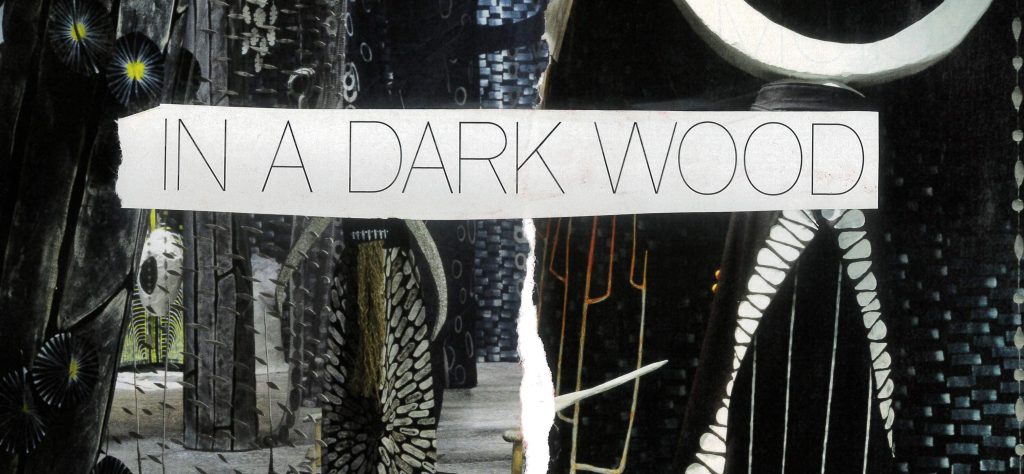
In a Dark Wood is two collages, a diptych. I used found images of from art magazines, old posters and painted scraps. Although they are quite different in colour and value, I feel they belong together. They tell a story of some strange other world not unlike our own. Same same, but different.
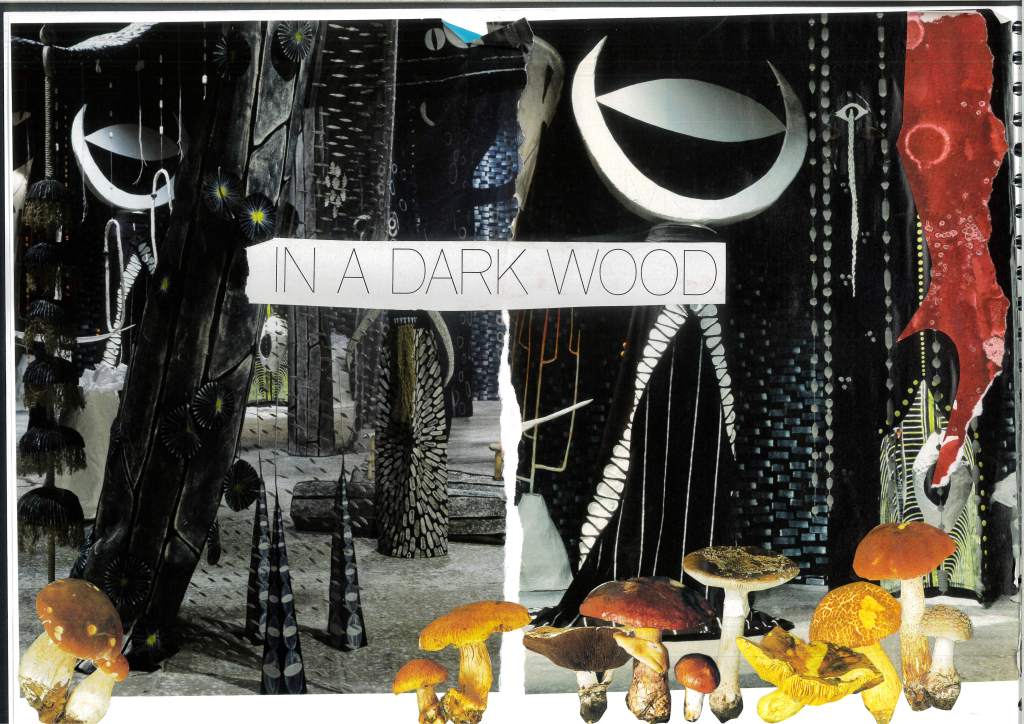
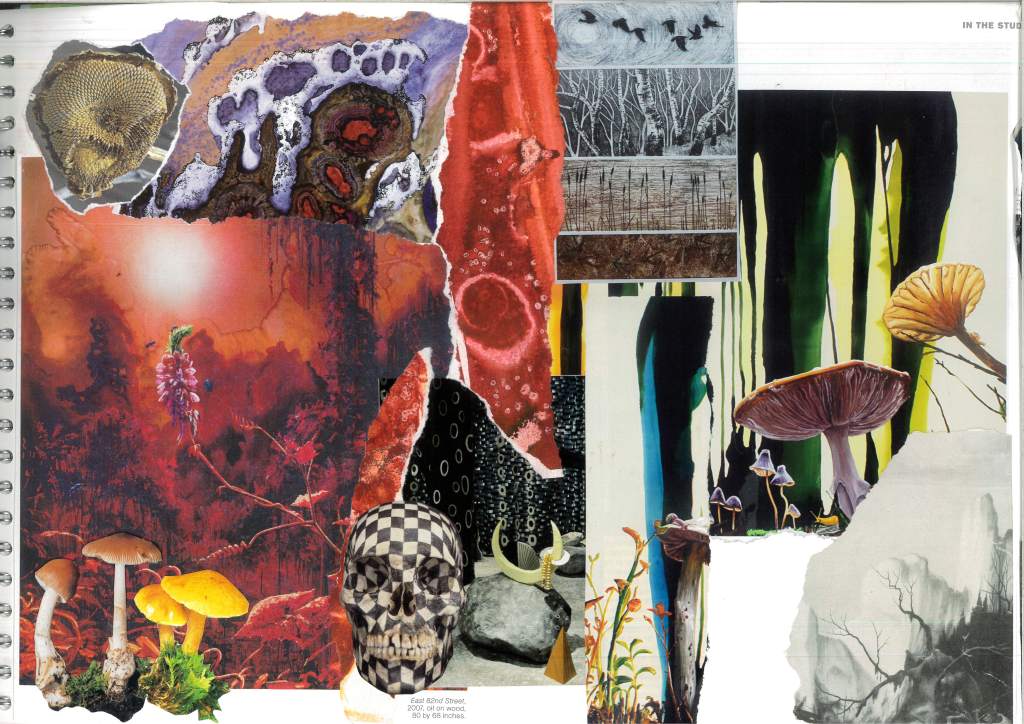
The march of the mushrooms along the bottom and the tear of read pqainted paper connects the landscape across the ring binding.
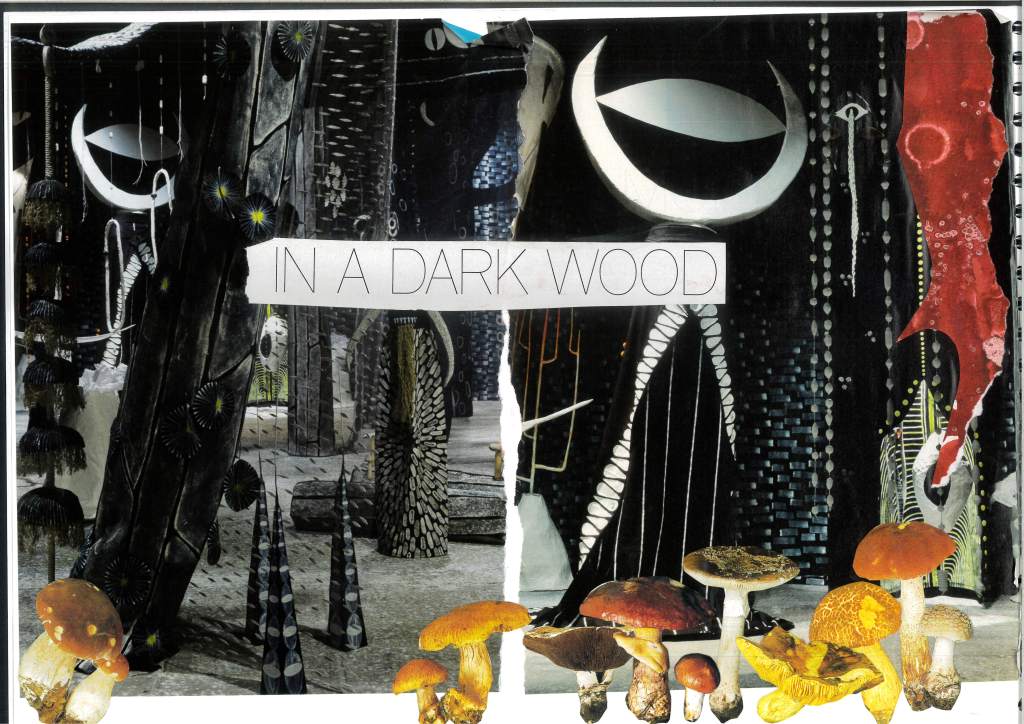
Liza Roos, In a Dark Wood 1/2, collage of found images and painted paper. Most of the collage above is taken up by images of Matthew Ronay’s installation Between the Worlds (2010). I added images of mushrooms from an old biology poster and some scrap bits of painted paper. The dark, burned wood reminds me of these recurring nightmares I had when I was young. Wild wolves hunting me through a pine forest with nowhere to hide, no low branches to climb up on, no escape. I never saw or heard the wolves, I just knew they were behind me and getting closer, like an evil presence. As a child I had visited this pine forest many times on family vacation, it was never daunting or scary on those sunny days. In my dreams the pine forest looked exactly the same, I felt I could even distinguish individual trees, except now it was dark and only a pale light lit the scenery.
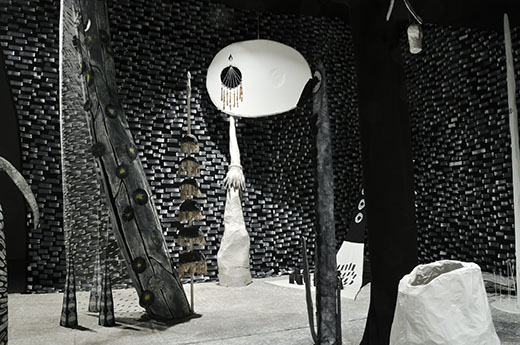
Matthew Roney – Between the Worlds – 2010 
Matthew Roney – Between the Worlds – 2010 When I created this collage, I didn’t actually research or even look up the installation, I just intuitively used the images in my collage. Reviewing the collages now, I’m curious about this artist, his work and his intention. I think this might be a new favourite!
Reading about this installation, looking at photographs and considering the title, it is clear that Ronay created a liminal space, an in-between space. A space that’s neither everyday nor dreamscape. A journey into a forest symbolises a journey into the unknown and Roney’s woods are definitely unknown. It is filled strange handmade sculptures which look like altars for pagan deities or spirits. He sees the making of the pieces not just as making objects, but as a transference of energy.
Ronay is inspired by Carl Jung and Joseph Campbell (The Power of Myth, 1988) and “works with his intuition in order to reach an expression that reach us at a fundamental and collective unconscious level [to create] strange remembrance of something primal and instinctively original that lies deeply buried in the consciousness of modern man.”
Between the Worlds is very different from his other work in that it is dark and rough where his other work is much brighter, smooth, almost cartoony.

Matthew Ronay, Organ/Organelle installed at Marc Foxx, Los Angeles, September 6-October 4, 2014.https://blafferartmuseum.org/matthew-ronay/ 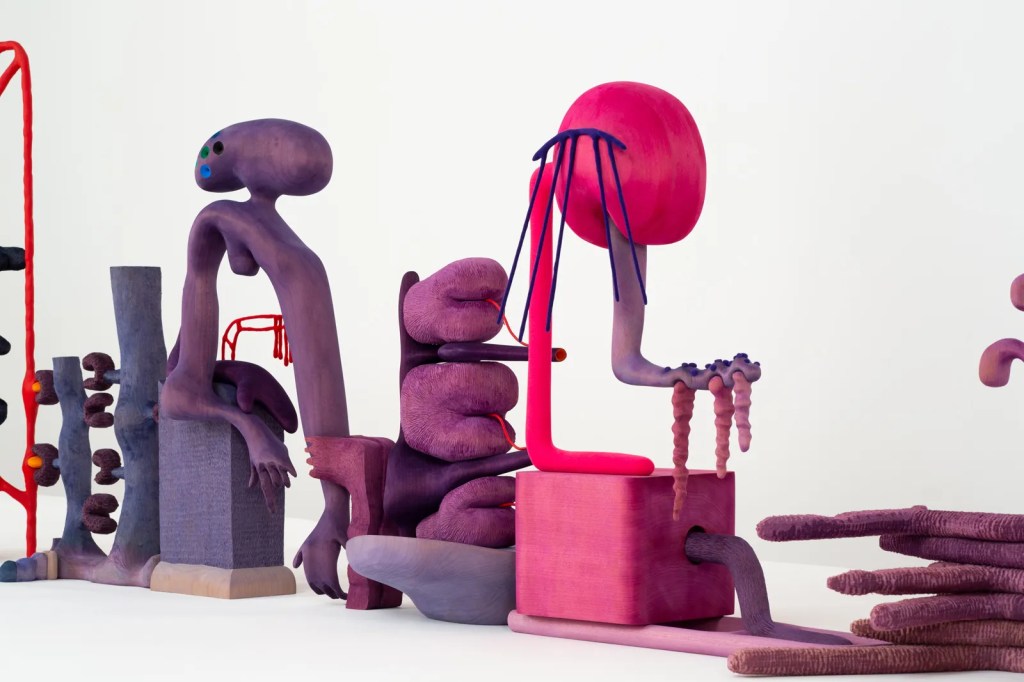
Matthew Ronay, The Crack, the Swell, an Earth, an Ode (detail), 2022
https://www.artforum.com/events/matthew-ronay-7-250586/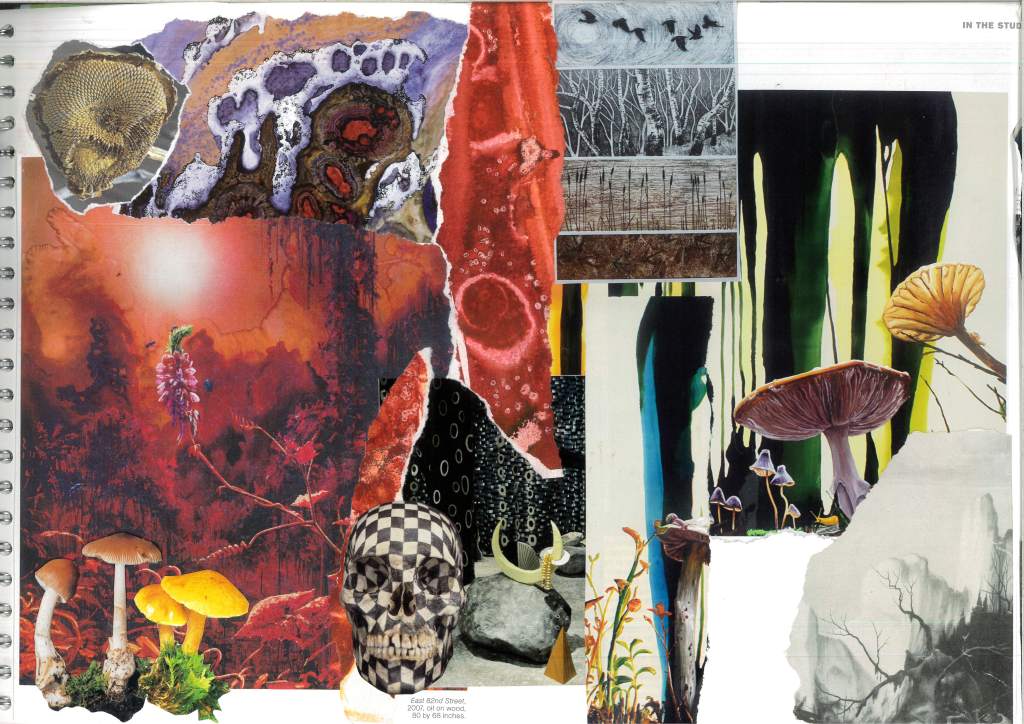
Liza Roos, In a Dark Wood 2/2, collage of found images and painted paper. The second collage consists of more mushrooms, bits of painted paper and several found images from art magazines. I’ve added the works and citations below.

Gabriel Orozco. Black Kites. 1997 https://www.mariangoodman.com/content/feature/675/detail/artworks13314/ 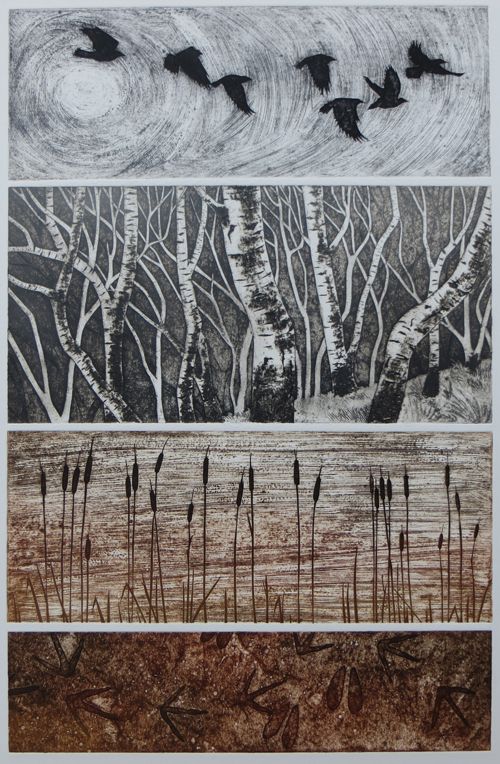
Hester Cox 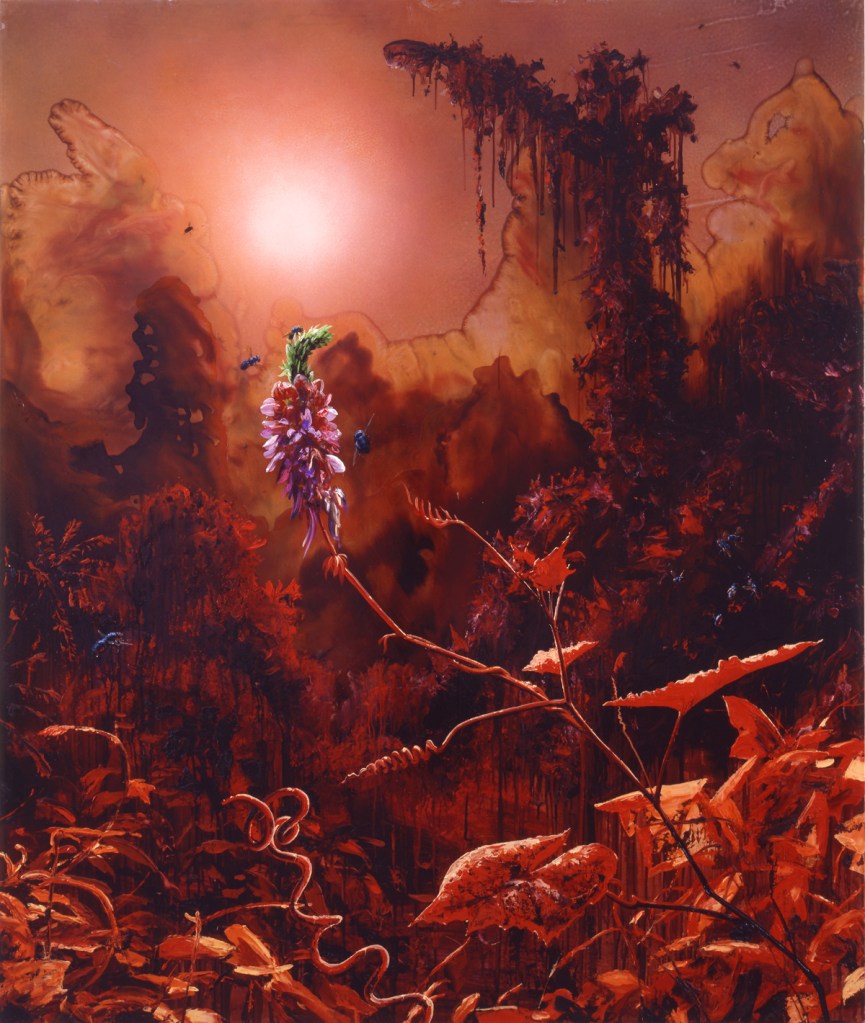
Alexis Rockman, East 82nd Street, 2007.
https://web.colby.edu/thelantern/2019/11/12/murder-chaos-and-fornication-dystopian-environmental-futures-in-alexis-rockmans-paintings/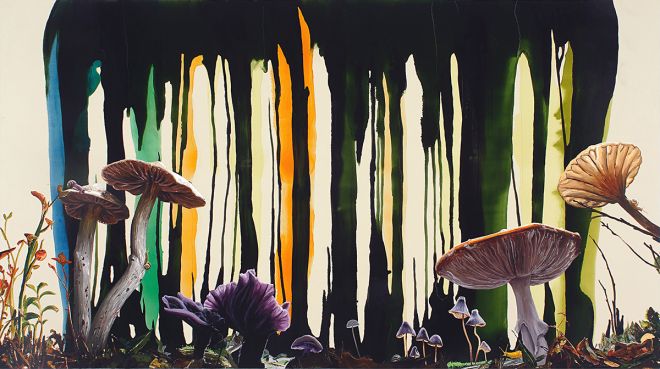
Alexis Rockman, Forest for the Trees, 2008.
https://www.pismowidok.org/en/archive/2018/22-how-to-see-the-antropocene/self-capture-in-the-anthropoceneI’m especially drawn to Alexis Rockman’s East 82nd Street (2007). This oil painting on wood shows a saturated, hot, damp and almost fleshy forest. Very different from Matthew Ronay’s forest where the light is stark and the forms hard and dry. From looking at this image, I can almost hear the buzzing of flying insects and the squelching of mud under my feet. I think the mushrooms feel more at home here than in Between the Worlds (2010).
It also reminds me of some of the scenery Stephen King describes in The Dark Tower series. In book 1, The Gunslinger, chapter “The Slow Mutants”, where Roland and Jake encounter mutated creatures with green glowing skin in a cave.
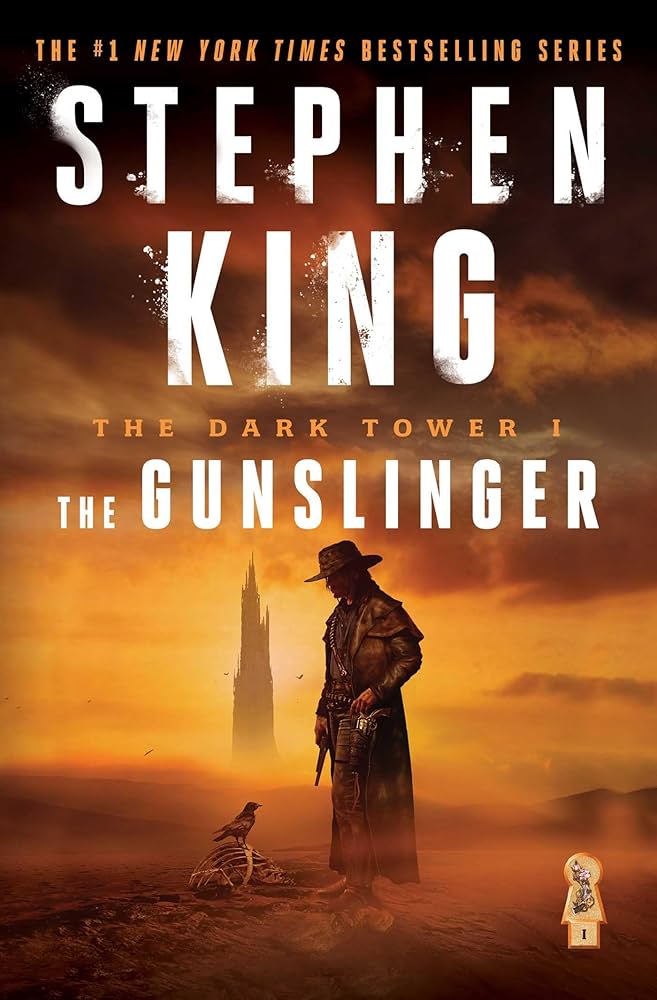
https://www.studioremarkable.com/reviews/reading-dark-tower-1-the-gunslinger/10713/ 
https://stephenking.fandom.com/wiki/Slow_mutants After being haunted by dark spirits in the dry and black woods, it’s not much of a relief ending up in the mud and heat. Perhaps Hester Cox’ birch trees, reeds and sky filled with birds is our final destination, but it seems still a long way to go. Or perhaps it’s a dream of nature past, in a world polluted and inhabited by mutant creatures as depicted by Alexis Rockman in which he warns us about our destructive relationship with the environment.
Citations
“Between the Worlds.” Artpace, artpace.org/exhibitions/between-the-worlds/. Accessed 11 Sept. 2025.“Joseph Campbell and the Power of Myth.” Wikipedia: The Free Encyclopedia, last edited 28 July 2025, en.wikipedia.org/wiki/Joseph_Campbell_and_the_Power_of_Myth. Accessed 11 Sept. 2025.
King, Stephen. The Dark Tower I: The Gunslinger. Revised and expanded ed., Scribner, 2003.
Magdeburg, Rachel. “Self-Capture in the Anthropocene: The Expedition Paintings of Alexis Rockman.” View. Theories and Practices of Visual Culture, no. 22, 2018, http://www.pismowidok.org/en/archive/2018/22-how-to-see-the-antropocene/self-capture-in-the-anthropocene. Accessed 11 Sept. 2025.
“Matthew Ronay.” Artforum, “Events,” artforum.com/events/matthew-ronay-195928/. Accessed 11 Sept. 2025.
“Matthew Ronay.” Wikipedia: The Free Encyclopedia, last edited 6 May 2024, en.wikipedia.org/wiki/Matthew_Ronay. Accessed 11 Sept. 2025.Sant, Ingrid. “Murder, Chaos, and Fornication: Dystopian Environmental Futures in Alexis Rockman’s Paintings.” The Lantern, 12 Nov. 2019, web.colby.edu/thelantern/2019/11/12/murder-chaos-and-fornication-dystopian-environmental-futures-in-alexis-rockmans-paintings/. Accessed 11 Sept. 2025.
“Q&A: Matthew Ronay.” Frieze, frieze.com/article/qa-matthew-ronay. Accessed 11 Sept. 2025.
-
Old sketchbooks and Collage 1/72
In an (admittedly halfhearted) attempted to create some order in my very small studio, I’ve been looking through some of my old sketchbooks. I laugh, cringe, am surprised and feel inspired leafing through the pages. I also feel regret, moving around the world and from house to house, over the years I’ve thrown away quite a few sketchbooks. I’m making the resolution never to throw sketchbooks away again. Perhaps the ones that only contain a few pages, I can dismantle, I don’t know…
Some books contain only quick sketches and experiments, others are more like art books rather than sketchbooks because they contain more finished and polished works. I can see how my interests change over time, how I work with different media and techniques, I can see my artistic obsessions wax and wain.
One such obsession was collage and I filled an A3 size ring bound book with collages. Seventy-two in total. Some collages I made from scraps found on the art room floor, others are made with a more predetermined intention. What I love about collages, is being able to juxtapose images to create completely new worlds and contexts. Also, there is something very soothing about sticking pieces of paper on other pieces of paper.
Anyway, 72 collages. Some are related to each other, some are one-offs. I hope you’ll enjoy them!
Here is the first, titled “Mooi”

For this collage I used mostly found scrap images. The black and white image is a detail of Sandro Botticelli’s Primavera from an old art book. I found the bird in a magazine and the shape reminded me of a Venetian mask. The word “mooi” means “beautiful” in Dutch.
 Where the Art is